
Alan Hayward James is an American former United States Air Force Master Sergeant who has drawn widespread national and international attention following his involvement in one of the most serious military contracting fraud cases in recent American history. During his military service, he worked in a key administrative and technical capacity, overseeing information technology related contracts and procurement operations within the United States Air Force, particularly across installations in the Pacific region. His role placed him in a position of trust, where he was responsible for managing sensitive contracting processes and ensuring proper vendor selection and service delivery.
However, his professional reputation changed dramatically after allegations surfaced linking him to a large scale fraud scheme involving military contracts. In April 2026, Alan Hayward James pleaded guilty to multiple federal charges connected to a corruption case estimated at approximately $37 million. The case included accusations of bribery, bid rigging, and manipulation of procurement systems over a period of nearly a decade. Federal authorities described it as one of the more serious contract fraud cases involving United States military procurement in recent years.
This comprehensive biography explores every aspect of Alan Hayward James’s life and the fraud case that made him a trending figure in 2026. We examine his early years, his military career, his role as a Contracting Officer’s Representative for Pacific Air Forces, the elaborate $37 million fraud scheme he orchestrated, his bizarre use of mobster nicknames including “Al Capone” for himself and “Godfather” and “Godmother” for co conspirators, the shell companies he created to hide the stolen funds, the luxury resort vacations he paid for with taxpayer money, his guilty plea, and the broader implications of his case for military procurement oversight.
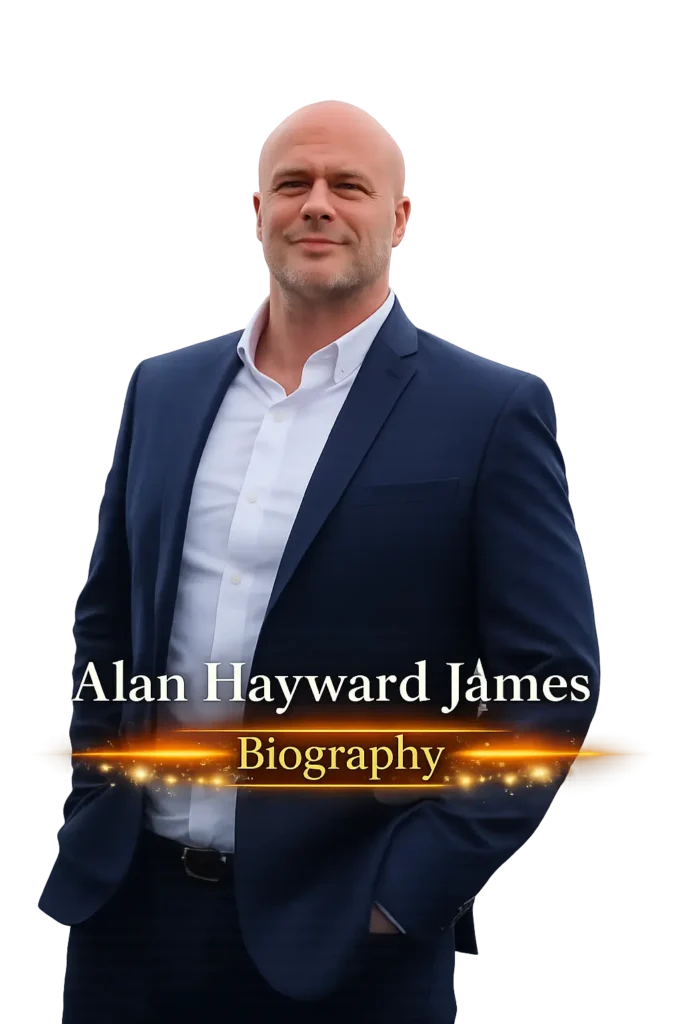
Who Is Alan Hayward James?
Alan Hayward James is an American former United States Air Force Master Sergeant whose name became synonymous with one of the most brazen military contracting fraud schemes in recent history. His story represents a dramatic fall from grace, transforming from a trusted senior non commissioned officer responsible for millions of dollars in government contracts into a federal defendant facing decades in prison for conspiracy, bribery, and bid rigging.
What makes James’s case particularly striking is not merely the scale of the fraud, estimated at $37 million, but the audacity with which it was carried out. According to federal prosecutors and the official plea agreement, James nicknamed himself “Al Capone” in the ledgers he used to track stolen funds. His parents were assigned the code names “Capone M” and “Capone D.” His co conspirators were referred to as “Godfather” and “Godmother.” These mobster inspired aliases, used in official documents tracking the distribution of stolen taxpayer money, suggest a level of arrogance and detachment from consequences that shocked even seasoned investigators.
James’s case is also notable for its duration and sophistication. The fraud scheme operated for approximately nine years, from 2016 to 2025, during which time James and his co conspirators allegedly built an elaborate network of shell companies, falsified invoices, inflated contract estimates, and directed competitive bidders on how much to bid to ensure government contracts were awarded to companies controlled by the conspiracy. The scheme was not a momentary lapse in judgment but a sustained, systematic effort to defraud the United States government of tens of millions of dollars.
The contrast between James’s military career and his criminal activities is stark. As a Master Sergeant in the United States Air Force, he held a position of significant responsibility and trust. His role as a Contracting Officer’s Representative for Pacific Air Forces required him to ensure that government contracts were awarded fairly, executed properly, and delivered value to the taxpayer. Instead, prosecutors allege, he used this position to enrich himself, his family members, and his co conspirators at the expense of the very military he had sworn to serve.
Alan Hayward James Biography: Early Life and Background in the United States
Alan Hayward James was born around 1974 to 1975 in the United States and spent his early years growing up in an American environment during a period marked by strong emphasis on discipline, education, and structured career development. Although his exact birthplace, family background, and early childhood experiences are not publicly documented, available information suggests that he was raised in a typical American setting that valued responsibility and long term professional growth.
Details about his parents, siblings, and early family life remain largely unknown, as he maintained a private lifestyle long before gaining public attention. Like many individuals who later pursue military careers, his upbringing is believed to have been influenced by principles such as order, commitment, respect for authority, and personal accountability. These values are often associated with households or communities that encourage service oriented careers, particularly within the armed forces.
During his formative years, Alan Hayward James grew up in an era where education and career stability were highly emphasized. While there are no widely available records of his primary or secondary education, it is assumed that he completed standard schooling within the United States education system. His early academic exposure likely contributed to the development of technical and administrative skills that later became relevant in his military career.
As he transitioned from adolescence into adulthood, he is believed to have developed an interest in structured professional environments. This direction eventually aligned with military service, where discipline, hierarchy, and responsibility play a central role. His eventual decision to join the United States Air Force reflects a shift toward a career path focused on service, technical operations, and organizational management.
Before entering the public spotlight due to later events in his career, Alan Hayward James lived a relatively low profile life. There is no significant public documentation of his early ambitions, personal interests, or formative achievements during his youth. However, his progression into the United States Air Force and eventual rise to the rank of Master Sergeant indicates that he was able to adapt to demanding professional environments and maintain long term service commitments.
Overall, his early life remains largely private and undocumented, but it forms the foundation of a journey that later led him into a highly responsible military role. This early period of his life represents a phase of personal development that preceded his long career in the Air Force and the eventual events that brought him into national and international attention.
Alan Hayward James Biography: Education and Professional Development
Alan Hayward James completed his formal education through recognized academic institutions, where he built a strong foundation in analytical thinking, communication, and professional development. Although specific schools and universities are not publicly confirmed, his educational background reflects a focus on knowledge building and career preparation.
His education helped him develop key skills such as critical thinking, leadership ability, organizational planning, communication skills, and problem solving techniques. These skills later supported his transition into professional roles and career development within the United States Air Force.
The technical and administrative competencies that James demonstrated throughout his military career suggest a solid educational foundation. His ability to manage complex contracting processes, understand procurement regulations, and coordinate with multiple stakeholders indicates training and education that went beyond basic military instruction. Contracting Officer’s Representatives typically undergo specialized training in federal acquisition regulations, contract law, and financial management, all of which require significant educational preparation.
His academic journey reflects consistency and a commitment to self improvement. The progression from enlisted service member to Master Sergeant, a senior non commissioned officer rank, typically requires not only years of service but also completion of professional military education courses, technical training, and often college level coursework. James’s rise to this rank suggests that he invested significantly in his professional development and was recognized by the Air Force as possessing the skills and judgment necessary for increased responsibility.
Alan Hayward James Biography: Military Career and Rise to Master Sergeant
Alan Hayward James built a long and structured career within the United States Air Force, eventually rising to the rank of Master Sergeant, a senior non commissioned officer position that reflects years of service, leadership responsibility, and technical expertise. His military journey was marked by gradual advancement through the ranks, earned through experience, training, and increasing levels of responsibility within the Air Force system.
He initially enlisted in the United States Air Force as part of his commitment to military service, where he underwent rigorous basic training and technical instruction. In the early stages of his career, James focused on adapting to military discipline, understanding operational procedures, and developing the foundational skills required for long term service. Like many service members, his early assignments were centered on learning the structure of military operations and building competence within his assigned units.
As he gained experience, James progressed into more advanced and specialized roles. Over time, his responsibilities expanded beyond basic operational duties into areas involving administration, systems coordination, and technical support functions. His growing expertise allowed him to work in positions that required precision, reliability, and a strong understanding of military processes.
A significant development in his career came when he transitioned into roles connected to information technology systems and contract management. In this capacity, he became involved in procurement related activities, helping manage contracts and oversee project implementation within the Air Force structure. This type of role is highly sensitive within military operations, as it involves the allocation and management of government funds, vendor selection, and oversight of critical infrastructure services.
One of the most important phases of his career involved assignments linked to IT contract management for United States Air Force installations in the Pacific region. This position placed him in a senior administrative role where he had influence over contracting procedures, coordination with external vendors, and oversight of project execution. His responsibilities required a high level of trust, as well as strong technical and organizational capability, since his decisions directly affected military operations and infrastructure support.
During his time in this role, Alan Hayward James was involved in duties such as managing and overseeing government contracts related to IT systems, coordinating with private contractors and service providers, assisting in budgeting and financial planning for technical projects, monitoring implementation of infrastructure and operational support systems, and supporting efficiency and continuity across Air Force installations.
These responsibilities placed him in a critical position within the military structure, where accountability and accuracy were essential. His rank of Master Sergeant reflected both his experience and the level of trust placed in him by the institution.
From approximately 2014 until in or around January 2018, James served as an active duty member of the Air Force acting as a Contracting Officer’s Representative for the Pacific Air Forces. He was a Contracting Officer’s Representative or acted as a government representative on contracts administered through, among other agencies, the Defense Information Systems Agency, the Defense Information Technology Contracting Organization, and the United States General Services Administration.
A Contracting Officer’s Representative is responsible for drafting contracting documents for the provision of information technology equipment and services to Pacific Air Forces, to include market research reports, Independent Government Cost Estimates, and lists of materials and labor required under contracts, often known as Performance Work Schedules. James knew that, as a Contracting Officer’s Representative, he was prohibited from, among other things, discussing or releasing source selection sensitive information, including Independent Government Cost Estimates, with anyone who did not have a need to know; directing contractors on how to carry out their contractual responsibilities; creating an employer employee relationship with any contractor personnel; accepting special favors or gratuities from any contractor; and having a conflict of interest on his own or through his family members’ interests.
On or around January 31, 2018, James retired from the Air Force. However, his involvement in contracting activities did not end with his retirement. Even after he was no longer a Contracting Officer’s Representative, a supervising federal government employee continued to rely on and direct him to draft contracting documents for the provision of IT services and equipment to Pacific Air Forces, including market research reports, Independent Government Cost Estimates, and Performance Work Schedules. James knew that such source selection sensitive information should be kept confidential, and that strict rules govern conflicts of interest and receipt of favors or gratuities among contracting professionals who direct government spending.
The $37 Million Air Force Fraud Scheme: How Alan Hayward James Operated
Alan Hayward James became the central figure in one of the most serious recent fraud cases involving the United States Air Force, in which federal authorities allege that approximately $37 million was illegally obtained through a long running contracting scheme. The alleged activities took place between 2016 and 2025, during which James served as a Master Sergeant and later as a retired contractor responsible for overseeing IT contract management for Air Force installations in the Pacific region.
In his position, James held significant authority over procurement procedures, including contract approvals, vendor coordination, and project oversight. According to federal prosecutors, this level of access and responsibility was allegedly misused to influence contracting outcomes and facilitate fraudulent financial activity over several years.
Investigators described the operation as a coordinated system of contract manipulation involving multiple methods of financial fraud. It was alleged that James used his official position to influence the awarding and execution of government contracts in ways that benefited selected contractors and individuals involved in the scheme.
Key allegations include manipulating the bidding process to favor specific contractors, inflating contract values for services, equipment, and labor costs, approving payments that exceeded the actual value of completed work, and redirecting excess funds through shell companies and intermediary accounts.
These shell companies were reportedly used to conceal the movement of funds and disguise illicit payments. Through falsified invoices, altered documentation, and coordinated financial transfers, the scheme allegedly continued without detection for an extended period.
Federal prosecutors further alleged that James received financial kickbacks in exchange for facilitating contract approvals and ensuring continued business flow to selected vendors. These payments were allegedly structured in ways intended to avoid detection and appear as legitimate financial transactions.
From at least as early as April 2016 and continuing to in or about April 2025, James and other co conspirators falsely inflated the value of Information Technology contracts with the United States Air Force and coordinated with other co conspirators who agreed to use the excess funds to pay James, James’s family members, the family of a supervising federal employee, and other co conspirators. From at least May 2019 and continuing to at least October 2022, James also directed co conspirators who were supposed to be competing to win government contracts on the amounts they should submit on their bids in order to circumvent the competitive bidding process. As a result of James’s actions, the government overpaid for IT contracts by at least $37 million.
James and his co conspirators falsely inflated multiple IT contracts, causing the government to pay a premium of over $37 million on IT contracts serving United States Air Force installations across the Pacific and then distributed the premium the government paid on those contracts between and amongst co conspirators and their friends and family members. They falsely inflated contracts relating to Cyber Resiliency Experienced Workforce, Data Center Sustainment, End User Computing Modernization, Enhanced Virtual Desktop Infrastructure Expansion, Nonsecure Internet Protocol Router E VDI Expansion, NIPR Network Technology Refresh, Secure View, Secure Internet Protocol Router E VDI Expansion, and SIPR Tech Refresh.
The SIPR Tech Refresh contracts provide just one example of how James and his co conspirators executed the wire fraud conspiracy. At the direction of and in consultation with a supervising federal employee, James drafted budgetary documents, including Independent Government Cost Estimates, for the SIPR Tech Refresh contracts. He and others ensured that the Independent Government Cost Estimate for each base in the Pacific Air Forces region contained line items that were never intended to be provided or were intentionally inflated.
James and other co conspirators built excess funding into the SIPR Tech Refresh Independent Government Cost Estimate, in part, by including line items for fictional part numbers that were never intended to be provided. He also inflated other line items by excluding discounts that he and co conspirators knew would be applied, which they referred to as “material savings.”
James and co conspirators ensured that a specific co conspirator company received subcontracts for the inflated line items in the SIPR Tech Refresh contracts. Among other things, James and the supervising federal employee ensured that an executive of this company had copies of the Independent Government Cost Estimates for the project. Sharing the Independent Government Cost Estimates gave this company an advantage by allowing it to bid up to, without exceeding, the government’s estimate.
On or around November 18, 2022, after the SIPR Tech Refresh contracts were awarded, James circulated to co conspirators a ledger that identified the excess funds in the contracts that would be distributed between and amongst the conspirators. The ledger showed $9,867,185 of “material savings” and $6,136,362 in “PMI costs” that were fraudulently billed to and paid by the government for material line items and or labor that were never provided. Together, the “material savings” and “PMI costs” constituted a $16,003,547 premium the government paid for IT services under the SIPR Tech Refresh contracts as a result of the actions of James and co conspirators.
During the conspiracy, James and co conspirators falsely invoiced and the government paid for at least $37 million of material and or labor that was never provided to the government.
Alan Hayward James, “Al Capone,” and the Mobster Nicknames: The Bizarre Details of the Fraud Ledgers
A key element of the alleged fraud network involved the use of concealed identities and coded communication. According to court documents and investigative reports, participants allegedly adopted nicknames to disguise their roles in the operation. The bizarre nature of these nicknames has captured public attention and added a surreal quality to an already shocking case.
James was reportedly referred to as “Al Capone” in the ledgers, while other individuals involved were identified using aliases such as “Godfather” and “Godmother.” These coded references were allegedly used in communications to maintain secrecy and reduce the risk of exposure.
The official plea agreement reveals extraordinary details about how James tracked the stolen funds. James, a supervising federal employee, and others created and maintained several ledgers for the conspiracy, identifying excess funds built into the contracts for which no material or labor were provided to the government. These ledgers tracked the conspiracy’s profits and monitored distribution between the co conspirators and their friends and family members.
For example, in 2018, James’s ledger identified over $1.1 million in excess funds from the SIPR E VDI Expansion contract, split between two co conspirator companies. According to the ledger, one company received $386,990 under the E VDI Expansion contract for Hickam Air Base for materials that were not provided to the government. Another company received $386,990 under the E VDI Expansion contract for Osan Air Base for materials that were not provided to the government and $386,990 under the E VDI Expansion contract for Yokota Air Base for materials that were not provided to the government.
The 2019 ledger detailed many other payments, including to multiple co conspirator individuals, to be paid by various co conspirator companies. According to this ledger, James directed a co conspirator company to pay him a “salary” of $270,000 as a subcontractor. This company then paid James through T.R.A.P. LLC, the shell company for which James was the sole signatory. James provided no material and performed no labor called for by any government contract in exchange for this “salary.”
The ledgers identified family members of the co conspirator individuals by code names, using variations of “Al Capone” (also “AC” or “Capone”), “Godfather” (or “GF”), and “Godmother” (or “GM”). An excerpt from a 2018 ledger identifies “salaries” to be paid using these nicknames, with payments of $50,000 each to Godfather M, Godfather B, Godfather D, Godmother M, Godmother, Capone M, and Capone D.
“Godfather” was the supervising federal employee’s nickname, and “Godmother” was the cohabiting romantic partner’s nickname. Salaries assigned to “Godfather” and “Godmother” in the ledgers were allocated to members of the supervising employee and partner’s family, respectively. “Al Capone” was James’s nickname within the conspiracy. Lines titled “Capone M” and “Capone D” detailed payments to be made to James’s mother and father, respectively.
Members of the co conspirator individuals’ families, and James’s family, did not perform work required by the contracts, despite receiving “salaries” or payments from co conspirator companies on those contracts. Yearly payments to the supervising federal employee’s friends and family members ranged from approximately $10,000 to $200,000.
The use of mobster nicknames in official documents tracking stolen government funds is almost unprecedented in its audacity. James’s decision to call himself “Al Capone,” one of the most infamous criminals in American history, while stealing from the United States government suggests either a dangerous sense of invincibility or a disturbing identification with criminal behavior. The fact that these nicknames appeared in documents that could be subpoenaed or discovered by investigators indicates a level of carelessness or arrogance that ultimately contributed to his downfall.
T.R.A.P. LLC and the Shell Companies: How the Money Moved
Shell companies and hidden financial accounts were used to distribute funds among participants, making it difficult for authorities to trace the full flow of money during the early stages of the investigation. The co conspirators used shell companies to facilitate the transfer of excess funding siphoned from government contracts.
James received unlawful payments through T.R.A.P. LLC, a shell company he established in approximately November 2017. He was the sole signatory for this company, which existed for the primary purpose of receiving and distributing stolen government funds. The name itself, T.R.A.P., may have been chosen as an inside joke or reference, though its exact meaning has not been publicly disclosed.
The use of shell companies is a common technique in financial fraud schemes, as it creates layers of separation between the stolen funds and the individuals who ultimately benefit from them. By routing payments through T.R.A.P. LLC and other shell companies, James and his co conspirators attempted to make the payments appear as legitimate business transactions rather than direct embezzlement of government funds.
However, the shell companies were not sophisticated enough to withstand federal scrutiny. The plea agreement reveals that investigators were able to trace the flow of funds from the inflated government contracts through the shell companies to the individuals who ultimately received them. The ledgers maintained by James, while coded with nicknames, provided a roadmap that investigators followed to unravel the entire scheme.
The Bribery of the “Godfather”: Luxury Resorts and All Expenses Paid Vacations
From at least April 2016 and continuing to in or about April 2025, James aided, counseled, commanded, and induced co conspirator companies and individuals to directly and indirectly corruptly give, offer, and promise things of value to the supervising federal employee while that employee was a public official, with the intent to influence the employee to commit, aid in committing, collude in, and allow fraud on the United States and to make opportunities for commission of fraud on the United States.
James aided, counseled, commanded, and induced the provision of things of value in several ways. First, he tracked excess funds from government contracts in ledgers, allocating at least $37 million in payments from those excess funds between and amongst co conspirators, including the supervising federal employee’s family members and the employee’s cohabiting romantic partner. His ledgers helped the supervising employee organize which co conspirator companies would pay whom, including the employee’s friends and family members.
James directed co conspirator companies to make payments to the supervising employee’s brother, sister, brother in law, daughter, and romantic partner. He also directed co conspirator individuals and companies to make payments or provide “salaries” to himself, his own family members, and family members of the romantic partner, among others.
Second, James ensured there would be excess funds in government contracts, knowing that those funds would be available to be disbursed to, among others, the supervising employee’s friends and family members. Among other methods, he inflated Independent Government Cost Estimates by creating and including fictitious part numbers and excess line items for material and labor. These inflated government estimates helped the supervising employee conceal the true cost of a contract so that the government would award excess funds to co conspirator companies.
Third, James directed co conspirator companies how to bid, ensuring the co conspirator companies would be awarded government contracts that had excess funding built in. He did this in part by sharing Independent Government Cost Estimates with co conspirator individuals. As a result, co conspirator companies knew how much they could charge the government without exceeding the government estimates inflated by James and others, while still being awarded a contract that built in excess funds.
One of the most striking examples of the bribery involved an all expenses paid three day, two night stay at a luxury resort on the North Shore of Oahu, from approximately October 8 to 10, 2023. At least as early as July 2023, the romantic partner began planning the event for conspirators and others. On or about July 27, 2023, the romantic partner emailed James, other co conspirators, and others with the following information: “Dates: 8 to 10 Oct (9th is a government holiday). This is an ALL EXPENSES paid event for 2 nights/3 days for Crew plus one! Expenses include: Transportation (airfare for our off island Crew), lodging, food, activities, etc. the whole nine yards.”
This luxury vacation, paid for with stolen taxpayer money, took place while James and his co conspirators were actively defrauding the United States government. The brazenness of planning such an event by email, using government holiday schedules to coordinate, demonstrates the level of confidence James and his co conspirators had developed after years of operating without detection.
The Charges and Guilty Plea: Alan Hayward James Faces Decades in Prison
Alan Hayward James was formally charged with multiple federal offenses related to his alleged involvement in the scheme. These included conspiracy to commit wire fraud, bribery involving government contracting, and conspiracy to rig bids in procurement processes.
In April 2026, he pleaded guilty in federal court in Honolulu, Hawaii, to several of the charges brought against him. As part of his plea agreement, he also agreed to pay at least $1,451,656.80 in restitution to the United States government, although prosecutors noted that the total financial loss from the scheme was significantly higher.
The penalties for the offenses to which James pleaded guilty are severe. For conspiracy to commit wire fraud, he faces a term of imprisonment of up to 20 years and a fine of up to $250,000, plus a term of supervised release up to three years. For bribery, he faces a term of imprisonment of up to 15 years and a fine of up to three times the monetary equivalent of the things of value, plus a term of supervised release up to three years. For conspiracy to rig bids, he faces a term of imprisonment of up to ten years and a fine of up to $1,000,000, plus a term of supervised release up to three years.
In addition, the court must impose a $100 special assessment as to each count to which James pleaded guilty. The plea agreement also notes that upon sentencing, the Antitrust Division will report his conviction to the Department of Justice’s Bureau of Justice Assistance for inclusion in the Defense Procurement Fraud Debarment Clearinghouse database and the System for Award Management. This provides for a mandatory term of debarment of at least five years, which term may only be waived if the Secretary of Defense determines a waiver is in the interests of national security.
The plea agreement includes stipulations about sentencing enhancements. As it relates to conspiracy to commit wire fraud, under the United States Sentencing Guidelines, the loss attributable to James was greater than $25,000,000 and less than $65,000,000, resulting in a 22 level enhancement. The offense involved sophisticated means, and James intentionally engaged in or caused the conduct constituting sophisticated means, resulting in a 2 level enhancement.
As it relates to bribery, more than one bribe was paid, resulting in a 2 level enhancement. The value obtained or to be obtained by a public official or others acting with a public official was greater than $25,000,000 but less than $65,000,000, resulting in a 22 level enhancement.
As it relates to conspiracy to rig bids, James participated in an agreement to submit non competitive bids, resulting in a 1 level enhancement. The volume of commerce attributable to him was greater than $10,000,000 and less than $50,000,000, resulting in a 4 level enhancement.
The United States agreed to recommend a fine of $30,000. The prosecution also agreed to move for a one level reduction in sentencing offense level if James is otherwise eligible for acceptance of responsibility.
James agreed to deliver certified checks or money orders to the United States Attorney’s Office in the amount of $1,451,656.80, payable to the “Clerk, United States District Court” at least five business days prior to sentencing. This payment will be applied toward the satisfaction of any assessment and restitution imposed at sentencing.
The sentencing will be determined by a federal district court judge after considering the United States Sentencing Guidelines and other statutory factors. Given the scale of the fraud, the sophisticated means employed, and the duration of the conspiracy, James could face a substantial prison sentence.
READ ALSO:
- Atty. Michael Poa Biography
- James Tolkan Biography
- Joy White Biography
- Bob Lazar Biography 2026
- Peller Biography
Alan Hayward James Biography: Personal Life, Family, and the Role of His Parents
Alan Hayward James has largely kept his personal life away from public attention, and there is very limited verified information available regarding his family background, upbringing, or private relationships. Unlike public figures whose personal details are widely documented, James maintained a low profile lifestyle prior to gaining public attention through the fraud case.
Most of what is known about his personal life has surfaced through federal investigations and court related disclosures rather than public biographies or personal interviews. As a result, details about his early family environment, parents, and close relatives remain largely undisclosed.
However, reports connected to the investigation suggest that individuals within his close circle may have been indirectly linked to financial transactions related to the alleged fraud scheme. Authorities indicated that some funds were allegedly routed through accounts associated with acquaintances or family linked entities. Despite these claims, the full extent of any involvement from relatives or close associates has not been publicly confirmed or clearly defined in official records.
The plea agreement reveals that James’s parents were direct beneficiaries of the fraud scheme. According to the ledgers maintained by James, his parents were assigned the code names “Capone M” and “Capone D,” with “Capone M” referring to his mother and “Capone D” referring to his father. These code names appeared in the 2018 ledger alongside payments of $50,000 each, listed as “salaries” for individuals who provided no work under the government contracts.
The involvement of James’s parents in the scheme, even if they were unaware of its criminal nature, adds a tragic dimension to the case. It suggests that James used his position not only to enrich himself but also to provide financial benefits to his family, possibly under the guise of legitimate employment or business relationships. Whether his parents knew the source of these payments remains unclear, but their inclusion in the fraud ledgers implicates them in the conspiracy, at least as recipients of stolen funds.
In terms of lifestyle, evidence presented during legal proceedings suggested that James benefited from a higher standard of living during the period in question. Prosecutors alleged that funds tied to the scheme were used to support personal expenditures, including travel, luxury related spending, and other private financial benefits. These alleged activities contrasted sharply with the expected conduct of a senior military officer serving in a trusted position.
Despite the attention surrounding the case, there is no publicly verified information confirming his marital status, spouse, or children. He is believed to have kept his family relationships and private affairs largely out of public view throughout his military career.
Overall, Alan Hayward James’s personal life remains largely private and only partially visible through information revealed during the investigation. His case demonstrates how individuals who maintain low public profiles can become subject to intense scrutiny when involved in major legal or financial controversies.
The Impact of the Alan Hayward James Case on Military Procurement
The case has had wide ranging implications for United States military procurement oversight and public accountability. Authorities highlighted that the scheme resulted in substantial financial loss to taxpayers, undermined fair competition in government contracting, disrupted trust in military procurement systems, and diverted funds away from defense related operations.
The scandal has also prompted broader discussions about the need for stronger internal controls, improved auditing systems, and tighter oversight within defense contracting environments. The fact that a single Master Sergeant, even after retirement, could continue to influence contracts and direct millions of dollars in fraudulent payments for years suggests serious weaknesses in the military’s procurement oversight mechanisms.
The case raises several critical questions about military contracting practices. How was James able to continue drafting contracting documents after his retirement, without an official contract or proper authorization? How did the inflated Independent Government Cost Estimates escape detection by reviewing officials? How were the shell companies and falsified invoices not identified during routine audits? These questions point to systemic vulnerabilities that extend beyond James’s individual misconduct.
The Defense Procurement Fraud Debarment Clearinghouse database and the System for Award Management will now include James’s conviction, ensuring that he cannot participate in government contracting for at least five years. However, the damage to public trust in military procurement may take much longer to repair. The case serves as a stark reminder that even the most trusted institutions can be vulnerable to determined and sophisticated fraud schemes.
Alan Hayward James Legacy and Public Perception in 2026
Alan Hayward James’s legacy is ultimately defined by the dramatic contrast between his years of military service in the United States Air Force and the serious federal fraud allegations that later emerged against him. While he once held a respected position as a Master Sergeant, trusted with oversight of sensitive IT contracting operations, his name has since become closely associated with one of the most significant alleged procurement fraud cases involving the United States military in recent years.
During his service, James occupied a role that required a high level of confidence from the institution. As a senior non commissioned officer, he was responsible for managing technical procurement processes, coordinating with contractors, and ensuring that critical IT infrastructure projects were executed across Air Force installations, particularly in the Pacific region. In such positions, individuals are expected to uphold strict standards of integrity, transparency, and accountability, as they directly handle government resources and influence contract awards.
However, following federal investigations, his career narrative shifted significantly. Authorities alleged that between 2016 and 2025, James became involved in a coordinated scheme that exploited weaknesses in military contracting systems. The alleged misconduct, which prosecutors estimate involved approximately $37 million, placed him at the center of a broader conversation about oversight failures and procurement vulnerabilities within defense related institutions.
Rather than being remembered solely for his long term military service, James is now frequently referenced in discussions surrounding corruption risks in high trust government positions. His case has been used as an example of how individuals with authorized access to procurement systems can, if internal controls fail, manipulate processes for personal or financial gain over extended periods without immediate detection.
The broader impact of the case extends beyond individual accountability. It has prompted increased scrutiny of how contracts are awarded, monitored, and audited within military systems. Questions have been raised about the effectiveness of oversight mechanisms, the role of supervisory checks, and the need for stronger digital and administrative safeguards in procurement workflows. In this sense, the case has contributed to ongoing discussions about reforming defense contracting systems to reduce the risk of fraud and improve transparency.
At a reputational level, Alan Hayward James’s public identity has shifted from that of a career military professional to a figure associated with alleged financial misconduct. While his earlier service reflects years of discipline and structured contribution within the Air Force, the allegations have overshadowed much of that legacy in public discourse. This duality between service and scandal has made his case particularly notable in discussions of ethics in public administration.
His story is also frequently referenced in broader legal and institutional contexts as an example of how prolonged fraudulent activity can occur within complex bureaucratic systems. It highlights the importance of continuous auditing, accountability at multiple administrative levels, and strong internal reporting systems to detect irregularities early.
Despite the seriousness of the allegations, it is also important to recognize that legal proceedings define formal responsibility, and outcomes are ultimately determined through the judicial process. Nevertheless, the public perception of his legacy has already been significantly shaped by the scale and visibility of the case.
Frequently Asked Questions About Alan Hayward James
The following frequently asked questions address the most common inquiries about Alan Hayward James and his case.
Who is Alan Hayward James?
Alan Hayward James is a former Master Sergeant in the United States Air Force who became widely known following his involvement in a major federal fraud investigation linked to military contracting.
How old is Alan Hayward James?
As of 2026, Alan Hayward James is estimated to be around 51 years old, based on reports placing his birth year around 1974 to 1975.
What role did Alan Hayward James hold in the Air Force?
He served as a Master Sergeant, where he worked as a Contracting Officer’s Representative for IT contract management and procurement oversight for various United States Air Force installations, particularly in the Pacific region.
What is Alan Hayward James known for?
He is primarily known for his alleged involvement in a $37 million fraud scheme connected to United States Air Force contracting systems, which later led to federal charges and a guilty plea.
What crimes was he accused of?
According to federal prosecutors, he was linked to offenses including fraud, bribery, and bid rigging conspiracy involving government procurement contracts.
When did the alleged fraud take place?
The scheme is reported to have taken place over several years, roughly between 2016 and 2025, during and after his time in service.
Did Alan Hayward James plead guilty?
Yes. In April 2026, he pleaded guilty in federal court to multiple charges connected to the fraud case.
How much money was involved in the case?
Authorities estimated that the fraud scheme involved approximately $37 million in misused or improperly obtained government funds.
Did he agree to pay restitution?
Yes. As part of his plea agreement, he agreed to pay at least $1,451,656.80 in restitution to the United States government.
What was his nickname in the fraud ledgers?
He nicknamed himself “Al Capone” in the ledgers used to track stolen funds. His parents were referred to as “Capone M” and “Capone D.”
Who were the “Godfather” and “Godmother”?
These were code names used in the fraud ledgers for a supervising federal employee and the employee’s cohabiting romantic partner, who were co conspirators in the scheme.
What shell company did he create?
He created T.R.A.P. LLC in approximately November 2017, a shell company used to receive and distribute stolen government funds.
Why is Alan Hayward James trending in 2026?
He is trending due to his guilty plea and the widespread attention surrounding one of the most significant recent fraud cases involving United States military contracting systems.
What is the maximum sentence he faces?
He faces up to 20 years for wire fraud conspiracy, up to 15 years for bribery, and up to 10 years for conspiracy to rig bids.
What contracts were involved in the fraud?
The fraud involved contracts for Cyber Resiliency Experienced Workforce, Data Center Sustainment, End User Computing Modernization, Enhanced Virtual Desktop Infrastructure Expansion, NIPR Network Technology Refresh, Secure View, and SIPR Tech Refresh, among others.
Conclusion: Alan Hayward James and the Betrayal of Public Trust
Alan Hayward James’s life story presents a complex and cautionary narrative that spans long term military service and a major federal fraud investigation. Rising to the rank of Master Sergeant in the United States Air Force, he held a position that symbolized trust, leadership, and technical responsibility. However, his alleged involvement in a multi million dollar contracting scheme fundamentally altered how his career is viewed.
The case has had lasting implications not only for his personal reputation but also for the broader conversation about accountability within military procurement systems. It has reinforced concerns about how easily vulnerabilities in oversight structures can be exploited when access and authority are not sufficiently checked.
Ultimately, his legacy remains one defined by contradiction between years of disciplined service and allegations of serious financial misconduct and continues to serve as a reference point in discussions about integrity, governance, and reform within public institutions. The bizarre details of his case, from the “Al Capone” nickname to the “Godfather” and “Godmother” code names, from the T.R.A.P. LLC shell company to the luxury resort vacations paid for with stolen taxpayer money, have made his story unforgettable.
For the United States military and government contracting systems, the Alan Hayward James case represents both a failure and an opportunity. It exposes serious weaknesses in procurement oversight that allowed a single individual to defraud the government of $37 million over nearly a decade. But it also demonstrates that federal investigators and prosecutors are capable of unraveling even the most sophisticated fraud schemes and holding perpetrators accountable.
As sentencing approaches and the full legal consequences of his actions become clear, Alan Hayward James will serve as a cautionary tale for anyone entrusted with public funds. His story reminds us that the greatest threats to institutional integrity often come not from external enemies but from those who have been given the trust and authority to protect the very systems they ultimately betray.