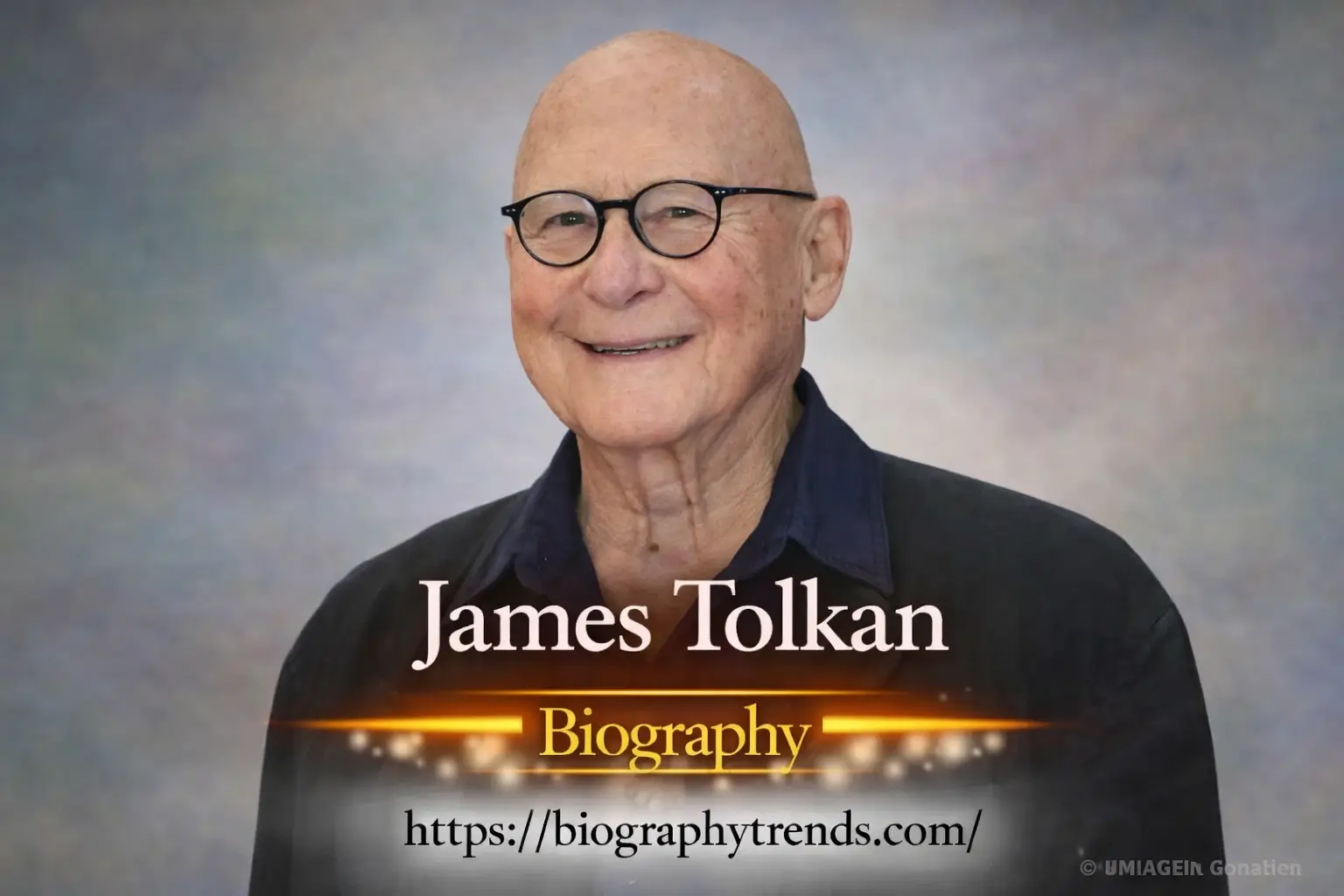
Stewart James Tolkan biography: a legendary American character actor known for his commanding voice, intense presence, and unforgettable roles as strict authority figures in Hollywood films. With a career spanning over five decades, Tolkan became widely recognized for playing Vice Principal Gerald Strickland in the Back to the Future trilogy and Commander Tom “Stinger” Jardian in Top Gun. He passed away peacefully on March 26, 2026, in Saranac Lake, New York, at the age of 94, leaving behind a legacy that shaped generations of film lovers and influenced the very archetype of the tough, no nonsense authority figure in American cinema.
This comprehensive biography explores every aspect of James Tolkan’s remarkable life and career, from his humble beginnings in a small Michigan mining town through his service in the United States Navy during the Korean War, his rigorous training at the legendary Actors Studio under Stella Adler and Lee Strasberg, his decades of work on Broadway and in television, and his iconic film roles that made him a pop culture icon. We examine his complete filmography, his personal life, his estimated net worth, and the lasting impact of his performances on generations of viewers who grew up hearing him bark “slackers” and declare that egos were writing checks that bodies could not cash.
Who Was James Tolkan?
James Tolkan was one of Hollywood’s most recognizable character actors, even if many people did not immediately know his name. He specialized in playing strict authority figures, military officers, police officials, and tough antagonists. His sharp delivery and intimidating screen presence made him the perfect choice for roles that demanded discipline, control, and intensity. With his bald head, beady intense eyes, wiry compact muscular build, gruff high decibel voice, and aggressive confrontational demeanor, Tolkan carved out a unique niche in American cinema as the go to actor for roles requiring a formidable, no nonsense authority figure.
Tolkan’s physical appearance was as distinctive as his acting style. Short and bald, with an intense gaze that could make even established stars like Tom Cruise and Al Pacino appear to struggle to stand toe to toe with him in scenes, Tolkan brought an undeniable presence to every frame he occupied. His voice was gruff, jarring, and delivered at high volume, cutting through dialogue and demanding attention. This combination of visual and vocal intensity made him unforgettable even in supporting roles, and directors quickly learned that casting Tolkan meant giving their films an instant injection of gravitas and tension.
What set Tolkan apart from other character actors was his ability to dominate scenes without being the lead. Frequently billed far down on the cast list, he immediately captured audiences’ attention through his fire breathing delivery and demeanor. Actors ranging from Al Pacino and Tom Cruise to Joe Mantegna and J.T. Walsh did their best to stand toe to toe with him in a scene and not get singed. This was not merely a matter of volume or aggression; Tolkan brought a sense of lived in authenticity to his roles that suggested genuine authority rather than theatrical bluster.
Tolkan’s career trajectory reflected both the opportunities and limitations available to character actors in mid to late twentieth century Hollywood. While he never achieved leading man status, he became one of the busiest supporting players in the industry, working consistently across film, television, and theater for more than five decades. His body of work includes appearances in some of the most beloved and successful films of the 1980s, as well as extensive television credits and a significant stage career that included the original Broadway production of David Mamet’s Glengarry Glen Ross.
James Tolkan Biography: Early Life and Family Background
James Stewart Tolkan was born on June 20, 1931, in Calumet, Michigan, a small copper mining town in the Upper Peninsula. His father, Ralph M. Tolkan, worked as a cattle dealer, providing the family with a modest but stable income. His mother was Margery Sibola. Tolkan’s heritage was a rich blend of Russian Jewish on his paternal side and Finnish on his maternal side, giving him a multicultural background that was common in the immigrant communities of early twentieth century Michigan but relatively rare in the Hollywood of his era.
After his parents separated, Tolkan moved between cities before eventually settling in Arizona. This early experience of displacement and adaptation likely contributed to the resilience and self reliance that would characterize his later career. The move to Arizona placed him in a completely different environment from the cold, industrial Upper Peninsula, exposing him to desert landscapes and a different pace of life. These formative experiences of change and movement may have prepared him for the nomadic lifestyle of an actor, constantly moving between locations for work.
Growing up in the 1930s and 1940s, Tolkan experienced the Great Depression and World War II as background conditions of his childhood. The economic hardships of the era, combined with his parents’ separation, would have instilled in him a sense of discipline and practicality that later became hallmarks of both his personality and his screen persona. The Finnish side of his heritage, with its cultural emphasis on stoicism and hard work, may have reinforced these traits.
Tolkan’s early life in Calumet and Arizona was far removed from the world of entertainment. There was no family connection to show business, no childhood exposure to theater or film that might have predicted his future career. His path to acting was not paved by privilege or connections but by determination, talent, and the kind of self directed ambition that would later define his characters. The small town origins that shaped his early years stood in stark contrast to the glamorous Hollywood world he would eventually inhabit, yet Tolkan never lost the grounded, no nonsense quality that came from his Michigan and Arizona roots.
James Tolkan Biography: Education and Military Service
James Tolkan’s educational journey was as varied and determined as his later acting career. He attended Amphitheater High School in Arizona, from which he graduated in 1949. His athletic abilities earned him a football scholarship to Eastern Arizona College, where he continued his education while developing the physical discipline that would later serve him in demanding acting roles. The combination of academic study and athletic training during these years helped shape the disciplined, focused personality that became his trademark.
Before committing fully to an acting career, Tolkan served in the United States Navy during the Korean War. He served aboard the USS Sandoval, a naval vessel that participated in operations during this pivotal conflict. This military experience was transformative for Tolkan, developing the discipline and toughness that would later define both his personal character and his on screen persona. The structured environment of military service, with its emphasis on hierarchy, obedience, and chain of command, provided Tolkan with firsthand experience of the authority dynamics that he would later portray so convincingly in films like Top Gun and Back to the Future.
The Korean War was a brutal conflict that tested the resolve of every service member. Tolkan’s year long stint in the Navy exposed him to the realities of military life, including the rigid discipline, the physical demands, and the psychological pressures of serving in a combat zone. These experiences gave him an authenticity in military roles that actors without actual service could not replicate. When he later played Commander Stinger in Top Gun, barking orders at fighter pilots and demanding discipline, he was drawing on genuine understanding of military culture rather than theatrical imitation.
After leaving the Navy, Tolkan pursued acting with the same seriousness and commitment he had brought to his military service. He studied drama at the University of Iowa and Coe College, building a foundation in theatrical technique and dramatic theory. These academic studies provided him with the intellectual framework for his craft, complementing the practical discipline he had developed in the military. The combination of formal education and real world experience gave Tolkan a well rounded preparation for the challenges of a professional acting career.
James Tolkan Acting Training at the Legendary Actors Studio
After completing his college education, James Tolkan made one of the most consequential decisions of his life: he moved to New York City to pursue acting professionally. He arrived with very little money, reportedly just $75 in his pocket, and found himself living in a cold water flat where the rent equaled his VA check. This was the classic New York story of a young artist arriving with nothing but ambition and determination, and Tolkan embraced the struggle with the same grit that would later define his characters.
To survive financially while pursuing his acting dreams, Tolkan worked manual jobs on the docks. This physical labor provided income while also reinforcing the working class toughness that was already part of his persona. The contrast between his days of manual labor and his evenings of artistic study created a discipline and work ethic that would sustain him through the lean years of his early career.
The centerpiece of Tolkan’s New York training was his study at the legendary Actors Studio, the most prestigious acting school in the United States. There, he studied under two of the most influential acting coaches in American theater history: Stella Adler and Lee Strasberg. Adler was known for her emphasis on imagination and script analysis, while Strasberg pioneered Method acting, which focused on emotional memory and psychological realism. Training under both masters gave Tolkan a comprehensive toolkit of acting techniques that he would draw upon throughout his career.
At the Actors Studio, Tolkan trained alongside future stars like Warren Beatty and worked with Robert Duvall. This environment of intense artistic competition and collaboration pushed him to develop his craft to the highest level. The Actors Studio was not merely a school but a crucible where actors were forged through rigorous scene study, improvisation, and constant critique. Tolkan’s ability to hold his own in this environment, competing with some of the most talented young actors of his generation, was a testament to his dedication and natural ability.
The training Tolkan received at the Actors Studio emphasized authenticity and emotional truth over theatrical artifice. This approach, which became known as Method acting, required actors to draw upon their own experiences and emotions to create believable characters. For Tolkan, this meant channeling his military discipline, his working class background, and his own natural intensity into performances that felt real rather than performed. The result was a screen presence that audiences found genuinely intimidating and compelling, not because of exaggerated acting but because of underlying authenticity.
James Tolkan Biography: Early Career in Theater and Television (1960 to 1975)
Tolkan began his acting career in theater before transitioning to television and film. His television debut came in 1960 with an episode of Naked City, a groundbreaking police drama series that aired on ABC. This early appearance marked the beginning of a television career that would span more than five decades and include guest spots on some of the most popular shows in American television history.
During the 1960s and early 1970s, Tolkan spent many years building his craft through stage work. He performed on Broadway and in theater productions across New York, developing the live performance skills that would later translate so effectively to film and television. His stage credits included productions of Between Two Thieves, Wings, One Tennis Shoe, The Front Page, Twelve Angry Men, Full Circle, The Tempest, Golda, The Silent Partner, and the original 1984 Broadway production of David Mamet’s Glengarry Glen Ross. This extensive theater background gave Tolkan a foundation in classical acting technique and live performance that many film actors lack.
The transition from stage to screen was gradual for Tolkan. His early film work included roles in independently produced projects and small parts in major films. He made his film debut in The Three Sisters, a 1966 Actors Studio adaptation of Anton Chekhov’s play that featured an ensemble cast including Geraldine Page, Sandy Dennis, Kim Stanley, Shelley Winters, Kevin McCarthy, Robert Loggia, and James Olson. This prestigious debut connected him with some of the most respected actors of his generation and established him as a serious dramatic performer.
Throughout the 1960s and early 1970s, Tolkan continued to build his resume with television appearances and supporting film roles. He appeared in episodes of Armstrong Circle Theatre and N.Y.P.D., demonstrating his versatility across different genres and formats. These early years were characterized by the kind of steady, unspectacular work that defines most acting careers, with Tolkan gradually building a reputation as a reliable, intense performer who could be counted on to deliver memorable supporting performances.
James Tolkan Breakthrough Roles in the 1970s and Early 1980s
Tolkan gained significant attention through roles in major films directed by the legendary Sidney Lumet, one of the most respected directors in American cinema. His appearance in Serpico in 1973 marked a major step forward in his film career. In this gritty police drama starring Al Pacino, Tolkan played Lieutenant Steiger, a rabidly homophobic police lieutenant who falsely accuses the title character of a homosexual encounter in a men’s room. This role, though relatively small, showcased Tolkan’s ability to portray intense and morally complex characters with a sense of authenticity that elevated the material.
Serpico was a critical and commercial success that established Tolkan as an actor capable of holding his own alongside major stars like Al Pacino. The film’s gritty realism and social commentary aligned with Tolkan’s own no nonsense approach to acting, and his performance contributed to the film’s powerful impact. Working with Lumet, a director known for extracting intense, truthful performances from his actors, was a formative experience that influenced Tolkan’s approach to film acting.
In 1975, Tolkan appeared in Woody Allen’s Love and Death, playing both Napoleon Bonaparte and a look alike. This dual role demonstrated a range that went beyond the tough authority figures for which he would later become famous. Working with Allen, one of the most distinctive comedic voices in American cinema, showed that Tolkan could adapt his intensity to different tones and genres. The role of Napoleon required him to balance historical gravitas with comedic elements, a challenge he met with the same commitment he brought to dramatic roles.
Tolkan’s appearance in The Amityville Horror in 1979, playing the Coroner, added another genre to his resume. This blockbuster horror film, based on the supposedly true story of a haunted house, was one of the biggest hits of the year and introduced Tolkan to a massive mainstream audience. His brief but memorable appearance as the coroner who examines the victims of the DeFeo family murders added a note of official gravity to the supernatural proceedings.
The early 1980s brought Tolkan’s collaboration with Sidney Lumet on Prince of the City in 1981. In this critically acclaimed crime drama, Tolkan played District Attorney George Polito, a character based on real life District Attorney Thomas Puccio. This role showcased Tolkan’s ability to portray complex authority figures with moral ambiguity, a significant step beyond the one dimensional tough guys he was often asked to play. Prince of the City was another critical success for Tolkan and further established him as a character actor of serious dramatic ability.
James Tolkan Peak Career in the 1980s: Back to the Future and Top Gun
The 1980s became the defining decade of Tolkan’s career, with a string of iconic roles that made him a household name and secured his place in pop culture history. This period represented the culmination of more than two decades of steady work in theater, television, and film, with Tolkan finally achieving the widespread recognition that his talent deserved.
In 1983, Tolkan appeared in WarGames, directed by John Badham. In this Cold War thriller about a teenager who accidentally hacks into a military supercomputer, Tolkan played FBI Agent George Wigan, a fanatic law enforcement official who embodies the paranoid security mindset of the era. His performance added a layer of bureaucratic intensity to the film’s suspense, and his scenes with Matthew Broderick demonstrated his ability to intimidate even when playing ostensibly non villainous characters. WarGames was a major hit that introduced Tolkan to a new generation of moviegoers.
The year 1985 brought the role that would define Tolkan’s career and make him a pop culture icon. In Robert Zemeckis’s Back to the Future, Tolkan played Vice Principal Gerald Strickland at Hill Valley High School. Strickland was the ultimate cinematic authority figure: bald, severe, humorless, and relentlessly committed to discipline. His famous habit of calling students “slackers” became one of the most quoted lines in 1980s cinema, and his appearance in the film’s opening scenes, barking at Marty McFly about being a slacker, immediately established the character’s unforgettable persona.
Tolkan’s performance as Strickland was a masterclass in economy. He did not need elaborate dialogue or extended screen time to make an impression. A few barked lines, a stern glare, and his imposing physical presence were enough to create a character that audiences would remember for decades. The role was so effective that Zemeckis brought him back for both sequels, with Tolkan reprising Strickland in Back to the Future Part II in 1989 and playing the character’s grandfather, Marshal James Strickland, in Back to the Future Part III in 1990.
The Back to the Future trilogy gave Tolkan a level of fame that transcended his previous work. Fans would approach him for the iconic “slacker” line, which became nearly synonymous with his on screen persona. Tolkan himself acknowledged the role’s impact, telling Impulse Gamer that when they filmed the second and third movies, they had huge trailers and it was unbelievable. He described the experience as the most fun he had ever had doing a movie, a rare glimpse into the personal satisfaction he derived from his most famous role.
In 1986, Tolkan delivered what may be his most quoted single line in Top Gun, directed by Tony Scott. As Commander Tom “Stinger” Jardian, the commanding officer of the aircraft carrier USS Enterprise’s Carrier Air Wing, Tolkan barked at Tom Cruise’s Maverick: “Your ego is writing checks your body can’t cash.” This line became one of the most iconic quotes in action movie history and perfectly encapsulated Tolkan’s screen persona: the tough, experienced authority figure who cuts through bravado with hard truths.
Top Gun was a massive box office smash that made Tom Cruise a superstar and gave Tolkan another unforgettable character. His scenes with Cruise demonstrated the dynamic that made Tolkan so effective: he could make even the biggest stars appear to struggle to match his intensity. The film’s success ensured that Tolkan’s line would be quoted, referenced, and parodied for decades to come, cementing his status as a pop culture touchstone.
The late 1980s continued Tolkan’s prolific run with roles in Masters of the Universe in 1987, where he played Detective Hugh Lubic, a hard nosed police detective who eventually fights Skeletor’s forces. This role combined elements of his authority figure persona with action adventure elements, showing his versatility within his established type. In 1988, he had a rare leading role as Colonel William Tansey in the action thriller Viper, demonstrating that he could carry a film when given the opportunity.
James Tolkan Complete Filmography and Television Career
James Tolkan’s filmography spans more than five decades and includes appearances in some of the most significant films and television shows of his era. His complete film work includes the following notable entries:
In 1966, Tolkan made his film debut in The Three Sisters, an independently produced Actors Studio adaptation. In 1969, he appeared in Stiletto as Edwards. In 1971, he played Mr. Brown in They Might Be Giants. In 1973, he had roles in The Friends of Eddie Coyle as The Man’s Contact Man, The Werewolf of Washington as Dark Glasses, and Serpico as Lieutenant Steiger, credited as James Tolkin. In 1975, he played Napoleon Bonaparte in Woody Allen’s Love and Death and appeared as an Off Duty Cop in Abduction. In 1976, he played Thomas Paine in Independence, again credited as James Tolkin.
The late 1970s and early 1980s brought more significant roles. In 1979, he played the Coroner in The Amityville Horror. In 1981, he appeared as “Baldy,” the Medical Examiner in Wolfen and as District Attorney Polito in Prince of the City. In 1982, he had roles in Hanky Panky as a Conferee and in Author! Author! as Lieutenant Glass. In 1983, he played FBI Agent George Wigan in WarGames and provided the voice for The Bishop in the segment “The Bishop of Battle” in Nightmares.
The mid 1980s brought his most iconic roles. In 1984, he appeared as Maynard in Iceman and as Howard Simpson in The River. In 1985, he played Hanley in Turk 182 and Principal Gerald Strickland in Back to the Future, the role that would define his career. He also appeared as Turner in Walls of Glass. In 1986, he played Harry in Off Beat, Commander Tom “Stinger” Jardian in Top Gun, and Lou Brackman in Armed and Dangerous.
The late 1980s continued his prolific output. In 1987, he played Detective Hugh Lubic in Masters of the Universe and Mr. Bjornstead in Made in Heaven. In 1988, he had his rare leading role as Colonel William Tansey in Viper and played Benny Pistone in Split Decisions. In 1989, he appeared as Detective Joe Hanley in True Blood, as Captain Coolidge in Second Sight, reprised his role as Principal Gerald Strickland in Back to the Future Part II, played Colonel Freeman in Ministry of Vengeance, and appeared as a Judge in Family Business.
The early 1990s brought more film work. In 1990, he played Sal Nichols in Opportunity Knocks, reprised his role as Marshal James Strickland in Back to the Future Part III, and played “Numbers,” Big Boy Caprice’s accountant, in Dick Tracy. In 1991, he appeared as “Patch” in Hangfire, as Vince in Trabbi Goes to Hollywood, and as Mr. Thorn in Problem Child 2. In 1992, he played Agent Sterling in Bloodfist IV: Die Trying, a direct to video release. In 1993, he played Senior US Treasury Agent Jerry Levitt in Boiling Point.
The mid to late 1990s saw Tolkan continuing to work steadily. In 1996, he appeared as Dan “Iceberg” Eagan in Underworld and as Quon in Robo Warriors, another direct to video release. In 1999, he hosted Wings: Thrill of Flight. In 2004, he played “Dutch” in Seven Times Lucky. In 2006, he appeared as Thomas Knight Sr. in Heavens Fall. His final film role came in 2015 when he played The Pianist in Bone Tomahawk. In 2024, he appeared as himself in the documentary Tom Wilson: Humbly Super Famous. In 2025, he made an uncredited appearance as Principal Gerald Strickland in BTTF Project 85: The Back to the Future Fan Remake, reprising his most famous role one last time.
Tolkan’s television career was equally extensive. His television debut came in 1960 with an episode of Naked City titled “The Man Who Bit a Diamond in Half,” where he played Evan Humboldt. In 1962, he appeared in Armstrong Circle Theatre as Stefan Malwitz in the episode “The Man Who Refused to Die.” In 1969, he played McCloud in an episode of N.Y.P.D. titled “The Night Watch.”
The 1980s brought more prominent television work. In 1983, he appeared in American Playhouse as Billy in the episode “Wings.” In 1985, he played Coach Beasley in an episode of Hill Street Blues titled “Queen for a Day.” From 1985 to 1986, he played Lester Mintz in 13 episodes of Mary. From 1985 to 1987, he had a recurring role as Norman Keyes in five episodes of Remington Steele, appearing in episodes titled “Diced Steele,” “Forged Steele,” “Bonds of Steele,” and “The Steele That Wouldn’t Die” in two parts.
In 1986, he appeared in the television film Little Spies as The Kennel Master. In 1987, he played Mason Mather in the Miami Vice episode “Amen … Send Money.” In 1988, he appeared in the television film Weekend War as Dr. Alex Thompson and in Leap of Faith as Dr. Siegel. In 1989, he played Ruger in The Equalizer episode “The Visitation” and appeared as Lieutenant Ed Henderson in the television film The Case of the Hillside Stranglers.
The early 1990s brought more television roles. In 1990, he played Ray Parker in the Sunset Beat episode “One Down, Four Up” and appeared as Dr. Oates and Dr. Bloat in The Fresh Prince of Bel Air episode “Day Damn One.” In 1991, he played Sergeant McClaine in the Tales from the Crypt episode “The Trap.” In 1992, he appeared in Tequila and Bonetti in the episode “Fetch This, Pal,” played Lieutenant Tonelli in the television film Sketch Artist, and appeared as Mike Ragland in The Hat Squad episode “The Widow Marker.” He also provided the voice of a Civil Defense Warden in the Back to the Future animated series episode “Marty McFly PFC.”
In 1993, he played Coach Silva in The Wonder Years episode “Hulk Arnold.” From 1993 to 1994, he had a major television role as Dallas Cassel in 22 episodes of Cobra. In 1994, he appeared as Joe Maloney in the television film Beyond Betrayal. In 1995, he reprised his role as Lieutenant Tonelli in Sketch Artist II: Hands That See. In 1996, he played Commander Cyrus Quinn in the Nowhere Man episode “Heart of Darkness” and appeared as Coach Phillips in the Early Edition episode “Hoops.”
In 1997, he appeared as Agent Price in the television film Love in Ambush and played FBI Special Agent Korkos in The Pretender episode “Dragon House.” From 2001 to 2002, he had his most substantial television role in A Nero Wolfe Mystery, appearing in 14 episodes playing multiple characters including Richard Wragg, Mr. Hackett, Bernard Quest, W.J., Mr. Joseph Pitcairn, Percy Ludlow, Avery Ballou, Loftus the Dog Expert, Leo Bingham, Adrian Dart, Benedict Aiken, Ben Jenson, and Ed Graboff. He also directed two episodes of the series, “Die Like a Dog” and “The Next Witness.”
In 2011, he appeared as Dean Chesny in the Leverage episode “The Cross My Heart Job.” In 2013, he played Judge Larry Fidler in the television film Phil Spector. In 2021, he appeared in Expedition: Back to the Future as both Strickland and a Guard in one episode, reprising his most famous role for a documentary series.
James Tolkan Biography: Personal Life, Marriage, and Private Character
James Tolkan biography: he kept his personal life mostly private, focusing on his career and maintaining a low public profile. He was known for discipline and professionalism both on and off the set, qualities that endeared him to directors and fellow actors alike. Unlike many actors who seek publicity and personal branding, Tolkan allowed his work to speak for itself, rarely giving interviews about his private life or engaging with the celebrity media machine.
Tolkan was married to Pamela Brown Tolkan, an actress in her own right. The couple’s marriage was a significant part of his personal life, though they kept their relationship out of the public eye. According to The New York Times, Pamela Welles married the actor in 1971, as reported in an August 29, 1971 announcement. Their marriage lasted until Pamela’s death, representing a long term commitment that paralleled Tolkan’s dedication to his craft.
When not acting, Tolkan spent his spare time collecting folk art. This hobby revealed a side of his personality that contrasted with his intimidating screen persona. Folk art collecting suggests an appreciation for handmade, authentic objects created outside the mainstream art world, a pursuit that aligns with Tolkan’s own status as a working actor who built his career through steady effort rather than stardom. The contrast between his tough on screen image and his off screen interest in folk art illustrates the complexity of his character.
Tolkan’s personal character was defined by the same discipline and intensity that he brought to his roles. Colleagues described him as focused, professional, and deeply committed to his craft. He did not seek the spotlight or cultivate a public persona beyond his work. This approach to fame was increasingly rare in an era of celebrity culture, where actors are expected to be brands as much as performers. Tolkan’s refusal to play this game was both a personal choice and a reflection of his generation’s approach to acting as a craft rather than a pathway to fame.
In his later years, Tolkan lived in the Lake Placid area of New York, a region known for its natural beauty and outdoor recreation. This location, far from the entertainment centers of Los Angeles and New York, reflected his preference for a quiet life away from the industry. The Adirondack Mountains provided a peaceful setting for his retirement, and it was in this region that he spent his final years.
James Tolkan Death and Legacy in 2026
James Tolkan passed away peacefully on March 26, 2026, in Saranac Lake, New York. He was 94 years old. His death was announced on the official Back to the Future website, which stated that he died peacefully in Saranac Lake. The cause of death was not publicly disclosed, though given his age, it was likely due to natural causes.
The news of Tolkan’s death was reported by major entertainment media outlets including The Hollywood Reporter, Variety, Rolling Stone, and The New York Times. These obituaries emphasized his iconic roles and his impact on popular culture, with most headlines highlighting his performances in Back to the Future and Top Gun. The coverage reflected the widespread recognition that Tolkan had achieved, even if many viewers knew his face and voice better than his name.
The response to Tolkan’s death on social media and in fan communities was immediate and heartfelt. Generations of viewers who had grown up with his performances expressed their appreciation for the characters he had created. The “slacker” line from Back to the Future and the “ego writing checks” line from Top Gun were quoted thousands of times in tribute posts. Fans shared clips of his most memorable scenes, creating a digital memorial that introduced his work to viewers who might not have known his name but recognized his face.
Tolkan’s legacy is defined by his unique ability to dominate the screen in supporting roles. He defined the “strict authority” character type in 1980s cinema, creating a template for tough, no nonsense authority figures that influenced generations of actors who followed. His delivery of iconic movie quotes ensured that his voice would continue to echo in popular culture long after his death. He became a staple of 1980s Hollywood, appearing in some of the decade’s biggest and most beloved films.
Even without always playing lead roles, Tolkan became unforgettable. His impact on film history is measured not in starring roles or awards but in the indelible impression he left on audiences. The characters he created, particularly Strickland and Stinger, have become part of the cultural lexicon, referenced and parodied in countless films, television shows, and online content. His ability to create fully realized characters in limited screen time was a rare gift that few actors possess.
The 2024 documentary Tom Wilson: Humbly Super Famous, in which Tolkan appeared as himself, provided a final opportunity for audiences to see him reflecting on his career. His appearance in the 2025 fan remake BTTF Project 85: The Back to the Future Fan Remake, where he reprised his role as Principal Strickland one last time, served as a fitting final bow for an actor whose most famous character had become synonymous with his identity.
James Tolkan Net Worth and Financial Legacy
James Tolkan’s exact net worth was not officially confirmed during his lifetime, and his estate has not publicly disclosed financial details following his death. However, estimates based on his long career and consistent work place his net worth between $1 million and $5 million at the time of his passing.
Tolkan’s income sources included film acting, television roles, and theater performances. Over a career spanning more than five decades, he appeared in dozens of films and television shows, as well as numerous stage productions. While he never commanded the multimillion dollar salaries of leading stars, his consistent work as a character actor provided a steady income that accumulated over time.
The films in which Tolkan appeared were among the most successful of their eras. Back to the Future grossed over $380 million worldwide, Top Gun grossed over $356 million worldwide, and WarGames grossed over $125 million worldwide. While Tolkan’s earnings from these blockbusters would have been modest compared to the lead actors, his participation in such successful films likely provided residuals and royalties that contributed to his financial stability.
Tolkan’s television work, including his recurring roles on series like Remington Steele, Mary, Cobra, and The Hat Squad, as well as his extensive guest appearances on popular shows, provided additional income streams. Television residuals, while often smaller than film residuals, accumulate over time and can provide significant income for actors with extensive credits.
His stage work, including the original Broadway production of Glengarry Glen Ross, would have provided income during his New York years and contributed to his artistic reputation. Broadway salaries vary widely, but appearing in a successful original production like Glengarry Glen Ross would have been financially rewarding as well as artistically significant.
In his later years, Tolkan’s income would have been supplemented by convention appearances, autograph signings, and fan events related to Back to the Future and Top Gun. These appearances, while not publicly documented in detail, are standard income sources for actors associated with beloved franchises. The enduring popularity of both films ensured that Tolkan remained in demand for such events throughout his later life.
James Tolkan Acting Style and Artistic Approach
James Tolkan’s acting style was as distinctive as his physical appearance. He brought a combination of Method acting technique, learned at the Actors Studio under Stella Adler and Lee Strasberg, with a natural intensity that could not be taught. The result was a screen presence that felt authentic rather than performed, intimidating rather than theatrical.
Tolkan’s approach to authority figures was particularly nuanced. Rather than playing these roles as simple villains or comic foils, he imbued them with a sense of genuine conviction. His Strickland believed absolutely in the importance of discipline and hard work. His Stinger was genuinely concerned about the safety of his pilots and the success of his mission. This underlying sincerity made his characters more than caricatures; they were fully realized people whose strictness came from a place of principle rather than mere nastiness.
The physicality of Tolkan’s performances was a key element of his style. His compact, muscular build and intense gaze created an immediate visual impression of strength and determination. He used his body economically, with minimal wasted movement, suggesting the same efficiency and discipline that his characters demanded from others. This physical control was likely influenced by his military service and athletic background, which taught him the value of disciplined movement and posture.
Tolkan’s voice was perhaps his most distinctive tool. Gruff, high decibel, and delivered with sharp precision, his voice cut through scenes and demanded attention. He did not shout for effect; he spoke with a volume and intensity that conveyed absolute authority. This vocal approach made his lines memorable even when the dialogue itself was relatively simple. The word “slacker” became iconic not because of the word itself but because of the way Tolkan spat it out, investing it with contempt and conviction.
His ability to hold the screen in limited screen time was a particular gift. Tolkan understood that in supporting roles, impact matters more than duration. He made every moment count, creating complete character impressions in scenes that might last only a few minutes. This efficiency was the result of his theater training, where actors learn to establish character quickly and maintain focus throughout a performance.
James Tolkan Influence on Pop Culture and Generations of Viewers
James Tolkan’s influence on popular culture extends far beyond his individual performances. He helped define the visual and emotional language of the 1980s authority figure, creating a template that has been referenced, parodied, and imitated countless times in the decades since his most famous films were released.
The “slacker” line from Back to the Future became a generational touchstone. For viewers who came of age in the 1980s and 1990s, Tolkan’s barked delivery of this single word encapsulates the entire experience of high school authority. The word has been referenced in countless films, television shows, and internet memes, often without attribution because it has become so deeply embedded in popular consciousness that many people forget its origin.
Similarly, “Your ego is writing checks your body can’t cash” from Top Gun has become one of the most quoted lines in action movie history. The line’s enduring popularity reflects both its inherent wit and Tolkan’s unforgettable delivery. It has been referenced in sports commentary, political discourse, and casual conversation, often by people who may not even know they are quoting a movie. This kind of cultural penetration is the mark of a truly iconic performance.
Tolkan’s influence on other actors is less visible but equally significant. His approach to authority figures, combining physical intimidation with underlying sincerity, has been studied and emulated by generations of character actors. The type of tough but principled authority figure that Tolkan perfected can be seen in the work of countless actors who followed him, from J.K. Simmons in Whiplash to various military and police characters in contemporary film and television.
The visual iconography of Tolkan’s characters has also left a mark. The bald head, severe expression, and dark suits of Strickland became a visual shorthand for school authority that has been referenced in films, television, and animation. Similarly, Stinger’s naval uniform and intense stare created an image of military leadership that remains influential. These visual elements, combined with Tolkan’s vocal delivery, created complete character packages that could be recognized and referenced with minimal context.
James Tolkan and the Art of the Character Actor
James Tolkan’s career exemplifies the art and craft of the character actor, a role in the entertainment industry that is essential to the success of films and television shows but often receives less recognition than leading roles. Character actors like Tolkan provide the supporting structure that allows stories to function, creating believable worlds through their consistent, authentic performances.
The character actor’s job is different from that of the leading man or woman. While stars carry the narrative and emotional weight of a film, character actors create the environment in which the story takes place. They establish the rules, norms, and power dynamics of the fictional world through their performances. Tolkan’s authority figures did more than advance the plot; they established the social and institutional context that made the stories believable.
Tolkan’s success as a character actor was built on specialization. Rather than attempting to play every type of role, he focused on the authority figure niche and became one of the best in the business at portraying tough, disciplined, no nonsense characters. This specialization allowed him to develop a deep understanding of the type, bringing nuance and variation to roles that might otherwise have been one dimensional.
The consistency of Tolkan’s work was another hallmark of his character actor status. Directors and casting agents knew exactly what they would get when they hired him: a professional, intense, reliable performance that would elevate whatever scene he was in. This reliability made him a valuable asset in an industry where unpredictability can derail productions. Over five decades, Tolkan built a reputation for delivering exactly what was needed, every time.
The financial reality of character acting is often modest compared to stardom, but Tolkan’s long career demonstrates that it can be sustainable and rewarding. By working steadily across film, television, and theater, he built a body of work that provided both artistic satisfaction and financial stability. His estimated net worth of $1 million to $5 million reflects a successful career built on craft rather than celebrity.
James Tolkan and the Back to the Future Legacy
The Back to the Future trilogy represents the most significant element of James Tolkan’s legacy, and his contribution to these films deserves detailed examination. His role as Vice Principal Gerald Strickland in the first two films and as Marshal James Strickland in the third film created a character that has become inseparable from the franchise’s identity.
In Back to the Future (1985), Strickland appears in the opening scenes, establishing the rules and atmosphere of Hill Valley High School with his barked commands and contempt for “slackers.” This early appearance sets the tone for the entire film, creating a sense of institutional authority against which Marty McFly’s rebellious energy can play. Strickland’s presence in the 1955 sequences, where he appears as a younger version of himself with the same harsh demeanor, suggests that this authority is timeless, unchanged across generations.
The character’s evolution across the trilogy is subtle but significant. In Back to the Future Part II (1989), Strickland appears in the dystopian 1985 sequence, where unnamed gang members attack him and he returns fire while again using the term “slacker.” This darker version of the character reflects the film’s exploration of how circumstances can corrupt even established institutions. Tolkan’s performance in this sequence adds a note of genuine tragedy to the comic adventure, suggesting that the strict authority figure has become a victim of the very chaos he once fought to prevent.
In Back to the Future Part III (1990), Tolkan played Marshal James Strickland, the character’s grandfather in the Old West setting. This role allowed him to explore the historical roots of the Strickland persona, suggesting that the family’s commitment to law and order stretched back generations. The Western setting also gave Tolkan an opportunity to work in a different genre while maintaining the core elements of his character. His performance as the marshal added gravitas to the film’s Western sequences and provided a satisfying conclusion to the Strickland family saga.
Tolkan’s contribution to the Back to the Future animated series, where he voiced an unnamed Civil Defense Warden in the 1992 episode “Marty McFly PFC,” extended his association with the franchise into new media. This voice role demonstrated his versatility and his willingness to continue engaging with the character that had made him famous. His final appearance as Strickland in the 2025 fan remake BTTF Project 85: The Back to the Future Fan Remake, at the age of 93, represented a remarkable final chapter in his relationship with the character.
James Tolkan and Top Gun: The Stinger Legacy
Top Gun (1986) gave James Tolkan his other iconic role and what may be his most quoted single line. As Commander Tom “Stinger” Jardian, Tolkan created a military authority figure who was tough, principled, and genuinely concerned about the safety and success of his pilots. This was not a simple villain or obstacle for the hero to overcome but a complex character who represented the institutional values of the United States Navy.
Tolkan’s scenes in Top Gun are brief but pivotal. His confrontation with Maverick, where he delivers the famous “Your ego is writing checks your body can’t cash” line, establishes the central conflict of the film: the tension between individual ambition and institutional discipline. This line encapsulates the entire theme of the movie in a single, memorable sentence, and Tolkan’s delivery makes it unforgettable. The line has been quoted so widely that it has transcended its origins to become a general idiom for overconfidence.
The character of Stinger was significant because he represented a different type of authority figure from Strickland. While Strickland was a civilian authority dealing with teenagers, Stinger was a military commander responsible for the lives of fighter pilots. Tolkan brought a different tone to this role, suggesting the weight of command and the seriousness of military responsibility. His Stinger was not merely angry or strict; he was deeply concerned about the consequences of Maverick’s reckless behavior.
The success of Top Gun, which grossed over $356 million worldwide and became one of the defining films of the 1980s, ensured that Tolkan’s performance would be seen by massive audiences. The film’s continued popularity through home video, cable television, and streaming has introduced new generations to his work. The 2022 sequel Top Gun: Maverick, while not featuring Tolkan, reignited interest in the original film and brought his performance back into public conversation.
Tolkan’s own reflections on Top Gun and his other iconic roles were characteristically modest. He rarely gave extensive interviews about his work, preferring to let the performances speak for themselves. When he did discuss his roles, he emphasized the fun and professionalism of the productions rather than his own contributions. This humility was consistent with his overall approach to his career and public life.
James Tolkan Later Career and Final Years
After the peak of his film career in the 1980s, Tolkan continued to work steadily in television and occasional film roles throughout the 1990s and 2000s. His most significant late career work came in A Nero Wolfe Mystery (2001 to 2002), where he appeared in 14 episodes playing more than a dozen different characters. This role showcased his range and versatility, demonstrating that he could play roles beyond the tough authority figure type that had made him famous. He also directed two episodes of the series, “Die Like a Dog” and “The Next Witness,” revealing a talent for behind the camera work that he had not previously displayed.
The 1990s brought roles in films like Boiling Point (1993), where he played Senior US Treasury Agent Jerry Levitt, and Underworld (1996), where he appeared as Dan “Iceberg” Eagan. While these films did not achieve the same level of success as his 1980s work, they demonstrated Tolkan’s continued employability and his ability to adapt his persona to changing cinematic styles.
In the 2000s and 2010s, Tolkan’s output slowed as he entered his seventies and eighties, but he continued to work when roles were available. His appearance in Seven Times Lucky in 2004 and Heavens Fall in 2006 showed that directors still valued his presence. His final film role in Bone Tomahawk in 2015, where he played The Pianist, was a fitting conclusion to his film career, appearing in a critically acclaimed Western that echoed the genre of his final Back to the Future role.
In his later years, Tolkan lived in the Lake Placid area of New York, enjoying the natural beauty and quiet lifestyle of the Adirondack region. This location, far from the entertainment industry centers, reflected his lifelong preference for privacy and his disinterest in the celebrity aspects of acting. He spent his time collecting folk art and enjoying the peaceful surroundings of upstate New York.
The 2024 documentary Tom Wilson: Humbly Super Famous provided a late opportunity for Tolkan to appear as himself, reflecting on his career alongside his Back to the Future co star. This appearance, along with his 2025 fan remake cameo, demonstrated that even in his nineties, Tolkan remained connected to the work that had defined his life.
READ ALSO:
- Joy White Biography: Age, Career & Life story, Who Is Bob Lazar & Wife?
- Bob Lazar Biography 2026: Age, Area 51 S4 Claims, Element 115, Net Worth & the New Film
- Peller Biography: Real Name, Age, Net Worth, Jarvis & TikTok Career of Habeeb Hamzat
- Péter Magyar Biography: Age, TISZA Party, Political Career & Net Worth 2026
- Atty. Michael Poa Biography: Age, Career, Education, Wife & Net Worth 2026
James Tolkan in 2026: Tributes and Remembrance
The announcement of James Tolkan’s death on March 26, 2026, prompted an outpouring of tributes from fans, fellow actors, and the entertainment industry. The official Back to the Future website, which broke the news, described him as having died peacefully in Saranac Lake, New York, at the age of 94. This announcement was quickly picked up by major media outlets including The Hollywood Reporter, Variety, Rolling Stone, and The New York Times, all of which published obituaries emphasizing his iconic roles and lasting impact.
The response on social media was immediate and heartfelt. Fans shared clips of his most memorable scenes, quoted his famous lines, and expressed gratitude for the characters he had created. The “slacker” and “ego writing checks” lines were posted thousands of times across platforms, often accompanied by personal stories about how his performances had impacted viewers’ lives. For many fans, Tolkan’s death marked the passing of a piece of their childhood, a connection to the films that had shaped their understanding of cinema and storytelling.
Fellow actors and industry professionals also paid tribute. Co stars from his various films and television shows shared memories of working with him, universally describing him as professional, disciplined, and generous. Directors recalled his reliability and his ability to elevate scenes with minimal direction. The consistency of these tributes, across decades and different projects, confirmed what his career had demonstrated: James Tolkan was a consummate professional whose work ethic and talent made him respected by everyone who worked with him.
The entertainment industry recognized Tolkan’s passing as the end of an era. He was one of the last links to the golden age of 1980s Hollywood, a period that produced some of the most beloved and influential films in American cinema history. His death, following those of other iconic figures from the era, prompted reflections on the passing of time and the enduring power of the films that defined a generation.
For the Back to the Future and Top Gun fan communities, Tolkan’s death was particularly significant. These communities, which remain active decades after the films’ releases, had long celebrated his contributions to their favorite movies. Memorials and tribute events were organized, with fans gathering to watch his films and share their appreciation for his work. The enduring popularity of these franchises ensured that Tolkan’s legacy would continue to be celebrated by new generations of fans who discovered his work through streaming, cable, and home video.
Frequently Asked Questions About James Tolkan
Who was James Tolkan?
James Tolkan was an American character actor known for playing strict authority figures in films and television. He was best known for his roles as Vice Principal Strickland in the Back to the Future trilogy and Commander Stinger in Top Gun.
How old was James Tolkan when he died?
He was 94 years old. He was born on June 20, 1931, and died on March 26, 2026.
What is James Tolkan famous for?
He is best known for Back to the Future and Top Gun. His roles as Mr. Strickland and Commander Stinger made him a pop culture icon.
When did James Tolkan die?
He died on March 26, 2026, in Saranac Lake, New York.
What was James Tolkan’s most famous role?
Vice Principal Strickland in Back to the Future is widely considered his most famous role, though Commander Stinger in Top Gun is equally iconic.
What was James Tolkan’s most famous line?
His most quoted line is “Your ego is writing checks your body can’t cash” from Top Gun. His delivery of the word “slackers” in Back to the Future is also extremely famous.
Where was James Tolkan born?
He was born in Calumet, Michigan, United States.
Did James Tolkan serve in the military?
Yes, he served in the United States Navy during the Korean War aboard the USS Sandoval.
Where did James Tolkan study acting?
He studied at the Actors Studio in New York City under legendary coaches Stella Adler and Lee Strasberg.
What was James Tolkan’s net worth?
His estimated net worth was between $1 million and $5 million, derived from his long career in film, television, and theater.
Was James Tolkan married?
Yes, he was married to Pamela Brown Tolkan until her death.
What was James Tolkan’s final role?
His final film role was as The Pianist in Bone Tomahawk in 2015. He made an uncredited appearance as Principal Strickland in BTTF Project 85: The Back to the Future Fan Remake in 2025.
Did James Tolkan direct any films or shows?
He directed two episodes of A Nero Wolfe Mystery in 2001 to 2002: “Die Like a Dog” and “The Next Witness.”
What was James Tolkan’s heritage?
His heritage was Russian Jewish on his paternal side and Finnish on his maternal side.
Where did James Tolkan live in his later years?
He lived in the Lake Placid area of New York, in the Adirondack Mountains region.
Conclusion: James Tolkan Biography
James Tolkan was a powerful and unforgettable presence in Hollywood. From his military background to his decades long acting career, he brought discipline, intensity, and authenticity to every role he played. His performances in Back to the Future and Top Gun alone secured his place in film history, ensuring that his legacy will continue to live on through the characters he brought to life.
Tolkan’s career represents the very best of what a character actor can achieve. He never sought stardom or celebrity but instead focused on the craft of acting, building a body of work that is remarkable for its consistency, quality, and impact. His ability to create memorable, fully realized characters in limited screen time was a rare gift that few actors possess. The authority figures he portrayed were not simple stereotypes but complex individuals whose strictness came from genuine principle and concern.
The legacy of James Tolkan extends beyond his individual performances to the very archetype of the tough, no nonsense authority figure in American cinema. He defined this type for a generation of filmmakers and viewers, creating a template that has been referenced, parodied, and imitated countless times. His voice, his physical presence, and his intensity have become part of the cultural lexicon, recognized even by those who may not know his name.
At 94 years old, James Tolkan lived a full life that spanned some of the most significant periods in American history, from the Great Depression through the Korean War, the golden age of American cinema, the blockbuster revolution of the 1980s, and the digital transformation of the entertainment industry. Through all of these changes, he remained true to his craft and his character, building a career on discipline, professionalism, and undeniable talent.
His death on March 26, 2026, marked the end of an era, but his work remains as vibrant and impactful as ever. New generations of viewers continue to discover Back to the Future and Top Gun, encountering his performances for the first time and understanding why he became such an iconic figure. The characters he created, the lines he delivered, and the presence he brought to every frame will continue to shape popular culture for generations to come.
James Tolkan was not a star in the conventional sense, but he was something rarer and more valuable: a true craftsman whose work will endure. In an industry often obsessed with fame and celebrity, he built a legacy on the simple, profound act of doing his job exceptionally well. That legacy, secured by two words barked at a generation of slackers and one line about egos writing checks, will outlast the fame of many who received more recognition in their lifetimes. James Tolkan may have played authority figures, but his true authority came from his art, and that authority will never diminish.