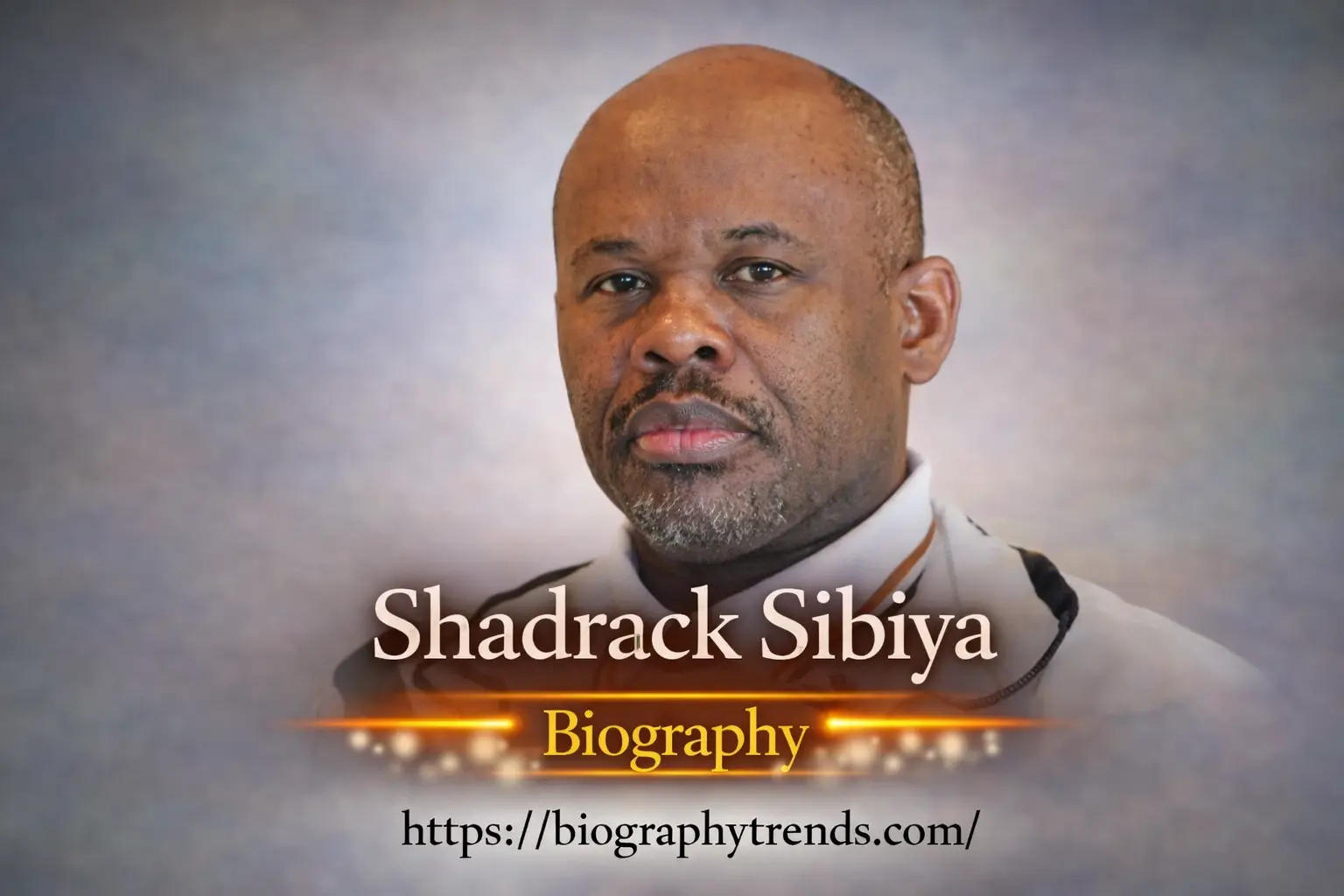
Shadrack Sibiya is a South African law enforcement official known for his long standing service and influential roles within the South African Police Service. Over the course of his career, he has become a notable figure in the country’s policing and intelligence structures, particularly for his involvement in crime investigation, intelligence operations, and strategic law enforcement activities. He is widely recognized for holding senior positions within SAPS, where he was entrusted with responsibilities that required a high level of discipline, confidentiality, and decision making authority.
However, his career has attracted significant public attention due to various controversies and legal challenges linked to his work in law enforcement. In 2025, Lieutenant General Shadrack Sibiya was suspended from his position as Deputy National Commissioner for Crime Detection in the South African Police Service due to allegations of interference in sensitive police investigations, links to drug cartel bosses, and the disbandment of the Political Killings Task Team. His case has become one of the most significant policing scandals in South African history, involving parliamentary testimony, court litigation, state commissions of inquiry, and a dramatic raid on his home by elite police units.
This comprehensive biography explores every aspect of Shadrack Sibiya’s life and career, from his early years in Johannesburg through his decades of service in the South African Police Service, his rise to lead the Gauteng Hawks, his dismissal and reinstatement, his appointment as Deputy National Commissioner, and the explosive scandal that has placed him at the center of South Africa’s law enforcement crisis in 2026.
Table of Contents
ToggleWho Is Shadrack Sibiya?
Shadrack Sibiya is a South African police officer whose name has become synonymous with both the achievements and the controversies of modern South African law enforcement. A Lieutenant General who rose from student constable to one of the five most senior police officials in the country, Sibiya’s career spans nearly four decades of service marked by operational excellence, political turbulence, dismissal, reinstatement, and ultimately suspension amid allegations of criminal collusion.
What makes Sibiya’s case particularly striking is the breadth and severity of the allegations against him. He has been accused of interfering with the Political Killings Task Team, disbanding a unit investigating politically motivated assassinations in KwaZulu Natal, redirecting 121 sensitive case dockets to his office without authorization, and maintaining improper relationships with alleged drug cartel bosses including Vusimusi Matlala and Katiso “KT” Molefe. A witness before the Madlanga Commission testified that Sibiya used him as a courier to collect cash from these cartel figures. Matlala allegedly gifted Sibiya 20 impalas, a lavish present that raises serious questions about the relationship between a senior police official and an alleged organized crime figure.
Sibiya’s suspension in July 2025 by National Commissioner Fannie Masemola came after explosive allegations by KwaZulu Natal Provincial Commissioner Lieutenant General Nhlanhla Mkhwanazi, who accused senior figures including Sibiya and Police Minister Senzo Mchunu of obstructing investigations and colluding with criminal syndicates. These allegations prompted President Cyril Ramaphosa to establish the Madlanga Commission of Inquiry into criminality, political interference, and corruption in the criminal justice system, and to place Minister Mchunu on special leave.
Sibiya has denied all allegations, testifying before Parliament in October 2025 that he has never been a rogue police officer and rejecting suggestions that he colluded with criminals. He has claimed that the campaign against him is politically motivated, designed to block his ambition to become National Commissioner of Police. The tension between these competing narratives, one of a corrupt cop who sold his badge to the highest bidder and another of a dedicated officer targeted by political enemies, defines the central drama of the Sibiya scandal.
Shadrack Sibiya Biography: Early Life and Background in Johannesburg
Shadrack Sibiya was born in 1967 in Johannesburg, South Africa, where he spent his early years in a society shaped by significant political, social, and economic transformation. His birth came during the height of the apartheid era, a period of institutionalized racial segregation and oppression that would shape every aspect of South African life for decades to come. Growing up in Johannesburg, the economic and political heartland of South Africa, Sibiya would have been exposed to the stark contrasts of apartheid society, the growing resistance movements, and the eventual transition to democracy.
Although detailed public information about his exact date of birth, hometown within Johannesburg, and family background is not widely available, his upbringing is believed to have played a meaningful role in shaping his character and future career path. Growing up in South Africa during a period marked by change and evolving governance structures, Sibiya was likely exposed to the realities of law enforcement, public safety, and the importance of maintaining order in a developing society. These broader societal influences often shape individuals who later choose careers in policing, where discipline, structure, and responsibility are essential.
From an early age, he is believed to have developed qualities such as determination, resilience, and a strong sense of duty. These traits are commonly associated with individuals who pursue careers in law enforcement, where the ability to handle pressure and make critical decisions is crucial. His early environment may also have contributed to his understanding of the role that policing plays in maintaining stability and protecting communities.
While specific details about his schooling and early academic experiences are not publicly documented, it is likely that his formative years included exposure to structured education and community values that emphasized responsibility and accountability. These foundational experiences would later support his transition into formal police training and professional development within the South African Police Service.
Despite the limited public record of his personal background, Shadrack Sibiya’s early life can be understood as a period that laid the groundwork for his future in law enforcement. His upbringing reflects a combination of discipline, awareness of societal issues, and a gradual development of the qualities required for a career in policing. His early life remains largely private, but it clearly contributed to shaping the mindset and values that guided his progression into one of South Africa’s notable law enforcement careers.
Shadrack Sibiya Biography: Education and Police Training
Shadrack Sibiya received his education in South Africa, where he developed the foundational knowledge and discipline that later supported his career in law enforcement. While specific details about the schools or institutions he attended are not widely available in public records, his academic journey is understood to have provided him with the basic intellectual framework required for public service and professional growth.
His transition into policing came through structured training within the South African Police Service, where formal education is combined with intensive practical instruction. This training is designed to equip officers with the necessary legal knowledge, operational skills, and ethical standards required to function effectively in law enforcement roles. Sibiya began his policing career in his early twenties as a student constable at the Hammanskraal Academy, the police training institution that has produced generations of South African law enforcement officers.
During his training and early professional development, Sibiya would have gained knowledge in key areas such as criminal law, investigative procedures, and the handling of evidence. These areas form the backbone of police work, ensuring that officers are capable of conducting lawful and effective investigations. In addition, he would have been trained in intelligence gathering and analysis, an area that later became central to his career.
Beyond technical knowledge, his education and training also focused on building critical thinking, decision making, and leadership skills. Law enforcement environments often require quick judgment and the ability to respond to complex situations, and these competencies are typically developed through both classroom instruction and real world experience.
A significant part of Sibiya’s professional education came from hands on fieldwork. Through years of active service, he gained practical experience in crime response, investigations, and operational coordination. This combination of formal training and on the job learning helped him develop a deeper understanding of policing systems and the challenges involved in maintaining public safety.
As he progressed in his career, additional training and exposure to specialized roles further enhanced his expertise, particularly in intelligence led policing and strategic operations. These experiences contributed to his ability to handle high level responsibilities and work within sensitive areas of law enforcement. Shadrack Sibiya’s education and training reflect a blend of formal instruction and practical experience, which together shaped his capabilities as a police official.
Shadrack Sibiya Career: From Student Constable to Lieutenant General
Shadrack Sibiya built a long and multifaceted career within the South African Police Service, rising through the ranks to become one of the most recognized figures in South Africa’s law enforcement and intelligence community. His professional journey reflects nearly four decades of service, operational experience, and involvement in both routine policing and high level investigative work.
Sibiya began his career in law enforcement at a foundational level, where he was introduced to the core responsibilities of policing. In these early stages, he was involved in general duties such as responding to incidents, maintaining public order, and assisting in basic investigations. This period allowed him to gain practical exposure to the realities of policing and develop an understanding of how law enforcement operates at the community level.
These early experiences were crucial in building his discipline, problem solving ability, and familiarity with legal procedures. They also laid the groundwork for his progression into more specialized roles within the police service.
As his experience grew, Sibiya moved into more advanced and specialized areas of policing, particularly in crime intelligence and investigative operations. These roles required a higher level of trust, as well as the ability to manage sensitive information and coordinate complex cases. His work in intelligence focused units involved gathering and analyzing information related to criminal activities, identifying patterns, and supporting efforts to prevent and disrupt organized crime.
One of the defining phases of Sibiya’s career came when he rose to senior positions within the Directorate for Priority Crime Investigation, commonly known as the Hawks. He commanded the Gauteng provincial branch of the Hawks and led the Commercial Crimes unit at the rank of Brigadier. The Hawks is South Africa’s elite anti corruption and organized crime investigation unit, and leading its Gauteng branch placed Sibiya at the forefront of the country’s most sensitive and high profile criminal investigations.
In these roles, he was responsible for supervising officers and coordinating team operations, overseeing high profile and sensitive investigations, contributing to strategic planning in crime prevention, managing resources and ensuring operational efficiency, and supporting intelligence driven policing initiatives. These responsibilities placed him in positions that required both administrative competence and operational expertise, highlighting his importance within the policing structure.
In 2015, Sibiya’s career took a dramatic turn when he was dismissed from the SAPS following allegations relating to the illegal rendition of Zimbabwean nationals during his time in the Hawks. The allegations concerned the unlawful deportation of Zimbabwean citizens who had been arrested in South Africa, a matter that raised serious questions about human rights and the rule of law. However, the Labour Court later found his dismissal procedurally and substantively unfair and ordered his reinstatement.
Following his reinstatement, Sibiya joined the City of Johannesburg as head of the Group Forensic and Investigation Services, commonly known as GFIS. In this role, he led anti corruption investigations in local government, applying his investigative expertise to combating fraud and corruption in South Africa’s largest municipality. His work at GFIS demonstrated his continued commitment to fighting organized crime and corruption, even outside the formal SAPS structure.
In 2023, Sibiya returned to national policing in spectacular fashion when he was promoted to the rank of Lieutenant General and appointed Deputy National Commissioner for Crime Detection. As one of the five Deputy National Commissioners, he was responsible for overseeing the country’s detective services, including specialized units, task teams, and intelligence operations. This appointment represented the pinnacle of his career, placing him among the most powerful law enforcement officials in South Africa.
In his capacity as Deputy National Commissioner for Crime Detection, Sibiya oversaw elements of the national crime detection architecture and engaged with specialized units, task teams, and intelligence structures. He was linked to a number of sensitive investigations, including those into politically motivated killings and the high profile murder of public figures like Senzo Meyiwa, because of his senior investigative police role with the detective units under his oversight.
Shadrack Sibiya and the 2025 Scandal: Disbanding the Political Killings Task Team
In July 2025, Shadrack Sibiya’s career took another dramatic turn when he was placed on special leave, later described as suspension, by National Police Commissioner Fannie Masemola. The suspension followed explosive allegations that emerged during a media briefing by KwaZulu Natal Provincial Commissioner Lieutenant General Nhlanhla Mkhwanazi, who held a press conference on July 6, 2025, to express serious concerns regarding the existence and operation of a sophisticated criminal syndicate that had allegedly infiltrated law enforcement and intelligence structures in South Africa.
Mkhwanazi alleged that political and executive level interference in the functioning of the South African Police Service had occurred, and he specifically implicated senior figures including Sibiya and Police Minister Senzo Mchunu in obstructing or undermining investigations. These allegations were so serious that President Cyril Ramaphosa responded by appointing a Judicial Commission of Inquiry into criminality, political interference, and corruption in the criminal justice system, known as the Madlanga Commission, and by placing Minister Mchunu on special leave.
The specific allegations against Sibiya centered on his handling of the Political Killings Task Team, a police unit established to probe political assassinations in KwaZulu Natal. It was alleged that during January, February, and April 2025, Sibiya gave instructions that the case dockets of the Political Killings Task Team in KwaZulu Natal be withdrawn from the task team and redirected to the Divisional Commissioner for Detective and Forensic Services at SAPS Head Office in Pretoria. This action allegedly resulted in the investigation of the case dockets being hindered and delayed.
The Notice of Intention to Suspend issued against Sibiya detailed these allegations, stating that he allegedly committed serious misconduct by contravening SAPS Discipline Regulations. The notice specified that his instructions to withdraw the dockets were done without the knowledge and authorization of the National Commissioner, and that he acted contrary to the instructions of the National Commissioner relating to the winding down of the Political Killings Task Team.
Sibiya challenged his suspension in court, filing an urgent application seeking to have the stay at home order declared unlawful and to interdict the National Commissioner from instituting parallel proceedings against him pending the conclusion of the Madlanga Commission. However, on September 9, 2025, the Pretoria High Court dismissed his application, with Judge Davis finding that the stay at home instruction was a reasonable and proportionate measure taken to facilitate a fair investigation and did not constitute an unlawful suspension.
Shadrack Sibiya’s Links to Drug Cartels: The Matlala and Molefe Allegations
Among the most explosive allegations against Shadrack Sibiya are claims linking him to South African drug cartel bosses. He has been accused of involvement with Vusimusi Matlala and Katiso “KT” Molefe, alleged organized crime figures operating in the narcotics trade. These allegations have transformed the Sibiya scandal from a matter of internal police misconduct into a potential case of high level collusion between law enforcement and organized crime.
In February 2025, a witness identified only as “Witness F” testified before the Madlanga Commission that Sibiya used him as a courier to collect cash from Katiso Molefe and Vusimuzi Matlala. This testimony, if accurate, would establish a direct financial relationship between a Deputy National Commissioner of Police and alleged drug cartel operators, representing one of the most serious forms of police corruption imaginable.
The allegations extend beyond cash payments to include lavish gifts. Matlala has allegedly gifted 20 impalas to the suspended Deputy Police Commissioner, a present that would be extraordinary under any circumstances and is deeply troubling when given by an alleged organized crime figure to a senior law enforcement official. The acceptance of such gifts, if proven, would demonstrate a level of corruption that goes far beyond procedural misconduct into the realm of criminal collusion.
Sibiya has denied these allegations, testifying before Parliament in October 2025 that he has never been a rogue police officer and rejecting suggestions that he colluded with criminals. He admitted that he knew some individuals within the policing environment but denied friendships or improper relationships with named criminal suspects. However, the specificity of the allegations, including the identification of Witness F and the detailed claims about cash collections and gift giving, has made these denials difficult for many observers to accept at face value.
The link between Sibiya and alleged cartel figures has also been cited in the broader context of South Africa’s struggle with drug trafficking and organized crime. If a Deputy National Commissioner was indeed in the pay of drug cartels, the implications for law enforcement effectiveness and public safety are catastrophic. It would mean that the very officials charged with combating organized crime were instead facilitating it, undermining decades of effort to build a professional and accountable police service.
Shadrack Sibiya’s Home Raid and Parliamentary Testimony
In October 2025, law enforcement units including the National Intervention Unit, the Special Task Force, and sections of Crime Intelligence executed a dramatic raid on Sibiya’s house in Centurion. The raid was conducted as part of ongoing investigations into Sibiya’s conduct, and electronic devices were seized for forensic analysis. The scale of the operation, involving some of the SAPS’s most elite tactical units, signaled the seriousness of the allegations against him.
Sibiya described the raid as a politically motivated attack and said it formed part of intimidation attempts to target him ahead of his parliamentary testimony. He claimed that the raid was designed to embarrass him and to send a message that he was being treated as a criminal rather than as a senior officer under investigation. The raid became a focal point of public debate about whether the response to Sibiya’s alleged misconduct was proportionate or whether it represented the use of state power to settle political scores.
In October 2025, Sibiya appeared before the Ad Hoc Parliamentary Committee to testify about his role and decisions in the disbandment of the Political Killings Task Team. During this testimony, he denied claims that he was a rogue officer and rejected suggestions that he colluded with criminals or unlawfully redirected dockets. He denied friendships or improper relationships with named criminal suspects while admitting that he knew some individuals within the policing environment.
Sibiya also raised conflict of interest concerns over members of the police corruption probe committee, suggesting that some of those investigating him had their own agendas and biases. He claimed that the tension between him and Mkhwanazi was about the post of National Commissioner, which was due to be filled, and that Mkhwanazi was determined to block his candidacy. According to Sibiya, when it became clear that General Lebeya would retire around May, some were determined to make sure he would not get the Hawks position, and they did everything in their power to push him out.
During his parliamentary testimony, Sibiya revealed that more than 20 criminal cases had been opened against him by a task team established under former Hawks boss Lieutenant General Berning Ntlemeza and Crime Intelligence, which he described as part of an unsubstantiated and focused campaign to have him arrested, removed from office, and publicly discredited. He stated that these allegations had caused profound and lasting harm to his reputation, integrity, and career.
Shadrack Sibiya’s Court Battles and the Madlanga Commission
Shadrack Sibiya has been involved in extensive civil litigation with the SAPS concerning the lawfulness of his suspension and administrative steps taken against him. His legal battles have played out across multiple forums, including the Labour Court, the Pretoria High Court, and the Madlanga Commission of Inquiry.
The Labour Court ruling in 2022 that ordered his reinstatement following his 2015 dismissal was a significant victory for Sibiya. The court found that his dismissal for the illegal rendition of Zimbabwean nationals was both procedurally and substantively unfair, vindicating his claim that he had been targeted by political enemies within the police service. This ruling restored his position and cleared the way for his subsequent promotion to Deputy National Commissioner.
However, his 2025 legal challenge to his suspension was less successful. On September 9, 2025, the Pretoria High Court dismissed his application to have the stay at home order declared unlawful and to interdict disciplinary proceedings pending the conclusion of the Madlanga Commission. Judge Davis found that the instruction to stay at home was a reasonable and proportionate measure to facilitate a fair investigation and did not constitute an unlawful suspension. The court also rejected Sibiya’s argument that disciplinary proceedings would obstruct the work of the Commission, finding that the two processes were distinct and could proceed independently.
The Madlanga Commission, established by President Ramaphosa under Proclamation Notice 269 of 2025, is investigating criminality, political interference, and corruption in the criminal justice system. Sibiya has been a central witness before this commission, testifying about the allegations against him and presenting his version of events. In February 2026, he testified that more than 20 criminal cases had been opened against him as part of what he described as a campaign of harassment and intimidation.
Several investigations, including internal disciplinary, criminal, and parliamentary processes, have continued to run in parallel, and further court processes are expected as evidence is reviewed and prosecution decisions are considered. The complexity of these overlapping proceedings reflects the depth of the crisis facing South Africa’s law enforcement institutions and the difficulty of achieving accountability in a system where political and institutional interests are deeply intertwined.
Shadrack Sibiya and the Senzo Meyiwa and AKA Murder Investigations
Shadrack Sibiya’s role in high profile murder investigations has added another layer of complexity to his public profile. As Deputy National Commissioner for Crime Detection, he oversaw the detective units responsible for investigating some of South Africa’s most notorious unsolved murders, including the killing of soccer star Senzo Meyiwa and the murder of rapper AKA.
Sibiya has claimed that his relationship with Lieutenant General Nhlanhla Mkhwanazi deteriorated after the arrest of suspects in the AKA murder case. According to Sibiya, the AKA murder arrest broke his relationship with Mkhwanazi, suggesting that tensions between the two senior officers were exacerbated by operational decisions in high profile cases. This claim, if accurate, would indicate that the personal and professional rivalry between Sibiya and Mkhwanazi had direct consequences for major criminal investigations.
The Senzo Meyiwa murder case, which has remained unsolved for years despite extensive investigation, has been a source of ongoing public frustration and political pressure. As the senior official overseeing the detectives responsible for this case, Sibiya was ultimately accountable for the progress, or lack thereof, in solving the murder. The fact that the case remains unresolved has contributed to public skepticism about the effectiveness of South Africa’s detective services and has raised questions about whether political interference or corruption has hindered the investigation.
Sibiya’s involvement in these cases has made him a target of both public criticism and political maneuvering. When high profile murders remain unsolved, the public demands accountability from senior officials, and Sibiya’s position made him the natural focus of this pressure. At the same time, his claims that operational successes like the AKA arrest triggered retaliation from colleagues suggest that the politics of policing can be as dangerous as the crimes being investigated.
Shadrack Sibiya Biography: Personal Life, Marriage, and Family
Shadrack Sibiya maintains a largely private personal life, with very limited publicly available information about his family background, relationships, or day to day lifestyle. As a senior official within the South African Police Service, much of his public identity is centered around his professional duties rather than his private affairs.
Sibiya is married to Helen Sibiya, his second wife. Beyond this basic fact, details about his family life, including whether he has children, are not publicly documented. This privacy is consistent with the approach of many senior police officials, who maintain strict boundaries between their professional and personal lives for security reasons.
Being involved in law enforcement and intelligence related work often requires a high level of discretion, and Sibiya’s personal life reflects this professional expectation. He is not widely known for public displays of his family life or personal relationships, and he generally keeps such matters away from media attention.
Sibiya’s lifestyle is believed to be consistent with that of a career public servant. His day to day life is likely shaped by professional responsibilities, administrative duties, and operational engagements within SAPS. Unlike public figures in entertainment or business, his lifestyle is not characterized by public visibility or luxury display. Instead, it reflects the structured and duty oriented nature of law enforcement work.
Although his professional career has placed him in the public eye, especially due to controversies and high profile discussions, his personal life has remained largely shielded from public scrutiny. This balance allows him to maintain a separation between his professional responsibilities and private existence.
The allegations of cartel links and lavish gifts, including the 20 impalas allegedly given by Vusimusi Matlala, have raised questions about whether Sibiya’s lifestyle may have been supported by improper means. However, these allegations remain unproven, and Sibiya has denied any improper relationships or financial benefits from criminal sources.
Shadrack Sibiya Net Worth and Financial Profile
Shadrack Sibiya’s exact net worth is not publicly disclosed, and no official financial statements or asset declarations have been made public. As a career public servant who has spent nearly four decades in the South African Police Service, his income has been derived primarily from government salaries at various ranks, from constable through to Lieutenant General.
Senior police officials in South Africa earn salaries that, while significant by public sector standards, are modest compared to private sector equivalents. A Lieutenant General in the SAPS would earn a salary in the range of several hundred thousand rand per year, plus benefits and allowances. Over a career spanning nearly four decades, this would provide a comfortable but not extravagant standard of living.
The allegations against Sibiya have raised questions about whether his financial position may have been enhanced through improper means. The claims that he received cash from cartel figures and accepted lavish gifts like 20 impalas suggest that investigators are examining whether his lifestyle was supported by corruption. If proven, these allegations would indicate that Sibiya used his position to accumulate wealth far beyond what his official salary could provide.
However, as of 2026, no formal findings of financial misconduct have been made against Sibiya, and he remains entitled to the presumption of innocence. The outcome of the Madlanga Commission and any subsequent criminal proceedings will determine whether the allegations of financial impropriety are substantiated.
Shadrack Sibiya Legacy and Impact on South African Policing
The legacy of Shadrack Sibiya is closely tied to his long career within the South African Police Service, where he served in various capacities ranging from operational policing to senior roles in crime intelligence and investigations. His professional journey reflects both the achievements and challenges of working in one of South Africa’s most critical public safety institutions.
One of the key aspects of Sibiya’s legacy is his involvement in strengthening policing operations, particularly in the areas of intelligence led crime prevention and investigation. Throughout his career, he contributed to efforts aimed at improving how information is gathered, analyzed, and used to combat crime. His work in intelligence and investigations highlights the importance of strategic policing in addressing organized crime and maintaining public safety.
Sibiya’s career also reflects the evolving structure of law enforcement in South Africa. As policing systems modernized, officials like him played roles in adapting strategies, improving coordination, and responding to increasingly complex criminal networks. His involvement in senior level operations contributed to discussions around how law enforcement agencies should function in a democratic society, particularly in balancing effectiveness with accountability and oversight.
However, his legacy is not without controversy. The 2025 suspension, the allegations of cartel links, the disbandment of the Political Killings Task Team, and the raid on his home have all contributed to a public perception that is deeply divided. For some, he represents a career law enforcement official who contributed to crime intelligence and operational policing. For others, his controversies raise questions about institutional practices and internal accountability.
The Sibiya case has contributed to broader national conversations about the need for transparency, ethical conduct, and effective oversight in law enforcement agencies. It has prompted calls for independent inquiries, reforms to police governance, and stronger mechanisms to prevent political interference in criminal investigations.
READ ALSO:
- Alan Hayward James Biography: $37M Air Force Fraud Case Explained 2026
- James Tolkan Biography: Age, Movie Career, Top Gun & BTTF Star Dies at 94
- Atty. Michael Poa Biography: Age, Career, Education, Wife & Net Worth 2026
- Joy White Biography: Age, Career & Life story, Who Is Bob Lazar & Wife?
Shadrack Sibiya and the Future: What Comes Next
As of 2026, Shadrack Sibiya’s future remains deeply uncertain. The outcome of the Madlanga Commission, the ongoing disciplinary proceedings, and potential criminal prosecutions will determine whether he can rehabilitate his career or whether his legacy will be defined by the scandal that has engulfed him.
If the investigations clear Sibiya of wrongdoing, he may seek to return to active duty and potentially pursue his ambition to become National Commissioner of Police. His reinstatement in 2022 after his 2015 dismissal demonstrates that he has successfully fought back against allegations before, and he may attempt to do so again. However, the scale and severity of the current allegations, including the specific claims of cartel links and cash collections, make this a far more challenging proposition.
If the investigations find that Sibiya engaged in misconduct or criminal activity, the consequences could include dismissal from the SAPS, criminal charges, and imprisonment. The allegations of interfering with murder investigations, colluding with drug cartels, and accepting bribes are among the most serious that can be leveled against a police official, and a finding of guilt would likely end his career and result in significant personal consequences.
For the South African Police Service, the Sibiya case represents both a crisis and an opportunity. It exposes serious weaknesses in internal oversight, political interference, and the vulnerability of senior officials to corruption. But it also demonstrates that accountability mechanisms, including commissions of inquiry, parliamentary oversight, and judicial review, are capable of investigating even the most senior officials.
The outcome of the Sibiya case will likely influence how South Africa approaches police reform for years to come. If the investigations produce clear findings and meaningful consequences, it could strengthen public confidence in law enforcement. If they falter or produce inconclusive results, it could reinforce the perception that senior police officials are above the law.
Frequently Asked Questions About Shadrack Sibiya
The following frequently asked questions address the most common inquiries about Shadrack Sibiya and his career.
Who is Shadrack Sibiya?
Shadrack Sibiya is a South African police official known for his senior roles within the South African Police Service, especially in crime intelligence and investigations. He served as Deputy National Commissioner for Crime Detection until his suspension in 2025.
How old is Shadrack Sibiya?
Shadrack Sibiya was born in 1967, making him 59 years old as of 2026.
Where was Shadrack Sibiya born?
He was born in Johannesburg, South Africa.
What position did Shadrack Sibiya hold in SAPS?
He held senior leadership positions including Commander of the Gauteng Hawks, Head of Commercial Crimes, and Deputy National Commissioner for Crime Detection.
When was Shadrack Sibiya appointed Deputy National Commissioner?
He was appointed Deputy National Commissioner for Crime Detection on July 1, 2023.
Why was Shadrack Sibiya suspended?
He was suspended in July 2025 following allegations that he interfered with the Political Killings Task Team, redirected 121 case dockets without authorization, and had links to drug cartel bosses.
What is the Madlanga Commission?
The Madlanga Commission is a Judicial Commission of Inquiry established by President Cyril Ramaphosa to investigate criminality, political interference, and corruption in the criminal justice system.
Who are Vusimusi Matlala and Katiso Molefe?
They are alleged South African drug cartel bosses who have been linked to Shadrack Sibiya through witness testimony before the Madlanga Commission.
Did Shadrack Sibiya plead guilty to any charges?
As of 2026, no criminal charges have been finalized against Sibiya. He has denied all allegations and is contesting disciplinary proceedings.
What is the Political Killings Task Team?
It was a police unit established to investigate politically motivated assassinations in KwaZulu Natal, which Sibiya allegedly disbanded and whose dockets he allegedly redirected.
Is Shadrack Sibiya married?
Yes, he is married to Helen Sibiya, his second wife.
What is Shadrack Sibiya’s rank?
He holds the rank of Lieutenant General in the South African Police Service.
How long has Shadrack Sibiya served in policing?
He has served for nearly four decades, having joined as a student constable in his early twenties.
What high profile cases was Shadrack Sibiya linked to?
He was linked to investigations into the murders of Senzo Meyiwa and AKA, as well as politically motivated killings in KwaZulu Natal.
Did Shadrack Sibiya face legal action before 2025?
Yes, he was dismissed in 2015 for the illegal rendition of Zimbabwean nationals but was reinstated in 2022 after the Labour Court found his dismissal unfair.
Conclusion: Shadrack Sibiya and the Crisis of South African Law Enforcement
Shadrack Sibiya’s career represents a long and complex journey within the South African Police Service, where he served in various operational, investigative, and intelligence related roles. Over the years, he rose through the ranks to become one of South Africa’s most senior law enforcement figures, contributing to crime prevention efforts, intelligence operations, and high level policing strategies.
His professional path reflects the realities of working in a demanding public service environment, where responsibility, discipline, and decision making play a major role in shaping outcomes. Through his involvement in crime intelligence and investigations, he became part of efforts aimed at addressing organized crime and improving security operations within the country.
At the same time, his career has also been marked by controversies and public scrutiny that are unprecedented for a senior police official. The 2025 suspension, the allegations of cartel links, the disbandment of the Political Killings Task Team, the raid on his home, and his testimony before Parliament and the Madlanga Commission have made him a central figure in South Africa’s law enforcement crisis.
Shadrack Sibiya’s story is one of both achievement and complexity. It highlights the demanding nature of policing at a senior level, where professional success often exists alongside public criticism and institutional pressure. His journey remains a notable example of the challenges and responsibilities that come with leadership roles in national security and law enforcement systems.
Whether Sibiya is ultimately vindicated or found culpable, his case will have lasting implications for South African policing. It has exposed serious vulnerabilities in the country’s law enforcement institutions, raised questions about the relationship between politics and policing, and demonstrated both the potential and the limitations of accountability mechanisms. For a country struggling with violent crime, organized corruption, and public distrust of the police, the Sibiya scandal is both a symptom of deeper problems and a potential catalyst for reform.