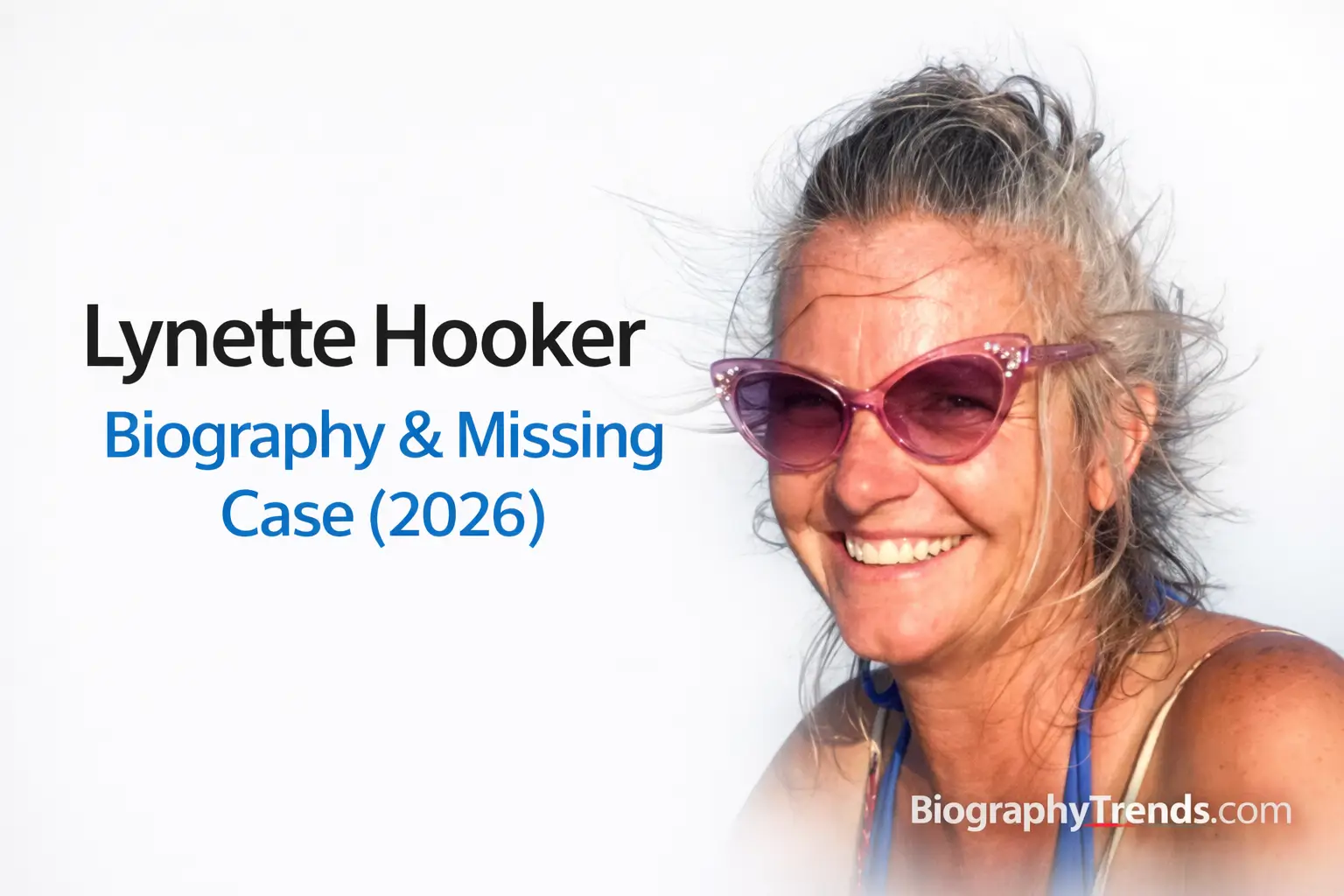
Lynette Hooker Biography
Lynette Hooker is a 55 year old American woman from Michigan who became known internationally after she went missing during a sailing trip in the Bahamas in April 2026. Her disappearance has become one of the most talked about missing person cases of the year, drawing global media attention and raising serious questions about maritime safety, search and rescue operations, and the circumstances surrounding her final moments. This comprehensive Lynette Hooker Biography provides the most detailed account available of her life, her relationship with husband Brian Hooker, their sailing lifestyle, the tragic incident near the Abaco Islands, the extensive search operations that followed, the arrest and release of her husband, the seizure of critical evidence including the dinghy and sailboat, GPS data that contradicts the initial account, and the latest case updates as of July 2026.
The Lynette Hooker Bahamas disappearance has captured public imagination in ways that few missing person cases do. Unlike many disappearances that occur in remote or poorly documented circumstances, this case involves a couple living a documented sailing lifestyle, a specific date and location, an ongoing investigation with multiple agencies involved, and new evidence that has reopened search efforts months after the initial incident. The combination of mystery, maritime adventure, conflicting accounts, and unanswered questions has made the Lynette Hooker story a subject of intense interest for true crime followers, sailing enthusiasts, and concerned citizens around the world.
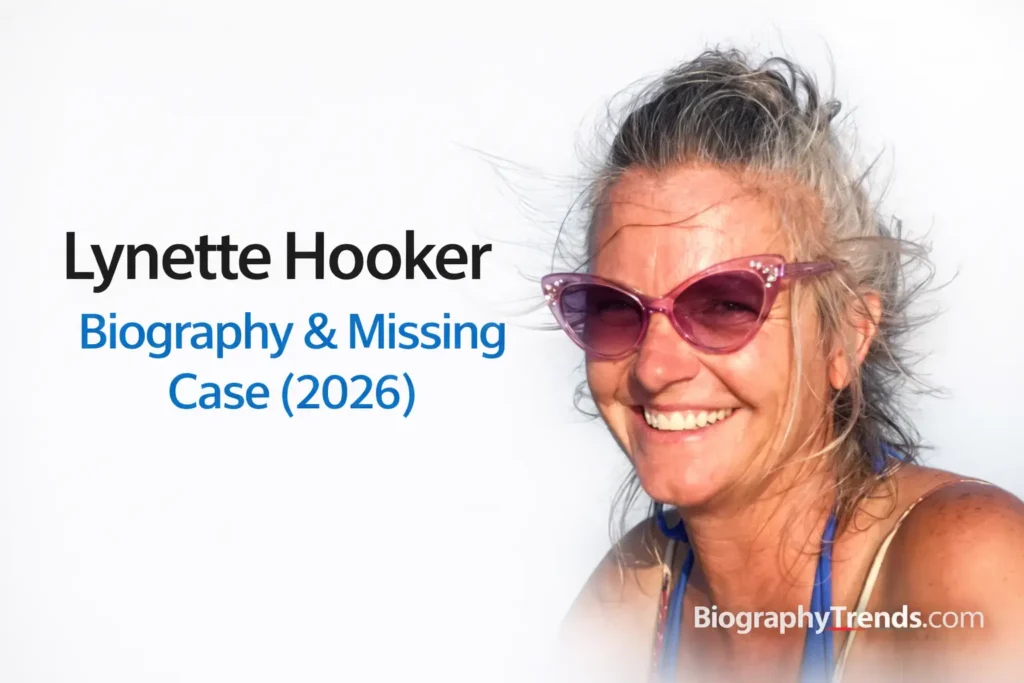
Who Is Lynette Hooker?
Lynette Hooker is an American woman whose name became synonymous with one of the most perplexing missing person cases of 2026. A 55 year old from Michigan, she had embraced a sailing lifestyle with her husband Brian Hooker that took them across thousands of nautical miles through the Caribbean and eventually to the Bahamas, where she vanished under circumstances that remain deeply contested.
What makes the Lynette Hooker case particularly striking is the combination of documented sailing experience, a specific and traceable incident, and the emergence of evidence that has contradicted the initial account of what happened. When Lynette disappeared on April 4, 2026, her husband Brian told authorities that she had fallen overboard from their small dinghy during rough waters, that she had the boat keys with her when she fell, and that he was forced to paddle back to shore. This account, while tragic, initially appeared to be a straightforward maritime accident.
However, the investigation has revealed complications that have transformed the case from a simple person overboard incident into something far more mysterious. GPS data from an electronic device seized by authorities appears to differ from Brian Hooker’s account of what happened that night, sparking a new search in the Bahamas months after the initial disappearance. Brian Hooker was arrested on April 8, 2026, and held for five days of intensive questioning before being released without charges on April 13, 2026. He has since returned to the United States and denies any wrongdoing, but he remains a person of interest in the ongoing investigation.
The seizure of the couple’s 8 foot dinghy by the U.S. Coast Guard on June 4, 2026, and the earlier seizure of their sailboat Soulmate on May 14, 2026, represent critical developments in the case. Investigators were seen aboard the dinghy with cadaver dogs, surveying the vessel and holding up a life jacket. The Coast Guard also asked the public for information about another sailboat moored near the Soulmate in Aunt Pat’s Bay, suggesting that investigators are exploring whether other vessels or individuals may have been involved in the incident.
Lynette Hooker Biography: Early Life and Background in Michigan
Lynette Hooker was an American woman who lived a private and low profile life before she became known because of her disappearance in the Bahamas in 2026. Understanding Lynette Hooker’s early life requires acknowledging the limited information available, as she deliberately maintained privacy throughout her adult years. She was raised in Michigan, where she spent most of her early years away from public attention. The specific details of her birthplace, childhood home, and family background have not been widely disclosed, reflecting her preference for a life outside the spotlight.
From what is known about her personality, Lynette Hooker had a calm demeanor and preferred a simple lifestyle. She was not widely involved in public activities or media attention during her early life. Friends and family members who have spoken to investigators and journalists describe her as thoughtful, careful, and genuinely content with experiences over possessions. This personality profile is important for understanding her later choices, including her decision to embrace a sailing lifestyle that many would find challenging or isolating.
As she grew older, Lynette developed an interest in travel and outdoor experiences that would eventually define her adult life. She became more drawn to nature and activities connected to water and sailing. This interest was not sudden or impulsive but evolved gradually over years of exploration and discovery. She reportedly spent time near coastal areas during her younger years, developing familiarity with boats and marine environments that would serve her well in her later sailing career.
Her early life was mostly normal and private, and it was not until her later years that she became connected to sailing and long distance travel. The transition from a conventional lifestyle to a semi nomadic existence on the water is significant for understanding who Lynette Hooker was and what motivated her choices. This transformation suggests a person seeking meaning through experience rather than material accumulation, a philosophy that resonates with many in the sailing community but that also carries inherent risks that would ultimately prove tragic.
Lynette Hooker Marriage to Brian Hooker and Life at Sea
Lynette Hooker was married to Brian Hooker, a partnership that formed the foundation of her adult life and sailing adventures. Brian Hooker was 58 years old at the time of Lynette’s disappearance, three years her senior. The couple shared a long term relationship that had weathered the unique challenges of life at sea. Their bond was not merely romantic but practical, as successful sailing partnerships require trust, communication, and shared commitment to a lifestyle that tests even the strongest relationships.
The Hookers had been living a semi nomadic sailing lifestyle for an extended period before the incident in the Bahamas. This was not a brief vacation or experimental phase but a genuine way of life that had taken them across thousands of nautical miles and through countless ports of call. Their journey represents a growing trend among retirees and remote workers who choose to live aboard vessels rather than maintaining traditional land based residences.
Their lifestyle involved traveling by boat for extended periods, often spending months at sea between port visits. They lived on a yacht named Soulmate for parts of their journey, a vessel that served as both transportation and home. This dual function required constant maintenance, navigation, and adaptation to changing conditions. The practical skills needed for successful cruising include mechanical repair, weather interpretation, route planning, and emergency preparedness.
They explored islands and coastal regions together, building a shared catalog of experiences that most people accumulate only through occasional vacations. Their travels took them through the Caribbean, one of the world’s most popular sailing destinations, where clear waters, steady trade winds, and numerous islands create ideal conditions for extended cruising. The Caribbean sailing community is tight knit, with cruisers often forming temporary communities in popular anchorages and sharing information about conditions, services, and safety.
Their journey eventually led them to the Bahamas, where the tragic incident occurred in April 2026. The Bahamas represents both the appeal and the risk of ocean sailing. Its waters offer spectacular beauty and excellent cruising conditions, but also present challenges including strong tidal currents, shallow reefs, and rapidly changing weather that can transform idyllic conditions into dangerous situations with little warning.
Lynette Hooker Sailing Experience and Maritime Skills
Yes, according to available information, Lynette Hooker had experience with boating and sailing. This experience is a crucial element of the Lynette Hooker Biography because it shapes understanding of the incident and the credibility of various explanations for her disappearance. An inexperienced sailor falling overboard suggests different circumstances than an experienced one, and investigators have carefully considered her background in evaluating the case.
She and her husband were living part of their life on a sailing boat, traveling across coastal waters. This lifestyle exposed them to ocean navigation and marine travel conditions on a daily basis. Living aboard a vessel requires constant engagement with the marine environment, from monitoring weather patterns to maintaining equipment to executing complex maneuvers in varying conditions. The Hookers had reportedly completed numerous passages, including overnight and multi day crossings, that demonstrated their capability as a sailing team.
However, despite experience, ocean travel always carries unpredictable risks that even the most seasoned sailors cannot fully eliminate. Sudden weather changes can transform calm seas into dangerous conditions within minutes. Strong currents can overwhelm vessel capabilities or push boats into hazardous areas. Visibility issues at night dramatically increase the risk of collision, grounding, or person overboard situations. Mechanical or navigation challenges can strand vessels or disable critical safety systems. These risks are well known to the sailing community but are often underestimated by those unfamiliar with ocean conditions.
The question of whether Lynette Hooker’s experience was sufficient for the specific conditions she faced on April 4, 2026, remains part of the ongoing investigation. Her general sailing background is established, but the particular circumstances of that night may have presented challenges that exceeded her preparation or that occurred too quickly for any response to be effective.
Journey to the Bahamas: The Final Voyage of Lynette Hooker
The Lynette Hooker Biography highlights that the couple arrived in the Bahamas during their sailing route through Caribbean waters. The Bahamas is known for clear waters, popular yacht routes, island hopping tourism, and strong tidal currents in some regions. These characteristics make the Bahamas both a paradise for sailors and a potentially dangerous environment for those who do not respect its challenges.
The Abaco Islands, where the Hookers were reportedly anchored before the incident, are a particularly popular destination within the Bahamas. The Abacos offer protected waters, charming settlements, and excellent cruising conditions that attract hundreds of vessels during the peak season. However, the area also features complex tidal patterns, shallow banks, and narrow channels that require careful navigation. The waters between the islands and the mainland can become treacherous under certain conditions, with currents running contrary to wind and creating confused seas that challenge even experienced boat handlers.
They were reportedly anchored near Elbow Cay before the incident happened. Elbow Cay is a small island in the Abacos known for its picturesque settlement of Hope Town, with its iconic candy striped lighthouse and protected harbor. The specific anchorage has not been publicly disclosed, but investigators have examined the location as part of their review of the case. The choice of anchorage, the condition of their ground tackle, and their plans for moving the vessel are all relevant to understanding the sequence of events that led to Lynette Hooker’s disappearance.
What Happened to Lynette Hooker: The Incident of April 4, 2026 Explained
What happened to Lynette Hooker is the central question that has driven public interest in this case since April 4, 2026. Understanding the Lynette Hooker Bahamas disappearance requires careful examination of the reported sequence of events, the environmental conditions, the conflicting accounts, and the various factors that may have contributed to the tragedy.
Lynette Hooker went missing after a nighttime boating incident involving a small dinghy boat on April 4, 2026. The date is significant because it places the incident during a period of active cruising season in the Bahamas, when numerous vessels are in the area and when search and rescue resources are readily available. The fact that the incident occurred at night is also significant, as nighttime operations present additional challenges for both the victims and rescuers.
The reported sequence of events begins with the couple using a small inflatable dinghy. Dinghies are essential equipment for cruising sailors, serving as the primary means of transportation between anchored vessels and shore. They are typically small, inflatable boats with outboard motors that are launched and retrieved daily. While indispensable, dinghies are also inherently vulnerable, offering minimal protection from the elements and limited stability in rough conditions.
According to the account provided by Brian Hooker to authorities, the couple had gone for a nighttime ride aboard the dinghy from Elbow Cay in the Bahamas when Lynette fell overboard and was swept away in the current with the keys to the boat, forcing him to paddle back to shore. He initially told investigators that his wife “bounced off” the dinghy during rough waters. He said that strong currents carried her away and that he lost sight of her.
This account, while tragic, initially appeared to be a straightforward maritime accident. Brian Hooker reported Lynette missing on April 5, 2026, the morning after the incident. Search efforts were launched shortly after the report, but the delay between the incident and notification may have affected their effectiveness. The exact timeline of when Brian Hooker returned to the main vessel, when he raised the alarm, and when search resources were deployed has been examined in detail by investigators.
However, the investigation has revealed significant complications that have transformed the case. GPS data from an electronic device seized by authorities appears to differ from Brian Hooker’s account of what happened that night. This discrepancy between the electronic evidence and the husband’s testimony has sparked a new search in the Bahamas and has raised serious questions about the accuracy of the initial account. The nature of the GPS data discrepancy has not been fully disclosed by investigators, but its existence has been confirmed by multiple sources and has been described as significant enough to warrant reopening the search.
Environmental Conditions and Their Role in the Lynette Hooker Case
Authorities reviewed environmental conditions after the disappearance, recognizing that understanding the physical environment is essential for reconstructing the incident and evaluating search strategies. The factors considered included water currents in the area, wind speed and wave activity, visibility at night, and the distance between boat and shore.
These conditions are important in understanding maritime accidents in open waters. The Bahamas, despite its reputation for calm cruising conditions, can experience rapidly changing weather that creates dangerous situations. Cold fronts passing through the region can bring strong northerly winds that generate steep, short period waves in normally protected waters. The interaction of wind against tidal currents can create standing waves and confused seas that challenge vessel stability.
Nighttime conditions compound these challenges. Visibility is reduced to the range of whatever lighting is available, which on a small dinghy may be minimal. Judgment of distance, speed, and wave patterns becomes more difficult. The psychological stress of nighttime operations can impair decision making and reaction times. Combined, these factors create an environment where experienced sailors can find themselves in situations that exceed their capabilities.
The specific conditions on April 4, 2026, have been analyzed using meteorological data, tidal predictions, and witness reports from other vessels in the area. This analysis has informed both the search strategy and the investigation into whether the incident was preventable or predictable. However, the GPS data discrepancy suggests that environmental conditions may not be the full explanation for what happened to Lynette Hooker.
Search Operation: The Hunt for Lynette Hooker
After Lynette Hooker was reported missing, a coordinated search operation began that represented the most extensive maritime search in the region for several years. The search efforts included Coast Guard patrols, local marine rescue teams, aerial surveillance, and water surface scanning. These resources were deployed in a systematic pattern designed to maximize coverage of the area where Lynette was last seen.
The Coast Guard’s involvement brought professional search and rescue expertise to the operation. Coast Guard assets included surface vessels capable of operating in challenging conditions and aircraft equipped with thermal imaging and search radar. These resources conducted methodical searches of the area, adjusting patterns based on drift modeling that attempted to predict where a person in the water might have been carried by currents.
Local marine rescue teams contributed intimate knowledge of local waters that national agencies could not match. These volunteers and professionals understood the specific hazards of the Abaco area, including reefs, shoals, and tidal patterns that affect search operations. Their vessels, while less sophisticated than Coast Guard cutters, offered maneuverability in shallow waters where larger craft could not operate.
Aerial surveillance provided the broad area coverage essential for effective maritime search. Aircraft can scan vast areas quickly, identifying objects or persons that might be missed by surface vessels. However, aerial search effectiveness is limited by sea state, with whitecaps and wave action making it difficult to spot objects in the water. The timing of the incident, at night, meant that initial aerial search could not begin until daylight, potentially reducing its effectiveness.
Water surface scanning by surface vessels employed trained observers using binoculars and naked eye search patterns. This labor intensive method remains the most reliable for detecting persons in the water, particularly in conditions where electronic sensors may be confused by wave action or debris. Search teams worked in grid patterns, communicating constantly to ensure complete coverage and to avoid duplicating effort.
Despite these extensive efforts, no confirmed recovery was made in the early phase of the search. This outcome, while disappointing, is not unusual in maritime person overboard cases. The ocean is vast, conditions are dynamic, and the human body is small and difficult to detect against the background of waves and reflections. The absence of recovery does not necessarily indicate anything suspicious about the incident, though it has contributed to the uncertainty that surrounds the case.
In June 2026, the search was reopened after GPS data contradicted Brian Hooker’s account of what happened. This new search represented a significant development, as it suggested that investigators had reason to believe Lynette Hooker might be in a different location than initially assumed, or that the circumstances of her disappearance were different from what had been reported.
Brian Hooker Arrested: The Investigation Intensifies
Brian Hooker was taken into custody in the Bahamas on April 8, 2026, four days after Lynette’s disappearance. His arrest marked a significant escalation in the investigation and signaled that authorities were treating the case as more than a simple maritime accident. He was in custody for five days and questioned several times before police ultimately decided to release him without filing charges.
The decision to release Brian Hooker was made following consultation with the Department of Public Prosecutions, which recommended that no charges be filed at that time pending the outcome of further investigations. The Royal Bahamas Police issued a press release on April 13, 2026, confirming the release and stating that the investigation remained ongoing. Brian Hooker remains a person of interest in the case.
Brian’s attorney, Terrel A. Butler, told reporters shortly before his release that Mr. Hooker categorically and unequivocally denies any wrongdoing and is cooperating with authorities. This statement has been consistent throughout the investigation, with Brian maintaining that Lynette’s disappearance was a tragic accident and that he had no involvement in any criminal activity.
The five days of questioning that Brian endured while in custody suggest that investigators were probing deeply into the circumstances of Lynette’s disappearance. The fact that he was held for this extended period, then released without charges, indicates that while authorities had suspicions, they did not yet have sufficient evidence to support a criminal prosecution. This is not uncommon in complex cases where the full facts take time to emerge.
Following his release, Brian Hooker returned to the United States. His departure from the Bahamas has not ended the investigation, which continues to be pursued by both Bahamian and American authorities. The international dimension of the case adds complexity to any potential prosecution, as it involves jurisdictional questions and the need for cooperation between law enforcement agencies in different countries.
GPS Data Contradicts Brian Hooker’s Account: The Evidence That Changed Everything
One of the most significant developments in the Lynette Hooker case came in May 2026, when investigators revealed that GPS data from an electronic device seized by authorities appeared to differ from Brian Hooker’s account of what happened on the night of April 4, 2026. This revelation transformed the case from a tragic accident investigation into something more complex and has been described as the evidence that changed everything.
The GPS data discrepancy was significant enough to spark a new search in the Bahamas in June 2026, months after the initial disappearance. This reopening of the search indicates that investigators believe the electronic evidence points to a different version of events than the one initially provided by Brian Hooker. The specific nature of the discrepancy has not been fully disclosed by investigators, who have cited the ongoing nature of the investigation as the reason for maintaining confidentiality.
However, the implications of the GPS data are clear. If the electronic evidence shows that the dinghy was in a different location than Brian claimed, or that it traveled a different route, or that the timing of events was different from his account, then the foundation of the initial investigation is called into question. This does not necessarily mean that Brian Hooker is guilty of a crime, but it does mean that his account cannot be accepted at face value and that alternative explanations must be considered.
The GPS data also raises questions about what other electronic evidence might exist. Modern sailing vessels are equipped with multiple devices that record position, speed, heading, and other data. Cell phones, chart plotters, AIS transponders, and satellite communicators all leave digital trails that can be analyzed by investigators. The fact that authorities seized both the sailboat and the dinghy suggests that they were seeking to preserve all available electronic evidence for forensic analysis.
For Lynette Hooker’s family, the GPS data discrepancy has been both a source of hope and of additional anguish. Her daughter, Karli Aylesworth, has spoken publicly about the case, expressing gratitude for the continued search efforts while also grappling with the implications of evidence that suggests her mother’s disappearance may not have been the accident initially described. The emotional toll of learning that the official account may be inaccurate, while still not knowing what actually happened, is a unique form of suffering that few families experience.
Seizure of the Dinghy and Sailboat: Critical Evidence in the Lynette Hooker Case
The seizure of critical evidence has been a defining feature of the Lynette Hooker investigation. On May 14, 2026, the U.S. Coast Guard seized the couple’s sailboat Soulmate as part of the investigation. This seizure was a major operation that involved boarding the vessel, securing it, and transporting it to a location where forensic examination could be conducted. The sailboat represented the couple’s home and primary means of transportation, and its seizure indicated that investigators were treating the case with the utmost seriousness.
On June 4, 2026, the U.S. Coast Guard seized the 8 foot dinghy that Brian Hooker claimed he and Lynette were aboard when she disappeared. CBS News captured the moment the dinghy was taken by a tender boat back to a U.S. Coast Guard cutter. An investigator with the Coast Guard Investigative Service was seen aboard the dinghy, surveying it and holding up a life jacket. A cadaver dog was also seen with investigators, indicating that the search for Lynette’s remains was ongoing and that the dinghy was being examined for any physical evidence that might explain what happened.
The seizure of the dinghy was particularly significant because it was the vessel on which the alleged accident occurred. Forensic examination of the dinghy could reveal evidence of how Lynette fell overboard, whether there was a struggle, whether the vessel was damaged, or whether any other physical evidence was present. The presence of cadaver dogs suggests that investigators were also checking for any traces of Lynette that might have been left on the vessel.
On July 2, 2026, bodycam video showing the U.S. Coast Guard seizing Brian Hooker’s sailboat Soulmate was released, providing the public with a dramatic visual record of the investigation. The video showed Coast Guard personnel boarding the vessel, securing equipment, and documenting the condition of the boat. This release of video footage represented a new level of transparency in the investigation and provided the public with tangible evidence of the scope of the inquiry.
The Coast Guard also asked the public for information about another sailboat, releasing two images of a vessel moored near the Soulmate in Aunt Pat’s Bay. This request for public assistance suggests that investigators are exploring whether other vessels or individuals may have been involved in the incident, or whether witnesses on other boats may have seen something relevant to the case.
Investigation Into the Lynette Hooker Disappearance: Latest Updates
Is Lynette Hooker’s disappearance being investigated? Yes. Authorities in the Bahamas and the United States have opened an official investigation into the case that remains active as of July 2026. The investigation has examined multiple aspects of the incident in an effort to determine what happened and whether any criminal conduct was involved.
What investigators are reviewing includes statements from her husband Brian Hooker, which have been examined for consistency and credibility, particularly in light of the GPS data discrepancy. The timeline of the boating trip has been reconstructed from navigation records, witness statements, electronic data, and forensic evidence. Weather and sea reports have been analyzed to understand the environmental conditions at the time of the incident. The safety conditions of the dinghy, including its equipment and maintenance status, have been evaluated through forensic examination. Possible mechanical or human factors that could have contributed to the incident have been considered, including the possibility that the initial account was inaccurate or incomplete.
At this stage, the case remains open and unresolved. Investigators have not publicly identified any suspects beyond Brian Hooker as a person of interest, and no charges have been filed. The possibility that the disappearance was accidental remains under consideration, as does the possibility of other explanations. The lack of resolution has contributed to public speculation and media interest that continues months after the incident.
The investigation has faced challenges typical of maritime cases. The marine environment does not preserve evidence in the way that terrestrial crime scenes do. Physical evidence may be lost to currents, weather, or marine organisms. Witness availability is limited by the transient nature of the cruising community, with vessels departing for other destinations and their occupants becoming difficult to locate. The international dimension of the case, involving American citizens in Bahamian waters with U.S. Coast Guard involvement, adds jurisdictional complexity that can slow investigative progress.
Public Attention and Media Coverage of the Lynette Hooker Case
The Lynette Hooker Biography gained international attention due to multiple factors that combined to create sustained media interest. The mystery surrounding the disappearance appeals to fundamental human curiosity about unexplained events. Conflicting interpretations of events, fueled by limited official information, active online speculation, and the GPS data discrepancy, have generated ongoing debate. Ongoing search operations, even after their initial phase, provided visual content that kept the story in news cycles. The arrest and release of Brian Hooker added a dramatic element of suspicion and uncertainty. Family concerns and public interest have maintained pressure for continued investigation and disclosure.
The story has been widely discussed in media outlets and online platforms focused on travel safety and missing persons cases. Major news organizations including CBS News, NBC News, People Magazine, and Fox News have provided extensive coverage of the case. Coverage has ranged from factual reporting of search operations to speculative analysis of possible scenarios to broader discussions about sailing safety and risk management.
Social media has played a significant role in amplifying interest in the Lynette Hooker case. Online communities of sailors, true crime enthusiasts, and concerned citizens have shared information, theories, and expressions of support for the family. This organic attention has kept the story alive even when traditional media coverage has waned, creating sustained pressure for resolution.
Family Reaction and Ongoing Concerns
Lynette Hooker’s family expressed deep concern after her disappearance, providing statements that have shaped public understanding of her character and the family’s perspective on the case. They emphasized that she was experienced in water travel, countering any suggestion that her disappearance resulted from novice mistakes or reckless behavior. They stressed that she was careful and responsible, a person who took safety seriously and who would not have taken unnecessary risks. They want a full investigation into the incident, reflecting both their grief and their need for answers.
Her daughter, Karli Aylesworth, has been particularly vocal in her public statements. Speaking to ABC News amid the dinghy seizure, Karli said, “She has to be somewhere, so all the help that we could get, it’s greatly appreciated. I’m happy they were able to get Brian’s location and discover new areas to look. I know they’re working very hard.” These words reflect both the hope that Lynette might still be found and the frustration with the pace of the investigation.
The family continues to seek clarity and closure as of July 2026. Their ongoing engagement with investigators, media, and the public demonstrates both their determination to understand what happened and their frustration with the lack of resolution. For families of missing persons, the absence of definitive answers creates a unique form of suffering that combines grief with uncertainty, preventing the mourning process from proceeding normally.
Lynette Hooker Social Media and Online Presence
Lynette Hooker’s social media presence was mainly connected to a joint sailing account known as “The Sailing Hookers,” where she and her husband documented their life at sea. This account provided glimpses into their cruising lifestyle, including destinations visited, maintenance challenges overcome, and the daily rhythms of life aboard. For those seeking to understand who Lynette Hooker was, this content offers valuable insight into her personality, priorities, and the life she chose.
She does not have a widely verified personal social media handle, consistent with her private nature and preference for shared rather than individual online presence. Most online content about her comes from shared or news based accounts that have reported on the case. This limited digital footprint has both complicated and simplified the investigation, providing fewer data points for analysis but also fewer opportunities for misinformation.
Lynette Hooker Legacy and Public Impact
Although her disappearance remains unresolved, the Lynette Hooker Biography has had a wider impact that extends beyond the specific circumstances of her case. Her story has highlighted risks of small boat travel in open waters, bringing attention to safety practices that many cruising sailors may neglect. The importance of maritime safety awareness has been emphasized in sailing publications and forums, with discussions of equipment, procedures, and decision making that can prevent similar incidents.
Challenges in sea rescue operations have been illuminated by the case, revealing gaps in coordination, resources, and technology that affect search and rescue effectiveness. The emotional toll on families of missing persons has been demonstrated vividly, raising awareness of the support needs of those who face the unique trauma of unresolved loss.
Her story continues to be discussed in the context of boating safety and missing person investigations, serving as both cautionary tale and catalyst for improvement. Whether or not the case is ultimately resolved, its impact on maritime safety practices and public understanding of ocean risks will persist.
READ ALSO:
- Shadrack Sibiya Biography
- Alan Hayward James Biography
- James Tolkan Biography
- Atty. Michael Poa Biography
Lynette Hooker Case Updates July 2026
As of July 2026, the Lynette Hooker Bahamas disappearance remains unresolved with several significant developments and ongoing activities. The investigation continues with periodic updates from Bahamian and American authorities, though no definitive conclusions have been announced. Search operations have transitioned from active rescue to recovery mode, with resources deployed when specific leads or conditions warrant, including the reopened search in June 2026 prompted by GPS data discrepancies.
Brian Hooker has returned to the United States after being released from custody in the Bahamas. He has not been charged with any crime related to the incident and maintains his innocence through his attorney Terrel A. Butler. However, he remains a person of interest in the ongoing investigation, and the GPS data that contradicts his account continues to be a focus of investigative attention.
The family has maintained public engagement, with daughter Karli Aylesworth using media appearances and statements to keep attention focused on the case. Community support remains strong, with fundraising efforts for search resources and family assistance continuing. Maritime safety advocates have used the case to push for improved regulations and equipment standards for small craft operations.
The cruising community has engaged in extensive discussions about risk management, with some experienced sailors offering analysis of what may have occurred and how similar incidents might be prevented. The lack of resolution continues to fuel speculation and interest, with online communities actively discussing theories and evidence.
Frequently Asked Questions About Lynette Hooker
The following frequently asked questions address the most common inquiries about Lynette Hooker and her case.
Is Lynette Hooker still missing?
Yes, she is still officially listed as missing as of the latest reports in July 2026. No remains have been recovered and no definitive explanation for her disappearance has been established.
Where did Lynette Hooker disappear?
She disappeared near Elbow Cay in the Abaco Islands in the Bahamas during a boating trip on April 4, 2026. The specific location within the Abaco area has not been fully disclosed by investigators.
How old is Lynette Hooker?
Lynette Hooker was 55 years old at the time of her disappearance in April 2026.
Where is Lynette Hooker from?
She is from Michigan in the United States.
Was Lynette Hooker experienced in sailing?
Yes, she had experience with sailing and ocean travel. She and her husband had been living a semi nomadic sailing lifestyle for an extended period before the incident.
Is the case still under investigation?
Yes, authorities in the Bahamas and the United States continue to review the circumstances of her disappearance. The investigation remains open as of July 2026.
What is the main focus of the investigation?
The investigation focuses on determining whether the incident was an accident and understanding the exact sequence of events that led to Lynette Hooker’s disappearance, particularly in light of GPS data that contradicts the initial account.
Who was Lynette Hooker’s husband?
Lynette Hooker was married to Brian Hooker, who was 58 years old at the time of her disappearance. He was arrested on April 8, 2026, and released without charges on April 13, 2026.
What type of boat were the Hookers using?
The couple lived on a sailing yacht named Soulmate and were using a small 8 foot inflatable dinghy at the time of the incident.
What were the weather conditions when Lynette Hooker disappeared?
Authorities reviewed environmental conditions including water currents, wind speed, wave activity, and nighttime visibility. Specific details have not been fully released.
Has anyone been charged in connection with Lynette Hooker’s disappearance?
As of July 2026, no charges have been filed against any person in connection with the case. Brian Hooker remains a person of interest.
What search efforts were conducted for Lynette Hooker?
Search efforts included Coast Guard patrols, local marine rescue teams, aerial surveillance, and water surface scanning. The search was reopened in June 2026 after GPS data contradicted the initial account.
What new evidence has emerged in the Lynette Hooker case?
GPS data from an electronic device seized by authorities contradicts Brian Hooker’s account of what happened on the night of April 4, 2026. The Coast Guard also seized the couple’s dinghy on June 4, 2026, and their sailboat Soulmate on May 14, 2026.
What is the significance of the GPS data in the Lynette Hooker case?
The GPS data discrepancy between electronic evidence and Brian Hooker’s account sparked a new search in June 2026 and raised serious questions about the accuracy of the initial explanation for Lynette’s disappearance.
Conclusion: The Unresolved Mystery of Lynette Hooker
The Lynette Hooker Biography remains an ongoing and developing story centered on a mysterious disappearance at sea. While search and investigation efforts continue, many questions remain unanswered about what truly happened during her final boating trip in the Bahamas. The case serves as a reminder of the unpredictability of ocean travel and the importance of maritime safety precautions.
Lynette Hooker’s story touches on universal themes that resonate far beyond the sailing community. It speaks to the human desire for adventure and freedom, the risks that accompany such pursuits, and the profound impact of unexplained loss on families and communities. Her life, though lived largely in private, has become a public narrative that raises important questions about safety, responsibility, and the limits of human control over natural forces.
The Lynette Hooker Bahamas disappearance explained through available evidence suggests a complex case where initial accounts have been challenged by electronic data, where a husband was arrested and released without charges, and where months of investigation have produced more questions than answers. As of July 2026, the case updates indicate continued investigation, sustained public interest, and ongoing efforts to provide answers for a family that deserves closure.
Whether the mystery is ultimately resolved or remains one of the sea’s countless untold stories, Lynette Hooker’s biography has already left its mark. Her case has influenced maritime safety discussions, demonstrated the challenges of ocean search and rescue, highlighted the role of GPS and electronic evidence in modern investigations, and reminded us all that the beauty of the sea carries risks that demand respect and preparation. For the sailing community, for true crime followers, and for anyone who has followed this story, the hope remains that answers will come and that Lynette Hooker’s legacy will include not only mystery but meaning.
1 thought on “Lynette Hooker Biography: Age, Career, Bahamas Case & New Evidence”