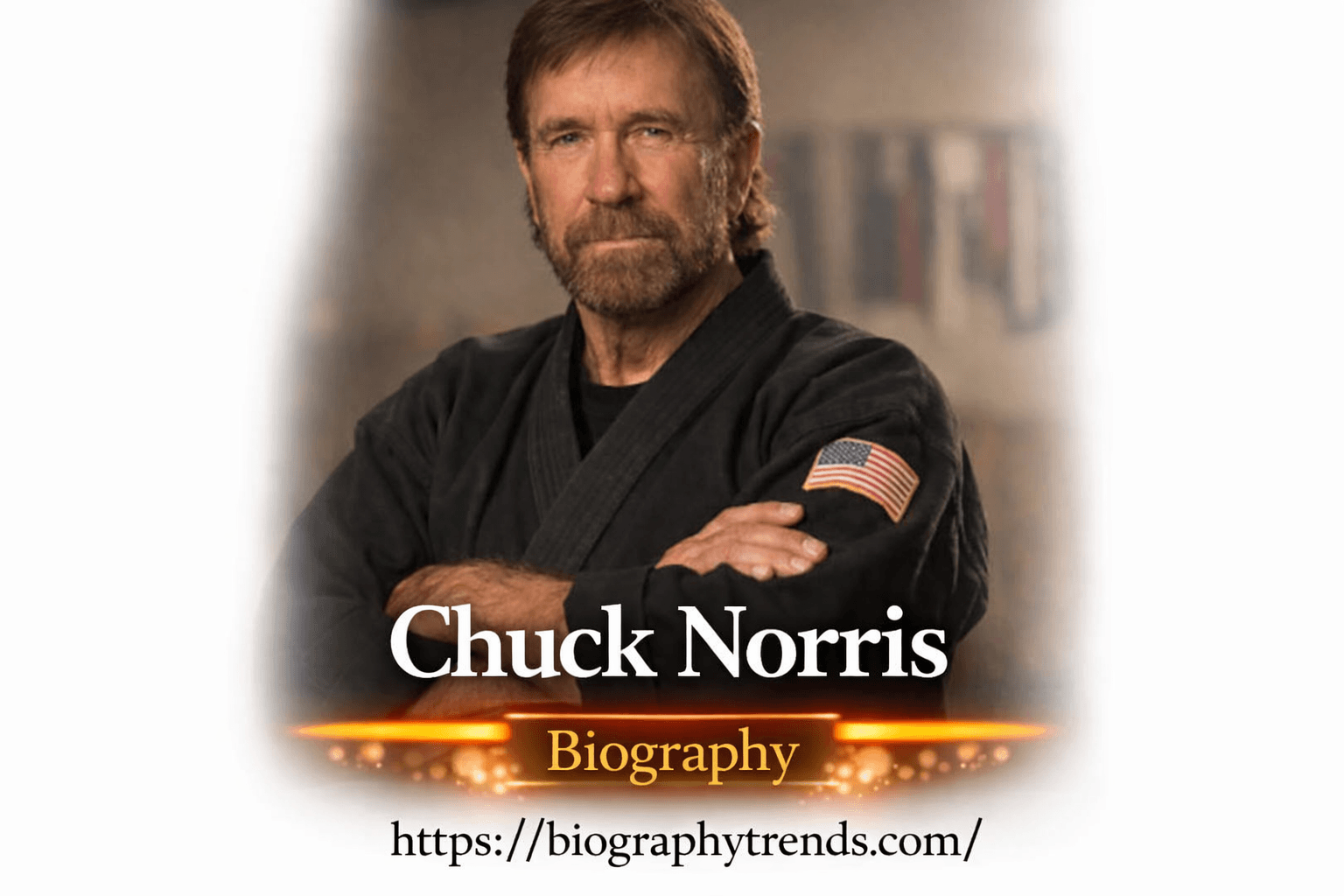
Chuck Norris Biography: who is Chuck Norris?
Chuck Norris was a legendary American martial artist, actor, and cultural icon best known for his roundhouse kicks on screen and his long-running role as Cordell Walker on Walker, Texas Ranger (1993–2001). Born Carlos Ray Norris on March 10, 1940, in Ryan, Oklahoma, he first trained in martial arts while stationed in Korea with the U.S. Air Force in the late 1950s, later becoming a karate champion before transitioning into film.
His breakout came opposite Bruce Lee in The Way of the Dragon (1972), and throughout the 1980s he became one of Hollywood’s defining action stars with films like Missing in Action, Delta Force, and Lone Wolf McQuade. In the 2000s, he gained a second wave of fame as the subject of viral “Chuck Norris Facts” internet memes celebrating his exaggerated toughness.
Chuck Norris died on March 19, 2026, at age 86, following a sudden medical emergency and hospitalization in Hawaii, just days after celebrating his birthday. His family confirmed the news in a statement, describing him as a devoted husband, father, and grandfather in addition to his public legacy as a martial artist and actor.
Chuck Norris Biography
Chuck Norris Biography: The Early Years
The story of Chuck Norris begins in the small town of Ryan, Oklahoma, a community located in Jefferson County in the southern part of the state. He entered the world on March 10, 1940, during a period of profound global uncertainty. The year 1940 saw Europe engulfed in the Second World War, with the United States still officially neutral but increasingly involved in supporting Allied efforts through material aid and diplomatic pressure. This historical backdrop would shape the world into which Carlos Ray Norris was born and the values that would come to define his character in the decades to follow.
The Norris family lived in circumstances that were typical of many working class American families during the Depression and wartime years. Material comforts were few, and the luxuries that would later define American consumer culture were entirely absent from young Carlos’s experience. The small town of Ryan provided a rural backdrop for Norris’s formative years, a place where economic opportunities were limited and where families often struggled to make ends meet through farming, manual labor, and other modest occupations. Like many communities in the American South and Southwest during this period, Ryan was a place where hardship was common and where resilience was not merely a virtue but a necessity for survival.
Growing up in an era of hardship and sacrifice, Norris developed the resilience and determination that would later become hallmarks of both his personal life and his public persona. Born during the Great Depression’s lingering aftermath, he entered a world marked by economic uncertainty and global conflict. The lessons learned during these lean years, about the value of hard work, the importance of perseverance, and the dignity of honest labor, became foundational elements of his character. This upbringing, while difficult, instilled in him a work ethic and a sense of self reliance that would prove invaluable in his later life.
His father, Ray Norris, struggled with alcohol addiction, which led to challenges within the family that would have lasting effects on young Carlos. Alcoholism was a widespread and often devastating problem in mid twentieth century America, affecting millions of families across all social classes. For the Norris family, Ray’s addiction created an environment of instability and unpredictability. Children of alcoholics often experience a range of emotional and psychological difficulties, including feelings of shame, anxiety, and low self esteem. Young Carlos was no exception to these patterns, and the effects of his father’s addiction would shape his personality in profound ways that he would spend much of his early adulthood working to overcome.
As a result of these challenging circumstances, Norris often described himself as shy and lacking confidence during his early years. This self characterization stands in stark contrast to the confident, almost superhuman persona he would later project on screen and in popular culture. The transformation from a shy, insecure child to a global icon of strength and confidence is one of the most remarkable aspects of Norris’s life story. It demonstrates the power of discipline, training, and self determination to overcome even the most deeply rooted personal limitations. Where he had once been timid and uncertain, he would eventually become a symbol of unwavering confidence and capability.
The challenges of his childhood also gave Norris a deep well of empathy for others facing difficult circumstances. Throughout his later life, he would channel this empathy into philanthropic work, particularly through programs designed to help young people develop the confidence and discipline that he himself had lacked as a child. His understanding of what it means to grow up without advantages, to feel powerless and uncertain, informed his approach to charity and his belief in the transformative power of martial arts and structured activity. This empathy would become a driving force behind his most significant charitable initiatives in later decades.
After his parents divorced, Norris moved with his mother to California, where his life began to take a new direction. The move to California represented a fundamental shift in Norris’s circumstances and opportunities. California in the 1950s was a land of promise and growth, attracting millions of Americans with its mild climate, expanding economy, and culture of reinvention. For young Carlos, the Golden State offered a chance to leave behind the difficulties of his Oklahoma childhood and to forge a new identity in a new environment. This geographical and psychological relocation would prove to be the first of many transformations in his remarkable life.
Military Service and the Discovery of Martial Arts
Before becoming famous, Norris served in the United States Air Force from 1958 to 1962. This period of military service was a pivotal chapter in his life, representing both a continuation of his journey toward self discovery and a crucial turning point that would set him on the path to international fame. The Air Force provided Norris with structure, discipline, and purpose at a time when he was still searching for direction in his life. For a young man who had grown up without strong paternal guidance and who had struggled with confidence issues, the military offered exactly the kind of external framework that could help him build internal strength.
His rank of Airman First Class reflected his commitment and capability during his service years. He was stationed at two significant locations during his military career: Osan Air Base in South Korea and March Air Reserve Base in California. Osan Air Base, located approximately 40 miles south of Seoul, was and remains one of the most important American military installations in the Pacific region. Established during the Korean War, the base played a critical role in American defense strategy throughout the Cold War. For Norris, assignment to Osan represented his first exposure to East Asian culture, a region that would become central to his personal and professional identity in ways he could not have anticipated at the time.
It was during his time in South Korea that Norris discovered martial arts, a decision that would change his life forever. The story of how Norris came to martial arts is often told as a moment of serendipity, but it also reflects the broader cultural exchange that occurred between American servicemen and Korean society during this period. The Korean War and its aftermath brought hundreds of thousands of American troops into contact with Korean culture, including its martial traditions. While many servicemen viewed their time in Korea purely in military terms, others like Norris found in Korean martial arts a path to personal transformation that would alter the trajectory of their entire lives.
The specific style that Norris initially studied was Tang Soo Do, a Korean martial art that combines elements of karate, traditional Korean martial arts, and Chinese martial arts. Tang Soo Do emphasizes striking techniques, including punches, kicks, and blocks, as well as forms (prearranged sequences of movements) and sparring. Under the guidance of Korean instructors, Norris threw himself into training with the same dedication that would later characterize all his endeavors. He trained for hours each day, pushing his body to its limits and gradually building the physical and mental capabilities that would make him a champion.
The impact of martial arts on Norris was immediate and profound. Where he had once been shy and uncertain, he began to develop confidence and self assurance. The rigorous physical training built not only his body but also his mental resilience. The discipline required to master complex techniques and to endure the pain and exhaustion of intensive training translated into other areas of his life. He learned to set goals, to work systematically toward their achievement, and to persist in the face of setbacks. These lessons, learned in the dojangs of South Korea, would serve him throughout his entire life and would become the foundation of his philosophy about personal development.
Norris’s military service also exposed him to the broader world of American defense and foreign policy. Serving during the height of the Cold War, he gained firsthand experience of the geopolitical tensions that defined this era. This exposure to international affairs, combined with his immersion in Korean culture, gave him a perspective that was broader and more cosmopolitan than that of many of his contemporaries. It also reinforced the patriotic values that would become a consistent theme in his later career, both in the roles he chose to play and in his public statements about American identity and purpose.
Rise to Martial Arts Greatness
Chuck Norris became one of the most accomplished martial artists of his time. His achievements in this field are all the more impressive given that he began his training as a young adult with no prior athletic background. Unlike many martial arts champions who begin training in childhood, Norris had to build his skills from scratch while also serving in the military. His success demonstrates that with sufficient dedication and discipline, extraordinary achievements are possible regardless of starting point. This aspect of his story would later inspire countless individuals who felt they had started too late or lacked natural talent to pursue martial arts or other ambitious goals.
His competitive achievements include multiple World Karate Championship titles that established him as the dominant fighter of his era. Norris won the Professional Middleweight Karate Champion title for six consecutive years from 1968 to 1974, a record of sustained excellence that few fighters have ever matched. During this period, he defeated many of the top fighters in the world, establishing himself as the dominant competitor in his weight class. His fighting style was characterized by speed, precision, and tactical intelligence. He was known for his ability to read opponents, to anticipate their movements, and to counterattack with devastating effectiveness. These qualities made him not merely a physical powerhouse but a strategic master of combat.
Norris was undefeated in his final competitive years, a testament to his technical mastery and physical conditioning. As he matured as a fighter, he became increasingly difficult to defeat. His understanding of strategy and tactics, combined with his physical capabilities, made him a formidable opponent for anyone who stepped into the ring with him. This period of dominance coincided with his growing fame outside the martial arts world, as his success in competition helped build the reputation that would serve him well in his transition to entertainment. The discipline and focus that made him a champion would prove equally valuable in the demanding world of film and television production.
He is also the founder of Chun Kuk Do, his own martial arts system that represents the culmination of decades of study and practice. Created in 1990, Chun Kuk Do translates as “The Universal Way” and represents Norris’s synthesis of the various martial arts he had studied over the decades. The system incorporates elements of Tang Soo Do, karate, Brazilian jiu jitsu, judo, and other disciplines, reflecting Norris’s belief in the value of cross training and his openness to learning from multiple traditions. Chun Kuk Do also includes a code of honor that emphasizes personal development, respect, and service to others, values that Norris has consistently promoted throughout his life and that distinguish his approach from purely combat focused systems.
His discipline, skill, and dedication helped popularize martial arts in the United States in ways that cannot be overstated. Before Norris and a handful of other pioneers, martial arts were relatively unknown in mainstream American culture. They were perceived as exotic, even mysterious practices associated with the Far East. Through his competitive success, his teaching, and eventually his film and television career, Norris played a major role in transforming martial arts from a niche interest into a mainstream American activity. Today, millions of Americans practice some form of martial art, and the cultural acceptance of these disciplines owes much to the pioneering work of Norris and his contemporaries who demonstrated that these ancient practices had relevance and value for modern Western practitioners.
The martial arts schools that Norris established became important centers for training and personal development across the country. These schools, which operated under various names over the years, attracted students from all walks of life. They offered not only physical training but also instruction in the philosophical and ethical dimensions of martial arts practice. Norris believed that martial arts were not merely about fighting but about building character, developing self discipline, and learning to respect oneself and others. This holistic approach to martial arts education influenced generations of students and instructors and helped establish the model for martial arts instruction in America that emphasizes personal growth alongside technical skill.
The Bruce Lee Friendship and Cinematic Breakthrough
A major turning point in Norris’s career came through his friendship with Bruce Lee, one of the most celebrated relationships in the history of martial arts and action cinema. It was a friendship built on mutual respect, shared passion for martial arts, and recognition of each other’s extraordinary abilities. Their bond transcended the competitive rivalries that often characterize relationships between top athletes, reflecting a genuine appreciation for the art and discipline they both loved. In an era when martial arts were still marginal in Western culture, these two men recognized in each other kindred spirits who understood the deeper significance of their practice.
The two trained together and shared a deep mutual respect that was evident to all who observed them. Their training sessions were legendary in martial arts circles, involving the exchange of techniques, sparring, and philosophical discussions about the nature of combat and personal development. Lee, already recognized as a revolutionary figure in martial arts, saw in Norris a kindred spirit: someone who took the practice of martial arts with the utmost seriousness and who was constantly seeking to improve and innovate. Norris, in turn, admired Lee’s physical genius, his philosophical depth, and his willingness to challenge traditional orthodoxies. This mutual admiration created a bond that enriched both men’s development as martial artists and performers.
Their most iconic film appearance together came in Way of the Dragon, released in 1972. This film, written, directed, and produced by Bruce Lee, was a landmark in martial arts cinema. It was Lee’s first major film as a leading man and director, and it established many of the conventions that would define the genre for decades to come. The film tells the story of Tang Lung, a young man from Hong Kong who travels to Rome to help his relatives at their restaurant, which is being threatened by local gangsters. Norris played the role of Colt, an American martial artist hired by the gangsters to defeat Tang Lung. This casting was significant not merely for the physical spectacle it promised but for the cultural statement it made about martial arts as an international language that transcended national boundaries.
Their fight scene in the Roman Colosseum is considered one of the greatest martial arts battles in film history. Filmed on location in the actual Colosseum, the scene pits Lee’s Jeet Kune Do against Norris’s Tang Soo Do based fighting style. The choreography, designed by Lee himself, was revolutionary for its time, featuring techniques and strategies that were far more realistic and sophisticated than anything previously seen in cinema. The fight builds from cautious probing to full intensity, showcasing the skills of both performers and creating a sense of genuine competition rather than staged performance. This authenticity was crucial to the scene’s impact; audiences could sense that they were watching two genuine masters at work, not merely actors performing rehearsed movements.
The scene’s impact on popular culture cannot be overstated. It introduced millions of viewers to the possibilities of martial arts cinema and helped establish the genre as a major commercial force. For Norris, the film provided invaluable exposure to international audiences and demonstrated his ability to perform at the highest level alongside the most celebrated martial artist of the era. While Lee’s star would burn brightly but briefly, cut short by his tragic death in 1973, Norris would go on to build a career that spanned decades and reached audiences across multiple generations. The Colosseum fight remains a touchstone for martial arts film enthusiasts and a reference point for choreographers seeking to create combat sequences that balance spectacle with authenticity.
The friendship between Norris and Lee also had a lasting impact on Norris’s approach to martial arts and filmmaking. Lee’s emphasis on practicality, efficiency, and continuous improvement influenced Norris’s own development as a martial artist and as an action performer. The philosophical conversations they shared about the nature of combat, the importance of adaptability, and the integration of mind and body informed Norris’s later work in developing Chun Kuk Do and in approaching his film roles with ever greater physical and emotional authenticity. Lee’s tragic early death made these conversations all the more precious to Norris, who carried their lessons forward into his own long and productive career.
Hollywood Stardom
Chuck Norris transitioned into acting in the 1970s and became a major action star in the 1980s. This transition was neither immediate nor easy. Like many athletes attempting to move into entertainment, Norris faced skepticism from industry professionals who doubted that a martial arts champion could develop the range and presence required for film acting. His early roles were small and often typecast him as a fighter or enforcer, limiting his opportunities to demonstrate broader capabilities. This skepticism was not entirely unfounded; the history of sports figures attempting acting careers is filled with examples of failed transitions. Norris’s determination to succeed where others had failed would become a defining characteristic of his Hollywood tenure.
Popular movies that defined his cinematic career include the Missing in Action series, The Delta Force, and Lone Wolf McQuade. The Missing in Action films, released between 1984 and 1988, were particularly significant in establishing Norris as a bankable leading man. These films, which followed the adventures of Colonel James Braddock, a Vietnam War veteran searching for American prisoners of war, tapped into the cultural fascination with the Vietnam War and the lingering sense that the conflict had been left unresolved. Norris’s portrayal of Braddock as a determined, capable hero resonated with audiences who were drawn to narratives of American strength and resilience. The films addressed a national wound that had not healed, offering a fantasy of resolution and redemption that many viewers found deeply satisfying.
The Delta Force, released in 1986, was another major success that expanded Norris’s range as a performer. Directed by Menahem Golan and based loosely on the real Delta Force special operations unit, the film cast Norris as Major Scott McCoy, a leader of an elite counterterrorism team. The film’s plot, involving the hijacking of a passenger plane by Lebanese terrorists, was ripped from contemporary headlines and gave Norris the opportunity to play a character who combined physical prowess with tactical intelligence and leadership. The film was a commercial hit and spawned a sequel, further cementing Norris’s status as a top action star. This role demonstrated that Norris could portray not merely a skilled fighter but a strategic thinker and leader, qualities that would become central to his most famous television character.
Lone Wolf McQuade, released in 1983, showcased Norris in a role that blended Western and martial arts elements. As Texas Ranger J.J. McQuade, Norris portrayed a rugged individualist who operated by his own code while fighting criminals and corrupt officials. The film’s success demonstrated Norris’s ability to carry a film as the sole lead and helped establish the persona that would later be refined and expanded in Walker, Texas Ranger. The Western genre, with its emphasis on individual justice and moral clarity, provided a natural framework for Norris’s talents and values. Lone Wolf McQuade can be seen as a bridge between his film career and his television success, testing the formula that would eventually make him a household name.
His films often portrayed him as a lone hero fighting injustice, resonating strongly with audiences across demographic lines. This archetype, which Norris embodied perhaps more fully than any other actor of his generation, spoke to deep seated American cultural values: individualism, self reliance, moral certainty, and the willingness to take action when institutions fail. In an era of increasing cynicism about government and social institutions, Norris’s characters offered a reassuring vision of personal agency and righteous strength. Audiences could trust that when Norris’s character appeared on screen, justice would ultimately prevail, not through bureaucratic process but through direct, decisive action. This narrative formula, while sometimes criticized for its simplicity, provided exactly the kind of moral clarity that many viewers sought in their entertainment.
The 1980s were the peak of Norris’s film career, a decade in which he starred in numerous commercially successful action films and established himself as one of the genre’s defining performers. Alongside contemporaries like Sylvester Stallone and Arnold Schwarzenegger, Norris helped define the action hero archetype for a generation. These three stars, each with their own distinct persona and appeal, dominated the action film landscape and created a template for the genre that would influence countless subsequent films and performers. Stallone brought emotional vulnerability and working class grit, Schwarzenegger brought immigrant ambition and superhuman physique, and Norris brought martial arts discipline and quiet moral certainty. Together they created a golden age of action cinema that remains influential to this day.
Television Dominance with Walker, Texas Ranger
One of Norris’s most iconic roles came from Walker, Texas Ranger, a television series that would transform him from a film star into a television icon. This series, which aired from 1993 to 2001, represented the culmination of Norris’s evolution as a performer and the fullest expression of the persona he had developed over decades in film. The show transformed him from a film star into a television icon and introduced him to an entirely new generation of viewers, many of whom were too young to have seen his films during their original theatrical runs. This generational expansion of his audience would prove crucial to his lasting cultural relevance.
The show’s eight season run from 1993 to 2001 established it as one of the most successful action series of its era. During this period, Norris played Cordell Walker, a Texas Ranger with a background in martial arts and Native American heritage. The character was conceived as a modern day Western hero, combining the traditions of the Texas Rangers with the physical capabilities of a martial arts master. This fusion of genres and cultural elements gave the show a unique identity that distinguished it from other police procedurals and action series of the era. Walker was not merely a law enforcement officer but a moral guardian, a man whose physical skills were matched by his ethical certainty.
The show combined action with moral lessons, a formula that proved enormously successful with audiences. Each episode typically featured physical confrontations in which Walker’s martial arts skills were put to use against criminals, but these action sequences were framed within narratives that emphasized themes of justice, honor, family, and personal responsibility. Walker was not merely a fighter but a man of principle, guided by a strong moral compass and a commitment to protecting the innocent. This integration of action and values was not accidental but reflected Norris’s own beliefs about the responsibility of entertainment to uplift as well as excite.
The show cemented his place in television history and introduced him to a broader audience than his films had ever reached. While Norris had been well known to film audiences throughout the 1980s, Walker, Texas Ranger reached millions of viewers who might never have seen his films. The show’s syndication after its original run ensured that it continued to attract viewers for years after its conclusion, creating a lasting presence for Norris in popular culture that extended far beyond the show’s original broadcast period. Even today, reruns of the series continue to introduce new viewers to Norris’s unique blend of action and values based storytelling.
The success of Walker, Texas Ranger also reflected broader trends in American television and culture. The 1990s saw a resurgence of interest in traditional values and straightforward narratives of good versus evil. In an era of increasing cultural complexity and moral relativism, the show offered a reassuringly clear vision of right and wrong. Walker’s certainty about justice and his willingness to enforce it personally spoke to audiences who found in his character a model of integrity and strength. This cultural positioning was not merely commercially savvy but authentically reflected Norris’s own worldview and the values he had championed throughout his public life.
Norris’s performance in the series demonstrated a growth in his acting abilities that critics had not always acknowledged. While early in his career he had been criticized for limited range, by the time of Walker, Texas Ranger he had developed a comfortable, authoritative screen presence that carried the show through its long run. He was supported by a strong ensemble cast, including Clarence Gilyard as Ranger James Trivette and Sheree J. Wilson as Assistant District Attorney Alex Cahill, whose characters provided complementary skills and perspectives that enriched the show’s narratives. The chemistry between these performers created a viewing experience that was greater than the sum of its parts.
Building a Fortune
At the time of his death in 2026, Chuck Norris had an estimated net worth of between 70 million and 80 million dollars. This substantial fortune was the result of decades of success across multiple fields: martial arts competition, film and television acting, business ventures, endorsements, and authorship. The diversity of his income streams reflected both his entrepreneurial instincts and his ability to leverage his fame and expertise into profitable enterprises. Unlike many performers who rely solely on acting income, Norris built a financial portfolio that provided security and growth across changing market conditions.
Income sources that contributed to his wealth included film and television earnings, which formed the foundation of his financial success. During the peak of his film career in the 1980s, Norris commanded salaries that placed him among the highest paid action stars in Hollywood. His television work on Walker, Texas Ranger, both as star and executive producer, provided a steady and substantial income over eight seasons. The syndication of the series continued to generate royalties long after its original broadcast, providing a passive income stream that contributed significantly to his net worth. This syndication revenue demonstrated the lasting value of creating content that resonated across generations.
Martial arts schools represented another major source of income throughout his career. The schools that bore Norris’s name attracted students eager to learn from a world champion, and the franchise model allowed for expansion across multiple locations. These schools were not merely commercial ventures but also extensions of Norris’s philosophy about the transformative power of martial arts training. They provided both financial returns and a means of spreading the values and practices that had changed his own life. The schools also served as community institutions, providing young people with structured activity, positive role models, and the benefits of martial arts training that extended far beyond physical fitness.
Fitness endorsements, including his long running association with Total Gym, added substantially to his wealth. Total Gym, a home fitness equipment system, became closely identified with Norris through years of infomercial appearances. His endorsement lent credibility to the product, and his visibly excellent physical condition in his later years served as powerful testimony to the effectiveness of the training methods he promoted. These endorsement deals were lucrative and extended Norris’s brand recognition beyond the entertainment industry into the broader consumer marketplace. The infomercials, which ran for years, became a familiar presence on late night television and helped establish Total Gym as a major brand in home fitness.
Book sales contributed to his income and expanded his influence beyond visual media. Norris authored numerous books over the years, covering topics ranging from martial arts technique to fitness, self defense, and personal development. These books reached audiences who might never have seen his films or television shows, spreading his message of discipline, health, and personal responsibility to readers around the world. The publishing success demonstrated that Norris’s appeal transcended any single medium and that his ideas resonated with a broad public hungry for guidance on self improvement. His writing style was accessible and encouraging, reflecting the same personality that made him effective on screen.
Business ventures beyond those already mentioned included various investments and partnerships that capitalized on his name recognition and reputation. Norris was a savvy businessman who understood the value of his brand and who sought opportunities to deploy it effectively. His business acumen contributed significantly to his wealth and ensured that his financial success would outlast his active performing career. He understood the importance of brand consistency, quality control, and customer satisfaction. His business ventures were generally well managed and profitable, reflecting the same discipline and attention to detail that characterized his martial arts and entertainment careers.
Despite stepping back from acting in his later years, Norris continued earning through royalties and brand partnerships. The enduring popularity of his films and television series, combined with the ongoing success of his endorsed products and licensed merchandise, provided a steady income that allowed him to maintain his lifestyle and to fund his philanthropic activities. This financial security in his later years was the reward of decades of hard work and smart business decisions. It enabled him to focus on family and charity without the financial pressures that affect many retirees.
Internet Fame and the Chuck Norris Jokes
In the 2000s, Norris became a viral internet sensation in a development that no one could have predicted and which Norris himself initially found puzzling. This phenomenon represented one of the most unusual chapters in his long career. The internet, still in its relative infancy as a mass medium, became the vehicle for a new kind of fame that was entirely separate from his accomplishments in martial arts, film, and television. This digital fame would introduce him to demographics that had never encountered his traditional media work.
What made him go viral was the emergence of “Chuck Norris jokes,” a genre of humorous statements that portrayed him as an invincible, superhuman figure capable of impossible feats. These jokes, which spread rapidly through email chains, websites, and early social media, took on a life of their own, creating a cultural phenomenon that introduced Norris to a younger generation who might never have seen his films or television shows. The jokes were not created by Norris or his representatives but by anonymous internet users who found in his tough guy persona a perfect subject for absurdist humor. This grassroots, user generated nature of the phenomenon was crucial to its authenticity and spread.
Examples of these jokes include statements such as “Chuck Norris doesn’t sleep. He waits.” and “Fear of spiders is called arachnophobia. Fear of Chuck Norris is called logic.” These jokes followed a consistent formula: they attributed to Norris abilities and achievements that defied the laws of physics, biology, and common sense, treating his toughness and capability as absolute and universal. The humor derived from the contrast between the mundane reality of human limitations and the exaggerated claims of Norris’s superhuman powers. This formula proved endlessly adaptable, with new jokes being created constantly by internet users competing to imagine the most absurd manifestations of Norris’s power.
The jokes introduced him to a younger generation and boosted his global fame in ways that traditional media could not have achieved. For many young people in the 2000s, Chuck Norris was known primarily as the subject of internet jokes rather than as a martial artist or actor. This created a fascinating dual identity: the real Chuck Norris, an accomplished human being with a remarkable life story, and the fictional Chuck Norris of internet lore, a being of limitless power and inexplicable abilities. Rather than resisting this phenomenon, Norris eventually embraced it, recognizing its value in maintaining his relevance and expanding his audience. This pragmatic acceptance demonstrated the same adaptability that had characterized his entire career.
The internet fame also had commercial implications that Norris and his team wisely leveraged. The renewed attention to Norris’s name and image created opportunities for new endorsements, appearances, and business ventures. It demonstrated the unpredictable nature of fame in the digital age, where cultural relevance could be generated not by traditional media exposure but by grassroots, user driven content creation. Norris’s experience with internet fame was an early example of how viral content could reshape and extend the careers of public figures in unexpected ways. It also showed how established celebrities could adapt to new media landscapes rather than being displaced by them.
Norris’s response to the joke phenomenon was characteristically good natured and pragmatic. Rather than taking offense at the absurdity of the claims or attempting to assert control over the use of his name, he participated in the fun while also using the attention to promote his serious interests in fitness, martial arts, and philanthropy. This balanced approach allowed him to benefit from the phenomenon without being defined by it, maintaining his dignity while also demonstrating a sense of humor about himself. This ability to laugh at oneself while remaining committed to serious purposes was perhaps the perfect encapsulation of Norris’s public persona.
Chuck Norris Biography: Personal Life, Faith, and Family
Marriages played a significant role in Norris’s personal life and provided the stable foundation that supported his public career. He was married to Dianne Holechek from 1958 to 1989, a marriage that lasted over three decades and produced much of his family. This long union, which began before Norris achieved any fame or fortune, was a testament to the stability and commitment that characterized his approach to personal relationships. Dianne was by his side during his rise from unknown martial artist to world champion and film star, sharing in the challenges and triumphs of his early career. Her support during these formative years was crucial to his eventual success.
Following his divorce from Dianne, Norris married Gena O’Kelley in 1998. This marriage, which lasted until his death in 2026, brought new happiness and stability to his later years. Gena was significantly younger than Norris, and their relationship attracted public attention, but the couple maintained a strong and loving partnership that endured for nearly three decades. Together they faced health challenges, including Gena’s serious illness, with the same determination and mutual support that defined Norris’s approach to all of life’s difficulties. Their partnership demonstrated that Norris’s capacity for commitment and loyalty extended across different phases of his life.
Children were a central focus of Norris’s life throughout his adulthood. He had five children, including Mike and Eric from his first marriage, as well as children from his second marriage. Family was always a priority for Norris, and he took an active role in the lives of his children, seeking to instill in them the values of discipline, faith, and personal responsibility that had guided his own life. His relationship with his children reflected his belief in the importance of strong family bonds and his commitment to being present and engaged as a father. This emphasis on fatherhood was particularly meaningful given his own difficult relationship with his father, which he worked consciously to avoid replicating.
Family influence was profound in shaping Norris’s character and priorities throughout his life. He was known for being deeply family oriented and often emphasized the importance of strong values in public statements and interviews. His own difficult childhood, marked by parental instability and financial hardship, made him determined to create a different kind of family life for his own children. He sought to provide the security, love, and guidance that he had lacked, and his success in doing so was a source of great personal pride. This commitment to family was not merely a private matter but a public value that he consistently championed.
Faith and beliefs were central to Norris’s identity and public persona. Chuck Norris was outspoken about his Christian faith, which influenced both his personal life and career decisions. His religious convictions were not merely a private matter but a defining element of his public identity. In an entertainment industry where religious expression was often viewed with skepticism or discomfort, Norris was unapologetic about his beliefs and their centrality to his understanding of himself and his purpose. This willingness to be open about faith in a secular professional environment demonstrated the same courage that characterized his physical performances.
He often incorporated moral lessons into his work, especially in Walker, Texas Ranger. The character of Cordell Walker was explicitly portrayed as a man of faith, and episodes frequently included references to prayer, biblical principles, and the importance of spiritual values. This integration of faith into mainstream entertainment was unusual for its time and reflected Norris’s commitment to using his platform to promote what he believed to be positive and uplifting messages. While this approach drew criticism from some who preferred their entertainment without explicit moral content, it resonated deeply with viewers who shared Norris’s values and appreciated seeing them reflected in popular culture.
Norris’s faith also informed his political and social views. He was associated with conservative causes and candidates, and he used his public platform to advocate for positions consistent with his religious beliefs. This political engagement, while controversial in some quarters, was consistent with his overall approach to life: he believed in standing up for what he thought was right, regardless of popular opinion or professional risk. This willingness to accept controversy for the sake of conviction was characteristic of a man who had built his entire career on the principle that personal integrity mattered more than external approval.
The role of faith in Norris’s life can be traced back to his difficult childhood. Many individuals who experience early hardship find in religion a source of comfort, meaning, and hope. For Norris, Christianity provided a framework for understanding his suffering, a community of support, and a set of values that guided his decisions throughout his life. His faith was not a superficial attachment but a deep and enduring commitment that shaped his relationships, his work, and his legacy. It provided the moral foundation that made possible his philanthropic work and his commitment to helping others overcome the kinds of challenges he had faced.
Fitness, Health, and Lifestyle Philosophy
Even into his later years, Norris remained committed to health and fitness with a dedication that inspired millions. This commitment was not merely a professional necessity for an action star but a personal philosophy that he maintained long after his active performing career ended. His physical condition in his seventies and eighties was remarkable, a testament to the principles he had practiced for decades. Where many of his contemporaries had slowed significantly or faced serious health challenges, Norris continued to demonstrate vitality and capability that defied conventional expectations of aging.
Key principles that guided his approach to health included regular exercise, martial arts discipline, clean lifestyle, and mental strength. Norris believed that physical fitness was inseparable from mental and spiritual well being. The discipline required to maintain a rigorous exercise regimen, to eat healthily, and to avoid destructive habits was, in his view, the same discipline required to succeed in any area of life. His approach to fitness was holistic, addressing the whole person rather than merely the physical body. This integrated philosophy distinguished his approach from purely aesthetic or performance based fitness regimens.
Regular exercise for Norris meant not just occasional activity but a consistent, structured program of training. Even as he aged, he continued to practice martial arts, to lift weights, and to engage in cardiovascular exercise. He adapted his routine to accommodate the physical changes that come with aging, but he never abandoned the fundamental commitment to movement and strength. His example challenged the common assumption that advanced age must mean physical decline. By continuing to train into his eighties, Norris demonstrated that the body remains responsive to exercise at any age, provided the mind remains willing to impose the necessary discipline.
Martial arts discipline remained central to his fitness philosophy throughout his life. The practices he had learned in Korea as a young airman continued to inform his approach to physical and mental training. The forms, techniques, and principles of martial arts provided not only exercise but also a meditative, focused activity that promoted mental clarity and emotional balance. For Norris, martial arts were never merely a means to an end but a lifelong practice that enriched every aspect of his existence. The philosophical dimensions of martial arts, including respect, perseverance, and self control, were as important to him as the physical techniques.
Clean lifestyle meant avoiding the excesses that derail many careers and lives in the entertainment industry. Norris did not smoke, drink alcohol, or use drugs. He maintained a healthy diet and prioritized sleep and recovery. This disciplined approach to lifestyle choices was consistent with his overall philosophy of self control and personal responsibility. It also served as a powerful example to his fans and followers, demonstrating that success and longevity were possible without compromising one’s health. In an industry notorious for substance abuse and self destructive behavior, Norris’s clean living was both unusual and admirable.
Mental strength was perhaps the most important element of Norris’s approach to fitness. He believed that the mind was the master of the body and that physical achievements were ultimately the result of mental discipline and determination. This emphasis on mental strength connected his fitness philosophy to his broader worldview, in which personal responsibility, perseverance, and faith were the keys to overcoming any obstacle. For Norris, the physical body was a tool that the mind directed, and the development of mental fortitude was the true foundation of all achievement. This philosophy had been born in the dojangs of Korea and refined through decades of competitive and professional success.
He also authored books on fitness and self improvement, extending his influence beyond personal example to explicit instruction. These books, which drew on decades of experience in martial arts, physical training, and personal development, offered readers practical guidance for improving their own health and lives. The success of these publications demonstrated the public’s appetite for Norris’s message and his credibility as a source of advice on these topics. Readers appreciated his straightforward, no nonsense approach and his emphasis on discipline over gimmicks or quick fixes.
Business Ventures and Entrepreneurial Success
Norris successfully expanded beyond entertainment, demonstrating an entrepreneurial drive that matched his physical and creative energies. His business activities were not merely opportunities to capitalize on his fame but extensions of his personal interests and values. Each venture reflected some aspect of his identity as a martial artist, fitness advocate, or motivational figure. This alignment between business and personal values ensured that his commercial activities felt authentic to his audience and sustainable over the long term.
Notable ventures included Total Gym fitness equipment, martial arts schools, and motivational books. Total Gym was perhaps the most commercially successful of these ventures. The home exercise system, which uses a sliding bench and resistance bands to enable a wide range of exercises, became closely associated with Norris through years of television infomercials. His endorsement was credible because his own physical condition visibly demonstrated the product’s effectiveness. The infomercials, which ran for years, became a familiar presence on late night television and helped establish Total Gym as a major brand in home fitness. This long running association demonstrated the power of authentic celebrity endorsement when the product genuinely aligned with the endorser’s lifestyle.
Martial arts schools operated under various names and formats over the decades, providing both income and a means of spreading Norris’s martial arts philosophy. These schools trained thousands of students, some of whom went on to become instructors themselves, creating a multi generational legacy of martial arts education that extended Norris’s influence far beyond his personal reach. The schools also served as community institutions, providing young people with structured activity, positive role models, and the benefits of martial arts training. This educational mission was not merely a marketing angle but a genuine expression of Norris’s belief in martial arts as a tool for personal transformation.
Motivational books allowed Norris to communicate directly with readers about his philosophy of life. These publications covered topics ranging from martial arts technique to personal development, faith, and fitness. They were written in an accessible, encouraging style that reflected Norris’s personality and that resonated with readers seeking inspiration and practical guidance. The books extended his audience beyond film viewers and television watchers to include readers who might never have seen him perform. This literary dimension of his career demonstrated his versatility as a communicator and his commitment to spreading his message through every available medium.
His business acumen contributed significantly to his wealth and financial security. Norris was not merely a celebrity who lent his name to products but an active participant in business decisions who sought to build lasting value. He understood the importance of brand consistency, quality control, and customer satisfaction. His business ventures were generally well managed and profitable, reflecting the same discipline and attention to detail that characterized his martial arts and entertainment careers. This business competence was often overlooked by critics who focused on his physical abilities, but it was essential to his long term success and independence.
Awards and Recognition
Throughout his life, Norris received numerous honors that acknowledged his contributions to martial arts, entertainment, and public life. These awards were not merely ceremonial acknowledgments but meaningful recognitions of achievements that had shaped industries and influenced millions of people. They represented the respect of his peers and the gratitude of the public for decades of service and excellence.
Highlights of his recognition include multiple Martial Arts Hall of Fame inductions. These honors, bestowed by various martial arts organizations, acknowledged his competitive achievements, his contributions to martial arts education, and his role in popularizing martial arts in American culture. Being inducted into a hall of fame is one of the highest honors in any field, and Norris’s multiple inductions reflected the breadth and depth of his impact on martial arts. These recognitions from the martial arts community were particularly meaningful to Norris because they came from the world that had transformed his life.
Lifetime Achievement Awards recognized not single accomplishments but entire careers of sustained excellence. These awards, presented by film industry organizations, martial arts bodies, and other institutions, celebrated the totality of Norris’s contributions over decades of work. They acknowledged not only what he had achieved but how he had achieved it: with discipline, integrity, and an unwavering commitment to his values. These awards typically came with retrospective celebrations that allowed Norris to reflect on his journey and to thank those who had supported him along the way.
The Hollywood Walk of Fame star was perhaps the most visible symbol of his entertainment industry success. Located on Hollywood Boulevard, this star placed Norris in the company of the most celebrated performers in film and television history. It was a permanent, public acknowledgment of his place in the entertainment pantheon, visible to millions of tourists and fans who visit Hollywood each year. This concrete symbol of his success stood in stark contrast to the modest circumstances of his Oklahoma childhood, representing the extraordinary distance he had traveled.
These recognitions reflect his contributions to both martial arts and entertainment. Few individuals have achieved prominence in two such different fields, and fewer still have done so with the longevity and consistency that characterized Norris’s career. The awards he received were not merely personal honors but acknowledgments of the paths he had opened for others and the standards he had set for his successors. They validated the choices he had made and the sacrifices he had endured in pursuit of excellence.
Legacy and Cultural Impact
Chuck Norris leaves behind a legacy that spans multiple generations and multiple domains of American life. His influence can be traced through the development of martial arts in the United States, the evolution of action cinema and television, the emergence of internet culture, and the ongoing discourse about fitness, faith, and personal responsibility. Few public figures of his era have left such broad and enduring marks on the culture. His life touched virtually every aspect of American entertainment and fitness culture.
Influence on action stars is evident in the careers of performers who followed in his footsteps. Norris, along with contemporaries like Sylvester Stallone and Arnold Schwarzenegger, established the template for the modern action hero: physically imposing, skilled in combat, morally certain, and capable of carrying a film through sheer presence and determination. The action stars who emerged in subsequent decades, from Jean Claude Van Damme to Dwayne Johnson, worked within a genre that Norris helped define and popularize. The physical demands and moral frameworks of modern action cinema owe much to the foundations that Norris and his contemporaries laid.
He stood alongside legends like Sylvester Stallone and Arnold Schwarzenegger as one of the defining action stars of the 1980s. This trio, each with their own distinct persona and appeal, dominated the box office and shaped the cultural imagination of masculinity and heroism. Stallone brought emotional vulnerability and working class grit, Schwarzenegger brought immigrant ambition and superhuman physique, and Norris brought martial arts discipline and quiet moral certainty. Together they created a golden age of action cinema that remains influential to this day. Their collective impact on American popular culture cannot be overstated.
Cultural contributions include popularizing martial arts in Western media, defining the 1980s action hero archetype, and becoming a global internet icon. The spread of martial arts from niche Asian practice to mainstream American activity owes much to Norris’s pioneering work. The action hero archetype he embodied, with its emphasis on individual justice and personal strength, became a template for countless subsequent films and television series. And his unexpected internet fame demonstrated the unpredictable ways that cultural relevance could be generated and sustained in the digital age. These three distinct contributions, spanning different decades and media, demonstrate the unusual breadth of his cultural significance.
Popularizing martial arts in Western media was perhaps Norris’s most significant cultural contribution. Before Norris and a handful of other pioneers, martial arts were virtually unknown to mainstream American audiences. They were perceived as exotic, even mysterious practices associated with the Far East. Through his competitive success, his film and television roles, and his teaching, Norris made martial arts familiar, accessible, and appealing to millions of Americans. The dojos and training centers that now operate in virtually every American city are part of his legacy. The normalization of martial arts in American fitness culture, including their incorporation into mixed martial arts and mainstream gym offerings, traces directly back to his pioneering work.
Defining the 1980s action hero archetype was another major contribution. The characters Norris played in films like Missing in Action and The Delta Force established a model of heroism that emphasized patriotism, personal courage, and physical capability. This archetype, while sometimes criticized for its simplicity, resonated deeply with audiences and influenced the development of action cinema for decades. The lone hero standing against corruption and evil, unwilling to compromise his principles regardless of the cost, became a recurring figure in American entertainment largely because Norris demonstrated its commercial viability and cultural resonance.
Becoming a global internet icon was an unplanned but significant aspect of Norris’s legacy. The Chuck Norris jokes phenomenon demonstrated the power of user generated content to create and sustain cultural relevance. It also showed how the internet could generate new forms of fame that were distinct from traditional media exposure, creating opportunities for public figures to reach new audiences in unexpected ways. This aspect of his legacy was particularly important because it demonstrated that cultural impact in the digital age need not be planned or controlled by traditional gatekeepers. Norris’s internet fame was entirely organic, created by anonymous users who found in his persona a source of creative inspiration.
READ ALSO:
- Laura Bicker Biography: BBC Journalist, Age & Net worth 2026
- Ambassador Konjit Sinegiorgis Biography: Early Life, Education, Career, Legacy and Death
- Atty. Michael Poa Biography: Age, Career, Education, Wife & Net Worth 2026
- Pam Bondi Biography: Age, Career, Husband & Net Worth 2026
- Cardi B Biography: Age, Songs, Career, Net Worth, Husband & Early Life
Philanthropy and Charity Work
Chuck Norris was deeply committed to giving back to the community, and his philanthropic efforts were as carefully considered and diligently pursued as his martial arts and entertainment careers. He believed that success carried with it a responsibility to help others, and he devoted significant time and resources to charitable activities throughout his adult life. This commitment was not a late life addition to his public persona but an integral part of his identity from his earliest days of success.
The Kickstart Kids Program was his most significant philanthropic initiative. Founded by Norris, this nonprofit organization focused on teaching martial arts to youth and promoting discipline and character development. The program was designed to address the same kinds of challenges that Norris had faced in his own childhood: lack of confidence, absence of positive role models, and vulnerability to negative influences. By providing structured martial arts training in school settings, Kickstart Kids sought to give young people the tools they needed to succeed in life. This mission was deeply personal for Norris, who understood from experience how martial arts could transform a struggling child into a confident, capable adult.
The program’s approach was grounded in Norris’s own experience of transformation through martial arts. He understood from personal experience how the discipline, respect, and self control learned in martial arts training could translate into improved academic performance, better behavior, and enhanced self esteem. The Kickstart Kids curriculum was designed not merely to teach fighting techniques but to instill the character traits that martial arts practice develops: perseverance, respect, integrity, and self discipline. These values were embedded in every aspect of the program, from the selection of instructors to the structure of classes to the evaluation of outcomes.
His philanthropic work impacted thousands of young lives across multiple states. Over the years, Kickstart Kids expanded to serve students in multiple states, providing martial arts instruction to children who might otherwise have no access to such training. The program’s success was measured not only in the number of students served but in the documented improvements in academic performance, behavior, and personal development among participants. For Norris, this work was not a sideline to his entertainment career but a central expression of his values and purpose. The hours he devoted to Kickstart Kids were among his most cherished, as they allowed him to directly witness the transformative power of the practices that had changed his own life.
Beyond Kickstart Kids, Norris supported numerous other charitable causes throughout his life. His Christian faith informed his commitment to helping others, and he contributed to organizations aligned with his religious and political values. He also supported military veterans’ organizations, reflecting his own service background and his ongoing commitment to those who had served their country. This support for veterans was particularly meaningful given his own military experience and his understanding of the challenges that service members face in transitioning to civilian life.
Final Years and Passing
In his final years, Norris lived a quieter life, focusing on family and philanthropy. The intense public activity that had characterized his earlier decades gradually gave way to a more private existence, centered on his home, his loved ones, and the charitable causes that remained important to him. This transition from public figure to private citizen was handled with the same grace and dignity that had characterized his entire career. He did not cling to fame or seek attention but allowed his legacy to speak for itself.
Though he made occasional public appearances, he largely stepped away from Hollywood. The demands of film and television production, which had consumed so much of his energy in earlier years, were no longer compatible with his priorities and physical condition. Instead, he devoted his time to his family, his faith, and his philanthropic work. These final years were not a retreat from life but a reorientation toward the things that mattered most to him. This prioritization of family and service over continued fame was consistent with the values he had always espoused.
His passing in 2026 marked the end of an era but his influence remains timeless. The news of his death was met with an outpouring of tributes from fans, colleagues, and public figures who recognized the magnitude of his contributions and the significance of his loss. Social media was filled with expressions of gratitude and remembrance, including, inevitably, a new wave of Chuck Norris jokes that celebrated his legacy in the uniquely irreverent style that had become part of his cultural identity. This blend of sincere tribute and humorous remembrance perfectly captured the dual nature of his fame: the serious achiever and the internet legend.
The tributes to Norris emphasized different aspects of his legacy. Martial artists remembered him as a champion and innovator who had helped bring their art to mainstream America. Film and television professionals recalled his contributions to the action genre and his professionalism on set. Fans shared memories of how his films, his television show, or his example had influenced their lives. And many simply expressed gratitude for the entertainment, inspiration, and occasional laughter he had provided over decades of public life. This diversity of tribute reflected the breadth of his impact across different communities and generations.
His legacy continues to be celebrated by fans old and new on social media platforms. Social media has become an important venue for preserving and extending the memory of public figures, and Norris’s presence on these platforms ensures that new generations will continue to discover his work and his story. The continued circulation of his films and television series through streaming services means that his performances remain accessible to viewers who never saw them during their original runs. This digital afterlife ensures that his influence will persist far beyond the traditional memorial period.
Conclusion: Chuck Norris Biography
Chuck Norris lived an extraordinary life defined by discipline, resilience, and success. From a shy boy in Oklahoma to a global icon, his journey is a powerful example of determination and self belief. The obstacles he overcame, from a difficult childhood to professional skepticism to the physical challenges of aging, demonstrate what is possible when an individual commits fully to a path of self improvement and service. His life story offers lessons that extend far beyond martial arts or entertainment into the fundamental questions of how to live with purpose and integrity.
At the age of 86, his death marks a significant moment in entertainment history. He was one of the last surviving giants of the 1980s action film era, a connection to a time when the action hero archetype was being defined and popularized in ways that would influence cinema for generations. His passing closes a chapter in American entertainment, but the legacy he leaves behind ensures that his influence will continue to be felt. The action heroes who dominate today’s screens still work within the framework that Norris and his contemporaries established, even if they have updated the formula for contemporary audiences.
However, his legacy continues through his films, teachings, and cultural impact. The movies he made remain available to new audiences through streaming services and home video. The martial arts schools he established continue to train students. The Kickstart Kids program continues to serve young people. And the internet jokes, endlessly recycled and reinvented, keep his name in circulation in ways that transcend traditional memorialization. This multi channel persistence of his influence is rare and speaks to the depth of his connection with audiences across different media and generations.
Whether remembered as a martial artist, actor, or internet legend, Chuck Norris will always remain one of the most iconic figures of all time. His life story embodies the American dream of transformation through hard work, the power of discipline to overcome adversity, and the possibility of reinvention at any stage of life. He was not merely a performer but an example, a man who lived the values he portrayed on screen and who used his success to make a positive difference in the world. This alignment between his public persona and his private conduct was perhaps his most remarkable achievement.
The measure of a life well lived is not merely the accomplishments accumulated but the impact made on others. By this measure, Chuck Norris’s life was extraordinarily well lived. He inspired millions to take up martial arts, to pursue physical fitness, to believe in their own capacity for transformation. He entertained generations with his films and television series, providing hours of excitement and enjoyment. He supported countless young people through his philanthropic work, giving them tools for success that they might otherwise never have received. And he demonstrated, through his own example, that age is no barrier to activity, that faith can guide a life of purpose, and that true strength comes from within.
From the dojangs of South Korea to the Roman Colosseum with Bruce Lee, from the action sets of 1980s Hollywood to the television screens of millions of American homes, from the infomercial studios promoting Total Gym to the school gymnasiums of Kickstart Kids, Chuck Norris’s journey was one of continuous growth and service. He transformed personal adversity into public inspiration, physical skill into cultural influence, and commercial success into charitable impact. In an era of fleeting celebrity and disposable entertainment, Norris built something lasting: a body of work, a set of values, and a legacy of helping others that will endure long after his passing.
The shy boy from Ryan, Oklahoma, who once lacked confidence and struggled with the effects of his father’s alcoholism, became a symbol of strength, discipline, and moral clarity for millions around the world. This transformation, more than any single film role or championship title, represents the true measure of Chuck Norris’s achievement. He proved that circumstances do not determine destiny, that discipline can overcome disadvantage, and that a life dedicated to service and excellence can inspire others across generations and cultures. In the end, that may be the most impressive feat of all.