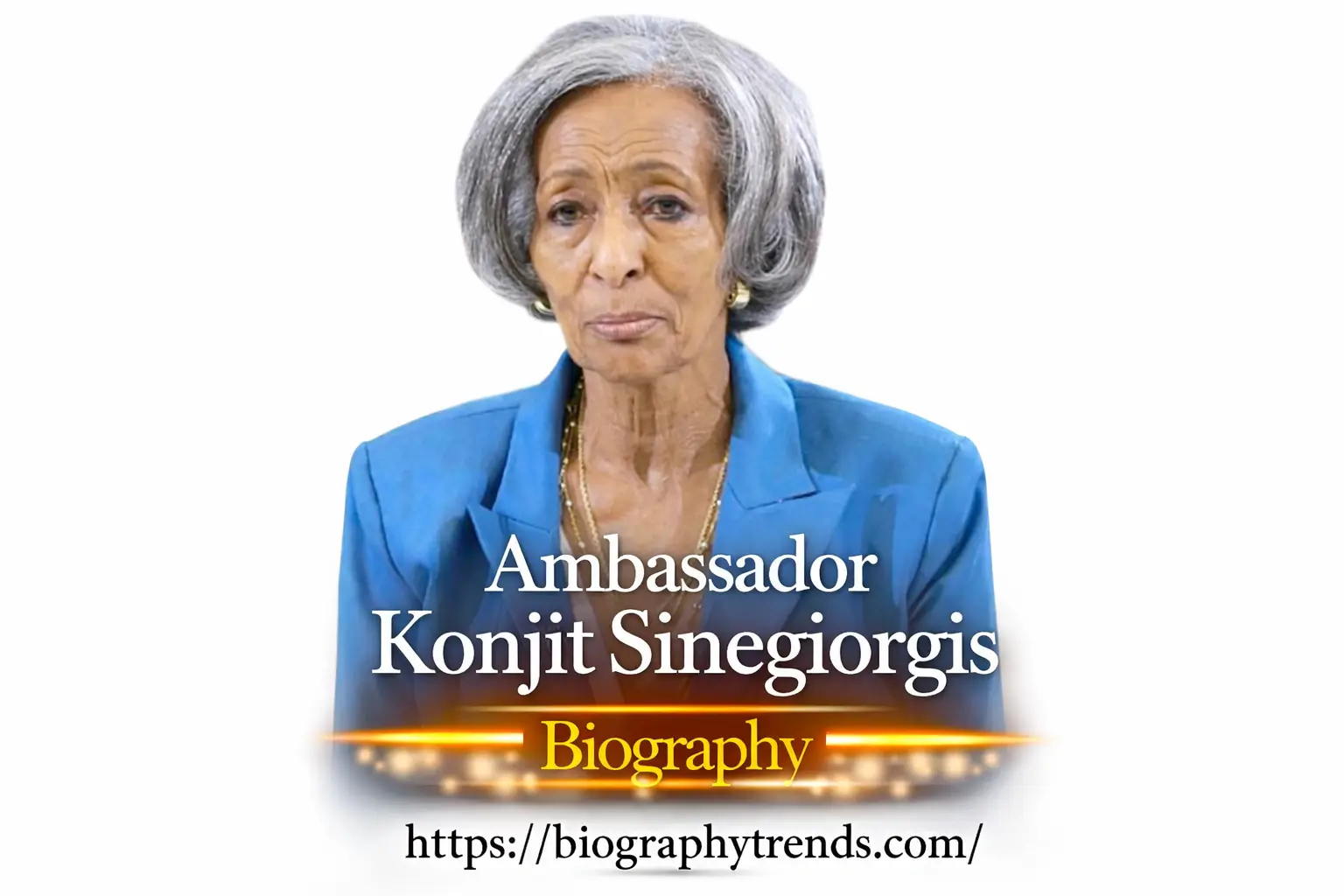
Who Is Ambassador Konjit Sinegiorgis?
Konjit Sinegiorgis stands as one of the most respected figures in Ethiopian diplomatic history and a trailblazer for women in African international relations. Born in Ethiopia in 1940, she dedicated her entire life to public service, rising through the ranks to become one of the most prominent ambassadors to represent her nation on the global stage. Her career spanned several decades and included postings to major world capitals, involvement in transformative continental initiatives, and a legacy that continues to inspire future generations of diplomats and women leaders across Africa and beyond.
The story of Ambassador Konjit Sinegiorgis is not merely about professional achievement. It represents a powerful narrative of perseverance, excellence, and dedication to national service during a period when women faced significant barriers to leadership roles. Her journey from a young girl growing up in Ethiopia to a seasoned diplomat representing her country in multiple nations demonstrates what is possible when talent meets opportunity and determination.
Understanding Ambassador Konjit Sinegiorgis requires examining her formative years, her educational background, her extensive diplomatic career, her contributions to African unity, and the lasting impact she left behind. Her passing in 2026 at the age of 86 marked the end of an era in Ethiopian diplomacy, but her influence continues to shape how Ethiopia engages with the international community and how African nations cooperate with one another.
This comprehensive biography aims to provide readers with an in depth exploration of Ambassador Konjit Sinegiorgis’s life, from her birth in 1940 through her distinguished career, her personal choices, and her enduring legacy. Whether you are a student of international relations, a researcher of African diplomacy, or simply someone interested in remarkable life stories, this article offers detailed insights into what made Konjit Sinegiorgis one of Africa’s most respected diplomatic figures.
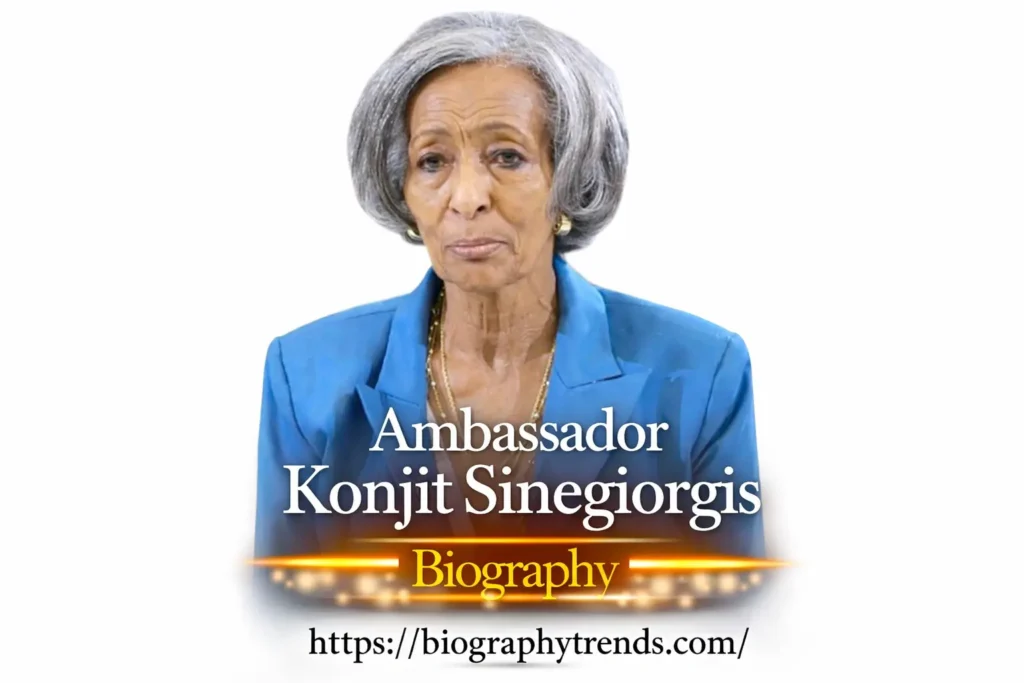
Ambassador Konjit Sinegiorgis Early Life and Background
Konjit Sinegiorgis was born in Ethiopia in 1940, during a period when the country was actively shaping its identity on the international stage. This was a transformative era for Ethiopia, as the nation navigated the complexities of modernization while maintaining its unique cultural heritage and ancient traditions. The 1940s were particularly significant for Ethiopia, following the country’s liberation from Italian occupation and its reassertion of sovereignty on the world stage.
Growing up in such an environment likely influenced her worldview and interest in global affairs from an early age. Ethiopia’s position as one of the few African nations that had never been fully colonized gave it a distinctive perspective on international relations. Young Konjit would have been exposed to discussions about national sovereignty, international diplomacy, and Ethiopia’s role in the emerging post colonial African order. These early exposures planted seeds that would eventually blossom into a lifelong career in diplomatic service.
Her early life was marked by discipline, education, and a desire to serve her country. In the Ethiopia of the 1940s and 1950s, educational opportunities for girls were limited compared to those available to boys. However, Konjit demonstrated an exceptional commitment to learning that set her apart from her peers. She understood that education was the key to unlocking opportunities for service and leadership, and she pursued her studies with dedication and focus.
At a time when opportunities for women in leadership roles were severely limited, she showed determination and ambition that set her apart. The mid twentieth century was not an era when women commonly rose to positions of national prominence in Ethiopia or across Africa. Traditional gender roles confined most women to domestic spheres, and those who sought professional careers faced significant social and institutional barriers. Konjit Sinegiorgis refused to accept these limitations, instead charting a course that would eventually take her to the highest levels of Ethiopian diplomacy.
Her background helped shape her future as a diplomat, preparing her for the challenges of representing her nation internationally. The combination of her Ethiopian cultural heritage, her exposure to international affairs during her formative years, and her personal commitment to excellence created a foundation upon which she would build an extraordinary career. She understood that representing Ethiopia abroad required not only professional competence but also a deep appreciation for her country’s history, culture, and aspirations.
The Ethiopia of Konjit Sinegiorgis’s youth was a nation in transition. Emperor Haile Selassie was working to modernize the country while preserving its ancient traditions and independence. This balancing act between tradition and modernization, between local identity and global engagement, would become a recurring theme in Konjit’s diplomatic career. She would spend decades helping Ethiopia navigate the complexities of international relations, drawing upon the lessons of her early life to guide her approach.
The post war period in Ethiopia was characterized by ambitious nation building projects. The country was working to rebuild after years of occupation, investing in infrastructure, education, and institutions that would support its development. For a young girl with intellectual curiosity and ambition, this environment offered both inspiration and challenge. The visible progress of national development provided a model of what dedicated effort could achieve, while the limited opportunities for women provided a challenge that would motivate her throughout her life.
The cultural context of her upbringing also deserves attention. Ethiopia possesses one of the oldest continuous civilizations in the world, with traditions dating back thousands of years. This deep historical consciousness shaped Konjit’s understanding of her nation’s place in the world. She grew up knowing that Ethiopia was not merely another African country but a civilization with ancient roots and a unique role in world history. This awareness of her nation’s special status informed her diplomatic approach and gave her a sense of purpose that transcended personal ambition.
Family influences likely played a significant role in shaping her character and aspirations. While specific details about her family background are not widely documented, it is reasonable to assume that she benefited from a supportive environment that valued education and public service. The fact that she pursued advanced education and a professional career at a time when most Ethiopian women did not suggests that her family encouraged her ambitions and provided the resources necessary for her development.
The international context of her youth was also significant. The 1940s and 1950s saw the emergence of the Cold War, the decolonization of Africa, and the formation of the United Nations. These global transformations created new opportunities and challenges for nations like Ethiopia. Young Konjit would have observed how her country navigated these international developments, learning lessons about diplomacy, sovereignty, and the art of national survival in a complex world.
Her early exposure to the idea of Ethiopia as a diplomatic actor was particularly important. Ethiopia had been a founding member of the United Nations and the Organization of African Unity, giving it a prominent voice in international affairs from the beginning of the post war order. This early involvement in multilateral institutions created a tradition of diplomatic engagement that Konjit would eventually join and extend.
The values instilled during her formative years, discipline, education, service, and determination, would remain constant throughout her life. They provided the moral compass that guided her through the complexities of diplomatic service and the challenges of breaking barriers for women in leadership. Her early life was not merely a prelude to her career; it was the foundation upon which everything else was built.
Ambassador Konjit Sinegiorgis Education and Academic Foundation
Konjit Sinegiorgis pursued education in fields related to international relations and diplomacy, recognizing that academic preparation was essential for the career she envisioned. Her educational journey was not merely about acquiring credentials; it was about building the intellectual foundation necessary for effective diplomatic service in an increasingly complex world.
Her academic journey provided her with a solid understanding of global politics, negotiation strategies, and diplomatic communication. These were not abstract subjects for Konjit; they were practical tools that she would wield throughout her career. She studied the history of international relations, learning from the successes and failures of diplomats who had preceded her. She examined the structures of global governance, understanding how organizations like the United Nations functioned and how nations could leverage multilateral institutions to advance their interests.
Her education equipped her with strong analytical skills that proved invaluable in her diplomatic work. The ability to analyze complex situations, identify key interests and motivations, and develop strategic responses is essential for effective diplomacy. Konjit’s academic training honed these skills, allowing her to approach diplomatic challenges with intellectual rigor rather than relying solely on intuition or personal charm.
She also developed deep knowledge of international systems through her studies. Understanding how the global order functions, how power is distributed among nations, and how international law shapes state behavior provided her with the context necessary for effective representation of Ethiopian interests. This knowledge allowed her to navigate the corridors of power in world capitals with confidence and authority.
Her ability to engage with diverse cultures was another critical outcome of her education. Diplomacy is fundamentally about building relationships across cultural boundaries, and Konjit’s academic preparation included exposure to different cultural perspectives and communication styles. She learned to appreciate the nuances of cross cultural interaction, understanding that what works in one cultural context may be ineffective or even counterproductive in another.
This educational foundation played a key role in her success as a diplomat and ambassador. While natural talent and personal qualities certainly contributed to her achievements, it was her rigorous academic preparation that provided the framework within which she could deploy those talents most effectively. Her education distinguished her from peers who might have possessed similar ambition but lacked the intellectual tools necessary for sustained diplomatic excellence.
The specific institutions where Konjit pursued her education are not widely documented in public sources, which is consistent with her private nature. However, the quality of her diplomatic performance suggests that she received training at institutions that provided rigorous preparation in international relations theory, diplomatic practice, and area studies relevant to Ethiopia’s foreign policy priorities.
Her education likely included study of international law, which provides the legal framework within which diplomacy operates. Understanding treaties, conventions, and customary international law is essential for effective diplomatic representation. Konjit’s ability to navigate complex international negotiations suggests thorough grounding in these legal foundations.
Economics and trade policy were probably also part of her academic preparation. As Ethiopia sought to develop its economy and integrate into the global trading system, diplomats needed to understand trade agreements, development finance, and economic diplomacy. Konjit’s effectiveness in promoting Ethiopian interests suggests that she possessed this economic literacy.
Language skills were undoubtedly an important component of her education. Effective diplomacy requires the ability to communicate in multiple languages, and Konjit’s postings to diverse countries suggest proficiency in several international languages. Her ability to engage directly with counterparts in their own languages would have enhanced her effectiveness and built stronger personal relationships.
The study of history, particularly African history and the history of international relations, likely formed part of her academic curriculum. Understanding historical context is essential for effective diplomacy, as current conflicts and cooperation often have deep historical roots. Konjit’s ability to navigate complex bilateral relationships suggests that she possessed this historical awareness.
Her education also likely included practical training in diplomatic skills such as negotiation, protocol, and public speaking. These are not merely natural talents but learned competencies that can be developed through systematic training. Konjit’s polished diplomatic performance suggests that she benefited from such practical instruction.
The intellectual habits formed during her education, critical thinking, careful analysis, attention to detail, would serve her throughout her career. Diplomacy often involves making decisions with incomplete information under time pressure. The analytical discipline developed through academic training provides a foundation for making sound judgments in such circumstances.
Her commitment to education also set an example for others. By pursuing advanced studies at a time when few Ethiopian women did so, she demonstrated that intellectual achievement was compatible with feminine identity and national service. This example would inspire subsequent generations of Ethiopian women to pursue education and professional careers.
Ambassador Konjit Sinegiorgis Career Beginnings and Rise Through Public Service
Konjit Sinegiorgis began her professional life in public service, where she gained experience in administrative and governmental roles. This early career phase was crucial in developing the practical skills and institutional knowledge that would serve her throughout her diplomatic career. Public service in Ethiopia during the mid twentieth century required dedication, patience, and a willingness to work within bureaucratic structures that were often complex and challenging.
Her dedication and professionalism helped her rise quickly within the system. In an era when women were rarely promoted to positions of authority, Konjit’s rapid advancement was a testament to her exceptional abilities. She approached every assignment with thoroughness and commitment, earning the respect of colleagues and superiors alike. Her work ethic was legendary, and her attention to detail ensured that tasks entrusted to her were completed to the highest standards.
She demonstrated strong leadership abilities early in her career, earning the trust of her colleagues and superiors. Leadership in diplomatic contexts requires a unique combination of qualities: the ability to inspire confidence, the capacity to make difficult decisions under pressure, and the wisdom to build consensus among diverse stakeholders. Konjit exhibited these qualities from the beginning of her career, suggesting that her diplomatic talents were not merely learned but inherent aspects of her character.
The early phase of her career also provided opportunities to develop expertise in specific policy areas that would prove relevant to her later diplomatic postings. She gained experience in trade policy, cultural exchange, and bilateral relations, building a portfolio of knowledge that made her an increasingly valuable asset to the Ethiopian government. Each assignment, no matter how modest, contributed to her growing reputation as a capable and reliable public servant.
These formative professional experiences were crucial in preparing her for the ambassadorial roles that would define her later career. Diplomacy at the highest levels requires more than academic knowledge; it demands practical wisdom, political sensitivity, and the ability to operate effectively within governmental structures. Konjit’s early career in public service provided all of these essential foundations.
The specific positions she held during this early phase are not extensively documented, which is typical for mid level public servants whose work does not generate public attention. However, the trajectory of her career suggests that she held progressively responsible positions that allowed her to demonstrate her capabilities and build the relationships necessary for advancement.
Her early work likely involved exposure to Ethiopia’s foreign policy bureaucracy, including the Ministry of Foreign Affairs and related governmental institutions. Understanding how these institutions function, how policy is formulated and implemented, and how different governmental actors interact is essential for effective diplomatic service. Konjit’s later effectiveness suggests that she mastered these institutional dynamics during her formative years.
She probably also gained experience in drafting official correspondence, preparing briefing materials, and assisting senior officials. These seemingly mundane tasks are the building blocks of diplomatic competence. The ability to communicate clearly and persuasively in official channels, to anticipate the information needs of decision makers, and to present complex issues in accessible terms are skills that distinguish effective diplomats from mediocre ones.
Her early career likely included opportunities to participate in international meetings and conferences, initially as part of delegations led by more senior officials. These experiences provided exposure to the protocols and practices of multilateral diplomacy. She would have observed how experienced diplomats conducted themselves, how negotiations unfolded, and how agreements were reached. This observational learning was invaluable preparation for her future independent responsibilities.
The mentors and colleagues she worked with during this period likely played important roles in her development. Senior diplomats who recognized her potential probably provided guidance, opportunities, and advocacy that accelerated her advancement. The importance of mentorship in diplomatic careers cannot be overstated, and Konjit’s rapid rise suggests that she benefited from supportive senior colleagues.
Her early career also required her to navigate the gender dynamics of Ethiopian public service. As a woman in a male dominated environment, she faced challenges that her male colleagues did not. She had to prove her competence repeatedly, overcome stereotypes about women’s capabilities, and assert her authority in contexts where it was not automatically granted. Successfully navigating these challenges built the resilience and self confidence that would serve her throughout her career.
The patience required during this early career phase was itself a form of preparation. Diplomatic careers typically involve long periods of preparation before reaching positions of significant independent responsibility. The ability to maintain motivation and continue developing one’s capabilities during these preparatory years is essential for long term success. Konjit’s eventual achievement of ambassadorial rank demonstrates that she possessed this patience and persistence.
Ambassador Konjit Sinegiorgis Diplomatic Career and International Postings
Konjit Sinegiorgis went on to become a prominent figure in Ethiopian diplomacy, achieving the rank of ambassador and representing her nation in multiple countries across different continents. Her diplomatic career was distinguished by its breadth and depth, encompassing postings to nations with diverse political systems, cultural traditions, and bilateral relationships with Ethiopia.
She served in various ambassadorial roles, representing Ethiopia in different parts of the world. Each posting presented unique challenges and opportunities, requiring her to adapt her approach while maintaining consistent commitment to Ethiopian interests. The ability to represent a single nation’s interests across diverse international contexts is one of the most demanding aspects of diplomatic work, and Konjit excelled in this regard.
Her assignments included countries such as Canada, a major Western democracy with significant Ethiopian diaspora community and economic ties. In Ottawa, she worked to strengthen bilateral relations between Ethiopia and Canada, promoting trade, cultural exchange, and political cooperation. The Canada posting required her to navigate the complexities of Western diplomatic protocols while advocating for Ethiopian perspectives on issues ranging from development assistance to human rights.
The Canada posting was particularly significant because of the large Ethiopian diaspora community in that country. Diaspora diplomacy has become increasingly important for many nations, and Konjit would have worked to maintain connections with Ethiopian Canadians, support their integration while preserving cultural ties, and leverage their potential contributions to Ethiopia’s development. This aspect of her work required sensitivity to the complex identities of diaspora communities and skill in balancing multiple constituencies.
She also served in Egypt, a neighboring country with which Ethiopia shares both historical connections and contemporary challenges. The Egypt posting was particularly sensitive given the longstanding tensions over Nile River water rights, a critical issue for both nations. Representing Ethiopian interests in Cairo required diplomatic finesse, strategic thinking, and the ability to engage in difficult negotiations while maintaining cordial bilateral relations.
The Nile water issue is one of the most complex and consequential disputes in African international relations. Egypt’s historical dependence on the Nile for agriculture and livelihood has created deep anxieties about any upstream development that might affect water flows. Ethiopia’s efforts to develop its water resources for hydroelectric power and irrigation inevitably raise Egyptian concerns. Navigating this issue required Konjit to balance principled advocacy for Ethiopia’s development rights with recognition of legitimate Egyptian concerns and the need for cooperative frameworks.
Her posting to Israel represented another dimension of her diplomatic portfolio. Israel and Ethiopia share ancient historical connections, and modern diplomatic relations encompass security cooperation, agricultural technology transfer, and cultural exchange. In Tel Aviv, Konjit worked to deepen these ties while navigating the complex geopolitical dynamics of the Middle East region.
The Israel Ethiopia relationship has deep historical roots dating back to biblical times and the legendary connection between King Solomon and the Queen of Sheba. In modern times, the relationship has included significant security cooperation, particularly during periods of regional instability. Konjit’s posting to Israel required her to manage these sensitive security dimensions while also promoting broader bilateral cooperation in areas such as agriculture, technology, and education.
She also served in Austria, a European nation that hosts numerous international organizations including United Nations agencies. The Vienna posting allowed her to engage with multilateral diplomacy at the highest levels, representing Ethiopian interests in forums where global norms and policies are shaped. This experience broadened her diplomatic perspective and enhanced her ability to operate effectively in international institutional settings.
Vienna as a diplomatic posting offers unique advantages because of its status as a major center of international organization headquarters. The United Nations Office at Vienna, the International Atomic Energy Agency, and other important institutions are based there, providing opportunities for engagement with multilateral diplomacy that are not available in most national capitals. Konjit’s experience in this environment enhanced her understanding of how international institutions function and how smaller nations can leverage them effectively.
In all of these roles, she worked to strengthen bilateral relations and promote Ethiopia’s interests on the international stage. Her approach combined principled advocacy for Ethiopian positions with pragmatic recognition of the need for compromise and cooperation. She understood that effective diplomacy requires balancing idealism with realism, pursuing national interests while building the relationships necessary for long term international engagement.
The specific achievements during each posting are not extensively documented in public sources, which is typical for diplomatic work much of which occurs behind closed doors. However, the fact that she was entrusted with multiple ambassadorial postings suggests that she performed effectively in each role and built a reputation for reliability and competence.
Her diplomatic work likely included extensive negotiation on trade agreements, development assistance, and cultural exchange programs. Each of these areas requires different skills and approaches. Trade negotiations demand attention to technical detail and understanding of commercial interests. Development assistance discussions require sensitivity to power dynamics between donor and recipient nations. Cultural exchange programs need creativity and commitment to building people to people connections.
She probably also engaged in public diplomacy, representing Ethiopia to foreign publics through media appearances, cultural events, and educational programs. Public diplomacy has become increasingly important in the modern era, as nations recognize that their international standing depends not only on government to government relations but also on how they are perceived by ordinary citizens around the world.
Her diplomatic career required frequent travel, both within her postings and to international conferences and meetings. This travel was essential for maintaining relationships, gathering information, and representing Ethiopian interests in various forums. The physical demands of diplomatic life, including jet lag, long hours, and time away from home, require physical stamina and personal sacrifice. Konjit’s sustained career suggests that she possessed these qualities.
The relationships she built with foreign diplomats, government officials, and civil society leaders during her postings created a network of contacts that served Ethiopian interests long after specific postings ended. Effective diplomacy is as much about relationships as about formal negotiations, and Konjit’s network of international contacts was undoubtedly one of her most valuable assets.
Ambassador Konjit Sinegiorgis Role in African Diplomacy and Continental Unity
Konjit Sinegiorgis also played an important role in African diplomatic affairs beyond her bilateral postings. She understood that Ethiopia’s interests were inextricably linked to the broader project of African unity and development, and she dedicated significant energy to promoting continental cooperation throughout her career.
She contributed to initiatives that promoted cooperation among African nations, recognizing that the challenges facing individual African countries, from poverty to conflict to underdevelopment, could only be effectively addressed through collective action. Her work in this area reflected a deep commitment to Pan African ideals and a belief in the potential of African nations to shape their own destiny through mutual support and collaboration.
One of her most notable contributions was her involvement in the transition from the Organization of African Unity (OAU) to the African Union (AU), a significant development in the continent’s political history. The OAU, founded in 1963, had played an important role in supporting African liberation movements and defending continental sovereignty, but by the 1990s many observers believed it needed reform to address the new challenges facing Africa in the post Cold War era.
The creation of the African Union in 2002 represented a bold attempt to reinvigorate African cooperation with stronger institutions, clearer objectives, and more effective mechanisms for implementation. Konjit’s involvement in this transition demonstrated her commitment to building stronger African institutions and her recognition that Ethiopia, as one of Africa’s oldest independent nations and host to the AU headquarters in Addis Ababa, had a special responsibility to support continental integration.
The transition from OAU to AU was not merely a name change but a fundamental reimagining of African continental organization. The AU was designed to be more interventionist than the OAU, with mechanisms for responding to conflicts, promoting democracy, and advancing economic integration. These changes reflected a new confidence in Africa’s ability to solve its own problems and a recognition that the old model of strict non interference was inadequate for addressing contemporary challenges.
Konjit’s contributions to this transition likely included participation in negotiations, drafting of foundational documents, and advocacy for institutional designs that would serve African interests effectively. While the specific details of her involvement may not be fully documented in public sources, her presence during this critical juncture in African history attests to her stature within continental diplomatic circles.
Her work on African diplomacy also likely involved engagement with regional economic communities and sub regional organizations. Africa’s regional integration has proceeded through multiple overlapping organizations, including the Economic Community of West African States, the Southern African Development Community, and the Intergovernmental Authority on Development in East Africa. Ethiopia’s participation in and leadership of these organizations would have been part of Konjit’s diplomatic portfolio.
She probably also contributed to African positions on global issues such as climate change, trade negotiations, and reform of international institutions. African nations have increasingly sought to coordinate their positions in global forums to amplify their influence. Konjit’s experience in multilateral diplomacy would have made her a valuable contributor to these coordination efforts.
Her commitment to African unity was rooted in a deep understanding of African history and the shared experiences that bind the continent together. The legacy of colonialism, the struggles for independence, and the ongoing challenges of development create common interests that transcend national boundaries. Konjit understood that African cooperation is not merely a political choice but a practical necessity for addressing challenges that no single nation can solve alone.
Ambassador Konjit Sinegiorgis Leadership, Influence and Professional Excellence
Throughout her career, Konjit Sinegiorgis held leadership positions that required strategic thinking and effective communication. These roles placed her at the center of Ethiopian foreign policy decision making and gave her influence over how her country engaged with the international community.
She was respected for her ability to handle complex diplomatic situations with professionalism. Diplomacy often involves navigating crises, managing competing interests, and finding solutions to problems that resist easy answers. Konjit’s colleagues and counterparts recognized her capacity to remain calm under pressure, to analyze situations objectively, and to develop creative approaches to seemingly intractable challenges.
Her influence extended beyond Ethiopia, impacting regional and international diplomatic efforts. As a senior African diplomat with extensive experience in multiple world capitals, she was frequently consulted by colleagues from other nations seeking her perspective on African affairs or her advice on engaging with Ethiopian and broader African interests. This influence was built on decades of demonstrated competence and integrity rather than on political maneuvering or self promotion.
The respect she commanded in diplomatic circles was particularly notable given the barriers she had overcome as a woman in a male dominated profession. Her success helped pave the way for subsequent generations of women diplomats across Africa, demonstrating that gender need not be an obstacle to achieving excellence in international relations. Her example proved that women could not only participate in diplomacy but could excel at its highest levels.
Her leadership style likely combined firmness with diplomacy, principled advocacy with pragmatic flexibility. Effective diplomatic leadership requires knowing when to stand firm and when to compromise, when to speak publicly and when to work behind the scenes. Konjit’s sustained success suggests that she mastered these nuances of diplomatic leadership.
She probably also mentored younger diplomats, particularly women entering the profession. The challenges she had overcome gave her unique insights that could guide those following in her footsteps. Her example and advice would have been invaluable resources for a new generation of Ethiopian and African diplomats seeking to navigate their own careers.
Her professional excellence was recognized not only by Ethiopians but by the international diplomatic community. Senior diplomats from other nations would have respected her for her knowledge, her integrity, and her effectiveness. This international recognition enhanced Ethiopia’s standing and created goodwill that served the nation’s interests in countless ways.
Ambassador Konjit Sinegiorgis Net Worth and Financial Profile
There is no publicly confirmed information about the net worth of Konjit Sinegiorgis, reflecting her private nature and the fact that she built her career in public service rather than private enterprise. Unlike celebrities or business figures whose financial details frequently appear in media coverage, career diplomats typically maintain privacy regarding their personal finances.
As a career diplomat, her income primarily came from government service rather than private business ventures. Ethiopian government salaries for diplomatic service, while providing a comfortable living, do not generate the kind of wealth associated with private sector success. Konjit chose a life of public service understanding that financial rewards would be modest compared to what she might have earned in commercial pursuits.
While her financial details are not publicly disclosed, her true wealth can be seen in her contributions to diplomacy and international relations. The value of her work cannot be measured in monetary terms alone. She helped shape Ethiopia’s international relationships, contributed to African continental unity, and inspired future generations of diplomats. These intangible contributions represent a legacy far more valuable than any financial fortune.
For those interested in the economic aspects of diplomatic careers, it is worth noting that while ambassadorial positions do not generate significant personal wealth, they provide access to networks, knowledge, and experiences that can be invaluable. Konjit’s career gave her a front row seat to major historical events and relationships with influential figures across multiple continents, experiences that enriched her life in ways that transcend financial measurement.
The lifestyle of a career diplomat involves certain privileges, including residence in official accommodations, representation allowances, and travel opportunities. These benefits, while not equivalent to private wealth, provide a standard of living that many would consider comfortable and enriching. Konjit’s diplomatic career would have provided these benefits while also demanding significant personal sacrifices.
Her financial profile also reflects the values of public service that characterized her generation. Many who entered government service in the post colonial era were motivated by ideals of national development and continental unity rather than personal enrichment. They accepted modest financial rewards in exchange for the opportunity to contribute to causes larger than themselves. Konjit’s career exemplifies this ethic of service.
Ambassador Konjit Sinegiorgis Personal Life and Private Values
Konjit Sinegiorgis maintained a private personal life throughout her career and retirement. She chose to focus on her career and public service rather than seeking media attention or cultivating a public persona beyond her professional role. This preference for privacy was consistent with the values of discretion and professionalism that characterized her diplomatic work.
There is limited publicly available information about her family or personal relationships, reflecting her preference for privacy. Unlike contemporary public figures who often share details of their personal lives through social media and entertainment journalism, Konjit belonged to a generation and profession that valued separation between public duties and private affairs. She understood that effective diplomacy sometimes requires maintaining distance between personal and professional spheres.
This privacy should not be interpreted as a lack of personal richness or meaningful relationships. It is far more likely that Konjit enjoyed fulfilling personal connections with family and friends but chose to protect these relationships from public scrutiny. The demands of diplomatic life, with its frequent relocations and long hours, often require strong personal support systems, and it is reasonable to assume that Konjit benefited from such support throughout her career.
Her choice to maintain privacy also reflects a professional philosophy that emphasized substance over style. She believed that her work should speak for itself, without need for personal publicity or celebrity cultivation. This approach earned her respect among diplomatic peers who valued professionalism over self promotion.
The personal qualities that underpinned her professional success, discipline, determination, integrity, and commitment to service, were likely also evident in her private life. These are not merely professional attributes but aspects of character that shape how individuals conduct themselves in all spheres of life. Konjit’s sustained excellence in demanding professional roles suggests that these qualities were deeply ingrained aspects of her personality.
Her personal life would have been shaped by the demands of diplomatic service. Frequent relocations, long working hours, and the need to maintain social engagements as part of professional responsibilities can strain personal relationships. Successful diplomats must find ways to balance these demands with personal needs, and Konjit’s long career suggests that she achieved this balance effectively.
Ambassador Konjit Sinegiorgis Death and Final Chapter
Konjit Sinegiorgis passed away in 2026 at the age of 86, marking the end of a long and impactful career in diplomacy. Her death was mourned across Ethiopia and throughout African diplomatic circles, where she was remembered as a pioneer and exemplar of professional excellence.
Although specific details regarding the cause of her death have not been widely disclosed, this privacy around her final days was consistent with how she had lived her entire life. She departed this world with the same dignity and discretion that had characterized her decades of public service, leaving the focus on her achievements rather than on the circumstances of her passing.
Her death at 86 represented a full life dedicated to service. She had witnessed and contributed to major transformations in Ethiopian and African international relations, from the early years of African independence through the creation of the African Union and into the twenty first century. Her longevity allowed her to see the long term impacts of her work and to observe how the diplomatic landscape evolved over more than half a century.
The passing of such a distinguished figure inevitably prompted reflection on her contributions and the values she represented. Colleagues, successors, and observers of African diplomacy took the opportunity to assess her legacy and to consider how her example might inform future generations of diplomats and public servants.
Her death also represented a generational transition in Ethiopian diplomacy. As veterans of the early post independence era pass from the scene, new generations of diplomats must assume responsibility for Ethiopia’s international engagement. Konjit’s example provides a standard against which these successors can measure themselves and a source of inspiration as they face their own challenges.
The tributes that followed her death, while not extensively documented in public sources, would have acknowledged her contributions to Ethiopian diplomacy, her role in advancing African unity, and her example as a woman who achieved excellence in a demanding profession. These tributes, whether formal or informal, public or private, represented the respect and gratitude of those who knew her work.
READ ALSO:
- Kid Rock Biography
- Rory McIlroy Biography
- Atty. Michael Poa Biography
- Cardi B Biography
- Pam Bondi Biography
Ambassador Konjit Sinegiorgis Legacy and Enduring Impact
Konjit Sinegiorgis leaves behind a powerful legacy of dedication, leadership, and service that continues to resonate across Ethiopia, Africa, and the international diplomatic community. Her life story offers lessons that remain relevant for contemporary and future generations seeking to make meaningful contributions to public life.
She is remembered as a trailblazer for women in diplomacy, having achieved success in a profession that historically excluded women from positions of authority and influence. Her career demonstrated that women possess the intellectual capacity, emotional intelligence, and strategic acumen necessary for effective diplomatic leadership. By succeeding in this demanding field, she helped dismantle stereotypes and opened doors for women who followed in her footsteps.
Her work continues to inspire future diplomats who see in her example a model of professional excellence, integrity, and dedication to national service. Young Ethiopians and Africans considering careers in international relations can look to Konjit’s career as evidence that diplomatic service offers opportunities for meaningful contribution to national and continental development.
Women in leadership roles across various sectors find inspiration in her example. While she operated in the specific context of diplomacy, her achievements speak to broader truths about the capacity of women to lead effectively in any field. Her success required not only personal talent and effort but also the courage to challenge prevailing assumptions about gender roles.
Students of international relations study her career as an example of effective diplomatic practice. Her approach to bilateral relations, her contributions to multilateral institutions, and her navigation of complex geopolitical challenges offer case studies in how small and medium sized nations can maximize their influence in the international system. Her career demonstrates that diplomatic effectiveness depends more on skill and commitment than on the size or power of the nation being represented.
Her influence remains an important part of Ethiopia’s diplomatic history. As the nation continues to engage with the international community, facing challenges ranging from regional security to economic development to climate change, the foundations that Konjit helped build continue to support Ethiopian foreign policy. The relationships she cultivated, the institutions she helped shape, and the standards of professionalism she embodied remain relevant to Ethiopia’s ongoing international engagement.
Her legacy also includes the example she set for how to conduct oneself in public life. In an era when public figures are often criticized for self promotion, corruption, or lack of principle, Konjit’s career stands as a reminder that public service can be conducted with dignity, integrity, and commitment to larger purposes. Her example challenges contemporary and future public servants to maintain high standards of ethical conduct.
The institutions she helped build, particularly the African Union, continue to evolve and face new challenges. Her contributions to these institutions during their formative years helped establish patterns of cooperation and norms of behavior that persist today. While the AU faces criticism and challenges, its continued existence and activity represent in part the success of efforts in which Konjit participated.
Her legacy also lives on in the individuals she influenced and mentored. The diplomats and public servants who worked with her, learned from her, and were inspired by her example carry forward her values and approaches in their own work. This transmission of professional culture from one generation to the next is one of the most important ways in which individual legacies persist.
Conclusion
Ambassador Konjit Sinegiorgis was a remarkable diplomat whose career spanned decades of service and achievement. Her contributions to Ethiopia and Africa as a whole highlight the importance of diplomacy in global development and international cooperation. Her life story serves as an inspiration to those who aspire to make meaningful impact in public service and international relations.
From her birth in Ethiopia in 1940 through her distinguished diplomatic career to her passing in 2026, Konjit Sinegiorgis embodied the highest ideals of public service. She demonstrated that dedication, education, professionalism, and integrity can overcome barriers of gender and circumstance to achieve excellence in demanding fields. Her postings to Canada, Egypt, Israel, and Austria represented not merely professional assignments but opportunities to strengthen her nation’s international standing and to promote African interests on the world stage.
Her role in the transition from the Organization of African Unity to the African Union attests to her commitment to continental cooperation and her recognition that Ethiopia’s destiny is intertwined with that of its African neighbors. She understood that effective diplomacy requires both principled advocacy and pragmatic engagement, and she balanced these imperatives throughout her career.
As Ethiopia and Africa continue to navigate the complexities of twenty first century international relations, the example of Ambassador Konjit Sinegiorgis remains relevant and inspiring. Her life demonstrates what is possible when talented individuals commit themselves to public service, when women refuse to accept artificial limitations on their potential, and when nations invest in developing the diplomatic capacity necessary for effective international engagement.
Her legacy challenges us to consider what we value in public life. In an age of celebrity culture and short attention spans, Konjit’s career reminds us that the most important contributions are often made quietly, over long periods, by individuals who prioritize service over recognition. Her life invites us to appreciate the diplomats, public servants, and leaders who work diligently behind the scenes to build a better world.
For Ethiopia, her legacy represents a standard of diplomatic excellence that subsequent generations must strive to maintain. For Africa, she represents the potential of continental cooperation and the importance of investing in institutions that serve the collective good. For women, she represents proof that gender need not limit ambition or achievement. For all who care about international relations, she represents the enduring value of professionalism, integrity, and dedication to service.
Ambassador Konjit Sinegiorgis may have passed from this world, but her influence persists in the institutions she helped build, the people she inspired, and the example she set. Her life story deserves to be remembered, studied, and celebrated as one of the great African diplomatic careers of the twentieth and early twenty first centuries.
Frequently Asked Questions
Who is Ambassador Konjit Sinegiorgis?
She was an Ethiopian diplomat known for her long career in international relations and ambassadorial roles. Born in 1940, she rose through the ranks of Ethiopian public service to become one of her nation’s most respected ambassadors, representing Ethiopia in countries including Canada, Egypt, Israel, and Austria. She was also a significant figure in African continental diplomacy, contributing to the transition from the Organization of African Unity to the African Union.
What is Konjit Sinegiorgis’s net worth?
Her net worth is not publicly available. As a career diplomat who dedicated her life to public service rather than private business, her financial details were never disclosed publicly. Her true wealth lies in her diplomatic contributions and lasting legacy rather than in monetary accumulation.
How old was Konjit Sinegiorgis?
She was 86 years old at the time of her death in 2026. Born in 1940, she lived through and contributed to major transformations in Ethiopian and African international relations across more than eight decades of life.
What was she known for?
She was known for her diplomatic service and contributions to African diplomacy. Her career included ambassadorial postings to multiple nations, leadership roles in Ethiopian foreign policy, and significant involvement in the creation of the African Union. She was also recognized as a trailblazer for women in African diplomacy.
What was the cause of her death?
The exact cause of death has not been officially confirmed or widely disclosed, consistent with her lifelong preference for privacy regarding personal matters. Her passing in 2026 was mourned across diplomatic circles where she was remembered for her professional achievements rather than the circumstances of her death.
What countries did Ambassador Konjit Sinegiorgis serve in?
She served as ambassador to several countries including Canada, Egypt, Israel, and Austria. Each posting presented unique diplomatic challenges and allowed her to develop expertise in different regional contexts and bilateral relationships.
What was her role in the African Union?
She was involved in the transition from the Organization of African Unity to the African Union, a major institutional transformation in African continental cooperation. Her contributions to this process reflected her commitment to stronger African institutions and her recognition of Ethiopia’s special role in hosting the AU headquarters.
Why is Konjit Sinegiorgis considered a trailblazer?
She is considered a trailblazer because she achieved senior diplomatic leadership at a time when women faced significant barriers to such positions. Her success helped demonstrate that women could excel in international relations and opened doors for subsequent generations of female diplomats across Africa.
What can students learn from Konjit Sinegiorgis’s career?
Students of international relations can learn from her example the importance of rigorous academic preparation, professional dedication, cross cultural competence, and principled engagement in diplomatic practice. Her career demonstrates that effective diplomacy depends on skill and commitment rather than the power of the nation being represented.
How is Konjit Sinegiorgis remembered today?
She is remembered as a distinguished diplomat, a pioneer for women in African leadership, and a dedicated public servant who represented Ethiopia with excellence across multiple decades and continents. Her legacy continues to inspire those who aspire to careers in diplomacy and public service.
When was Konjit Sinegiorgis born?
Konjit Sinegiorgis was born in 1940 in Ethiopia, during a period of national transformation and international reassertion following the country’s liberation from Italian occupation.
What education did Konjit Sinegiorgis receive?
She pursued education in fields related to international relations and diplomacy, developing strong analytical skills, deep knowledge of international systems, and the ability to engage with diverse cultures. Her academic foundation was crucial to her subsequent diplomatic success.
What was Konjit Sinegiorgis’s early career like?
She began her professional life in Ethiopian public service, gaining experience in administrative and governmental roles. Her dedication and professionalism enabled rapid advancement within the system, and she demonstrated strong leadership abilities that prepared her for ambassadorial responsibilities.
How did Konjit Sinegiorgis contribute to African diplomacy?
Beyond her bilateral postings, she contributed to initiatives promoting cooperation among African nations and played a notable role in the transition from the Organization of African Unity to the African Union, helping to shape stronger continental institutions.
What leadership qualities did Konjit Sinegiorgis demonstrate?
She demonstrated strategic thinking, effective communication, professionalism in complex situations, and the ability to build consensus among diverse stakeholders. Her leadership extended beyond Ethiopia to influence regional and international diplomatic efforts.
Did Konjit Sinegiorgis have a family?
She maintained a private personal life, and limited information is publicly available about her family or personal relationships. She chose to focus public attention on her professional achievements rather than her private affairs.
What is the significance of Konjit Sinegiorgis’s legacy?
Her legacy includes trailblazing achievements for women in diplomacy, contributions to African continental unity, inspiration for future diplomats and leaders, and demonstration that professional excellence and integrity can overcome barriers of gender and circumstance.
How did Konjit Sinegiorgis represent Ethiopia internationally?
She represented Ethiopia through ambassadorial postings to major world capitals, engagement in multilateral forums, promotion of bilateral relations, and advocacy for Ethiopian interests in diverse international contexts ranging from trade negotiations to cultural exchange.
What challenges did Konjit Sinegiorgis face in her career?
She faced significant barriers as a woman in a male dominated profession, the complexities of representing a developing nation in major power capitals, sensitive negotiations over issues such as Nile water rights, and the personal sacrifices required by diplomatic service including frequent relocation and long working hours.
Why is Konjit Sinegiorgis important to Ethiopian history?
She is important to Ethiopian history as one of the nation’s most distinguished diplomats, representing Ethiopia with excellence across multiple decades and continents, contributing to major institutional developments in African cooperation, and setting standards of professionalism that continue to influence Ethiopian foreign policy.
1 thought on “Ambassador Konjit Sinegiorgis Biography: Early Life, Education, Career, Legacy and Death”