Table of Contents
ToggleWho Is Papiya Sultana IPS?
In the vast and complex machinery of Indian governance, where the world’s largest democracy administers justice and maintains order for over 1.4 billion citizens, there exists a cadre of extraordinary individuals whose dedication, discipline, and sacrifice make the entire system function.
Among these public servants, the officers of the Indian Police Service (IPS) occupy a particularly vital position, standing at the intersection of law enforcement, public safety, and administrative governance. Papiya Sultana IPS is one such distinguished officer whose career exemplifies the highest ideals of this demanding profession.
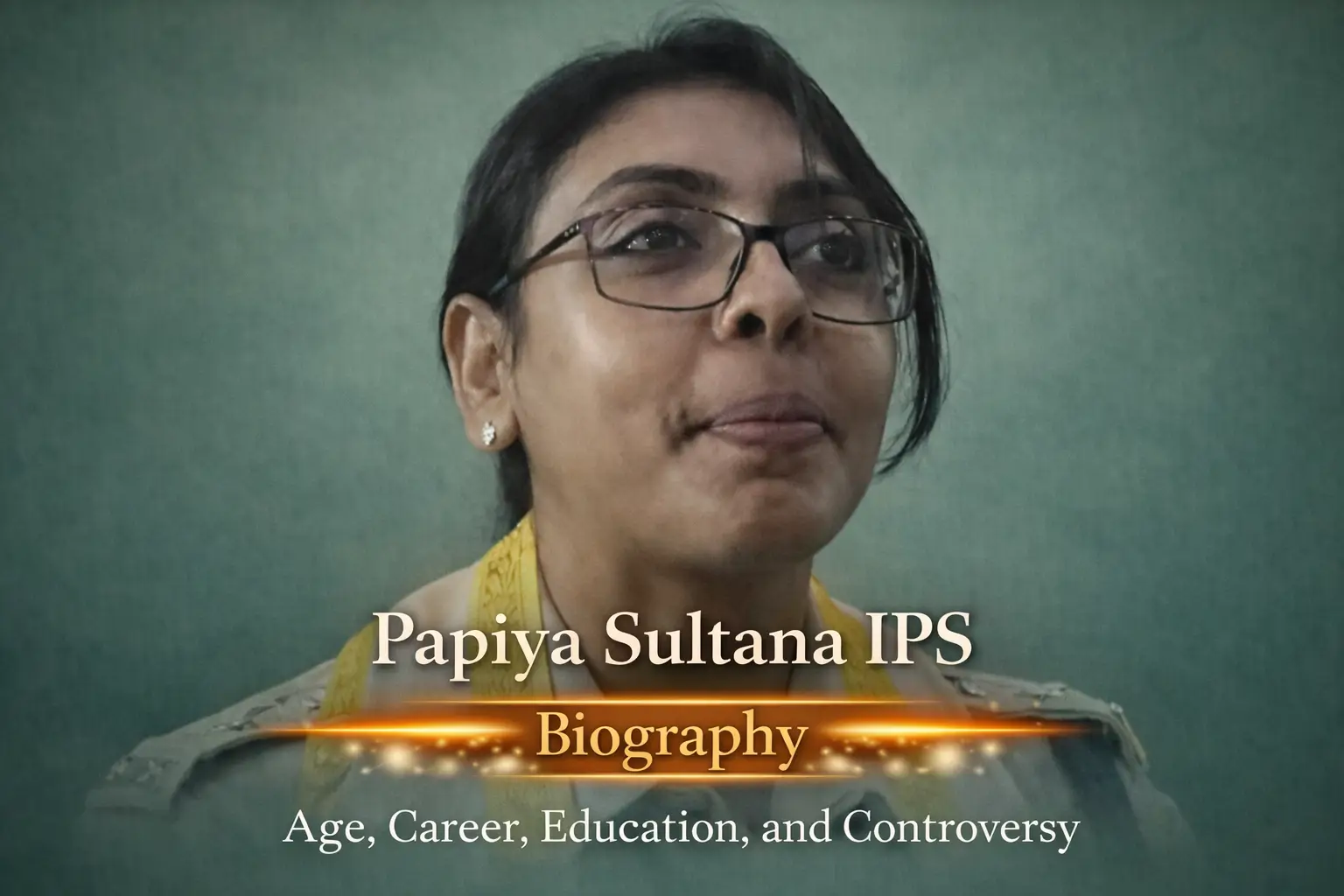
Papiya Sultana is an Indian Police Service officer who has earned recognition throughout her career for her unwavering commitment to law enforcement, public administration, and the maintenance of social order. In a nation where the challenges of policing are as diverse as its population, ranging from urban crime and terrorism to rural insurgency and communal tensions, officers like Papiya Sultana serve as the backbone of India’s security apparatus, translating constitutional mandates into daily action on the streets and in the corridors of power.
What distinguishes Papiya Sultana is not merely her professional position but the qualities she brings to it. She is widely regarded as a disciplined and dedicated officer who has contributed significantly to the Indian policing system through her leadership roles and field assignments. In an era when public trust in institutions faces constant challenges, officers who demonstrate integrity, competence, and genuine commitment to public service become beacons of hope for citizens who depend on the state for their safety and security.
Her journey from aspiring student to accomplished IPS officer represents one of the most demanding career paths available in contemporary India. The Union Public Service Commission (UPSC) Civil Services Examination, through which she entered the IPS, is universally acknowledged as one of the most competitive examinations in the world, with success rates that make admission to the most elite international universities seem comparatively accessible. That Papiya Sultana not only cleared this examination but has built a sustained career of public service speaks to exceptional intellectual ability, emotional resilience, and moral commitment.
In this comprehensive biography, we will explore every dimension of Papiya Sultana’s life and career, from her formative years and educational preparation through her UPSC triumph, her professional responsibilities and achievements, the challenges she has faced as a woman in Indian policing, and the broader context of law enforcement in contemporary India.
Whether you are an aspiring civil servant, a student of public administration, or simply someone interested in the individuals who make democratic governance possible, this deep exploration offers invaluable insights into the nature of public service in one of the world’s most complex nations.
Early Life and Formative Years in India
Birth and Childhood in a Diverse Nation
Papiya Sultana was born and raised in India, a nation of extraordinary diversity where over 22 officially recognized languages, multiple religions, and countless cultural traditions coexist within a single democratic framework.
While specific details about her exact place of birth and date of birth remain private, consistent with the discretion that characterizes many Indian civil servants, her upbringing occurred within the rich tapestry of Indian society, where the values of education, discipline, and social responsibility are deeply cherished.
Growing up in India, Papiya Sultana would have experienced firsthand the complexities that make the nation both challenging and inspiring. India’s democratic experiment, sustained for over seven decades since independence in 1947, represents one of humanity’s most ambitious political achievements. Yet this democracy operates within contexts of significant inequality, persistent poverty, and social tensions that demand constant attention from those charged with maintaining order and justice.
The formative years of any future civil servant are particularly significant, as they shape the worldview and values that will guide professional conduct. For Papiya Sultana, these years were characterized by what those who know her describe as an emerging focus on education and academic development. In a society where educational achievement often represents the most reliable path to social mobility and professional opportunity, her commitment to learning positioned her for the extraordinary challenges ahead.
Developing an Interest in Public Service
From an early age, Papiya Sultana demonstrated an interest in public service, governance, and administrative systems. This attraction to careers that serve collective rather than merely individual interests is a hallmark of those who eventually succeed in India’s civil services. The IPS, in particular, attracts individuals who combine intellectual capability with physical courage, administrative aptitude with emotional resilience, and personal ambition with genuine commitment to social welfare.
The roots of this interest in public service may lie in family influences, educational exposure, or personal observation of social conditions. Many future civil servants report being shaped by encounters with injustice, inequality, or institutional failure that inspired them to work within the system to effect positive change. Others are drawn by the example of family members, teachers, or public figures who demonstrated that individual action could contribute to collective good.
Whatever the specific origins of her motivation, Papiya Sultana’s early commitment to public service set her on a trajectory that would require years of sustained effort, sacrifice, and determination. The path to the IPS is not one that can be navigated casually; it demands total commitment and the willingness to prioritize long term goals over immediate gratification.
Family Background and Influences
A Supportive Environment for Achievement
Although detailed public information about Papiya Sultana’s family background is limited, those familiar with her journey indicate that she comes from a supportive environment that encouraged discipline and academic excellence. This familial support represents a crucial, often underappreciated factor in the success of civil service aspirants.
The UPSC examination process is notoriously demanding, often requiring multiple years of dedicated preparation during which candidates may have limited income and face significant uncertainty. Family support, emotional, financial, and practical, can make the difference between perseverance and abandonment. Parents, siblings, and extended family members who believe in the aspirant’s potential and are willing to make sacrifices to support their preparation provide an essential foundation for success.
In Indian society, where family bonds remain particularly strong and multigenerational households are common, this support often extends beyond immediate encouragement to include tangible assistance with daily responsibilities, financial contributions during preparation periods, and the psychological reassurance that comes from knowing that loved ones believe in one’s potential.
Cultural Values and Professional Identity
The values instilled during Papiya Sultana’s upbringing, discipline, focus, determination, and social responsibility, have clearly shaped her professional identity as an IPS officer. Indian culture places particular emphasis on the concept of “seva” or selfless service, a value drawn from multiple religious and philosophical traditions that elevates work performed for collective benefit above purely personal advancement.
This cultural context helps explain the extraordinary prestige that civil service careers command in Indian society. While corporate positions may offer higher salaries and international careers may provide greater glamour, the Indian Administrative Service (IAS), Indian Police Service (IPS), and Indian Forest Service (IFS) remain the most coveted professional destinations for the nation’s most talented young people. The respect accorded to these officers reflects societal recognition that their work serves fundamental collective needs.
For Papiya Sultana, her family’s encouragement of these values would have reinforced her natural inclinations and provided the moral foundation for the sacrifices that civil service careers inevitably demand.
Education: Building the Foundation for Civil Service
Formal Education in India
Papiya Sultana completed her formal education in India, building the strong academic foundation that civil service aspirants require. While specific details about her educational institutions and qualifications remain private, the typical educational trajectory for successful UPSC candidates involves completion of secondary education followed by a bachelor’s degree from a recognized university.
The Indian education system, despite its well documented challenges regarding access and quality in certain regions, produces graduates of exceptional capability who compete successfully in international academic and professional arenas. For civil service aspirants, the educational foundation must be particularly strong, as the UPSC examination tests knowledge across an extraordinarily broad range of subjects including history, geography, economics, political science, science and technology, and current affairs.
Many successful candidates complete their education in prestigious institutions, central universities, Indian Institutes of Technology (IITs), Indian Institutes of Management (IIMs), or top private colleges, where rigorous academic training develops the analytical skills and knowledge base necessary for competitive examination success. Others achieve success through dedicated self study, demonstrating that institutional prestige, while helpful, is not essential for those with sufficient determination and discipline.
Higher Education and Academic Specialization
Beyond basic qualifications, Papiya Sultana pursued higher education in relevant academic fields that strengthened her understanding of governance, society, and administrative systems. This specialized knowledge would have proven invaluable during UPSC preparation and in her subsequent professional career.
Common academic backgrounds for successful IPS officers include degrees in political science, history, sociology, law, and public administration. These disciplines provide theoretical frameworks for understanding the complex social, economic, and political dynamics that police officers must navigate. A background in law is particularly valuable, as police work is fundamentally concerned with the enforcement of legal norms and the protection of constitutional rights.
The interdisciplinary nature of civil service preparation means that successful candidates typically develop expertise spanning multiple domains. Papiya Sultana’s educational journey would have required mastering not merely her academic specialization but also acquiring broad knowledge of Indian and world history, economic principles, scientific developments, and cultural affairs.
The UPSC Civil Services Examination: India’s Toughest Test
Understanding the Examination Structure
The Union Public Service Commission (UPSC) Civil Services Examination is universally recognized as one of the most challenging competitive examinations in the world. This assessment, through which candidates are selected for the Indian Administrative Service (IAS), Indian Police Service (IPS), Indian Foreign Service (IFS), and other central services, represents a grueling test of intellectual ability, knowledge breadth, analytical skill, and personal endurance.
The examination proceeds through three distinct stages, each progressively more demanding:
The Preliminary Examination serves as a screening test, consisting of two objective-type papers that assess general studies knowledge and analytical aptitude. This stage eliminates the majority of candidates, with success rates typically below 3% of total applicants.
The Main Examination constitutes the substantive assessment, comprising nine papers that test candidates’ knowledge of Indian heritage, governance, international relations, ethics, and optional subjects of their choice. This written examination requires extensive essay writing, precise factual recall, and sophisticated analytical argumentation over multiple days of testing.
The Personality Test (Interview) represents the final stage, in which successful candidates face a panel of senior civil servants and experts who assess their suitability for administrative responsibilities. This interview evaluates communication skills, ethical reasoning, crisis management aptitude, and the personal qualities necessary for leadership in public service.
The Scale of Competition
To appreciate Papiya Sultana’s achievement in clearing the UPSC examination, one must understand the extraordinary scale of competition. Each year, approximately one million candidates apply for the preliminary examination. Of these, roughly 10,000 to 15,000 qualify for the main examination. From this group, approximately 2,000 to 3,000 are called for interviews. Ultimately, fewer than 1,000 candidates are selected for all civil services combined, with the IPS typically receiving 150 to 200 of these selections.
These statistics mean that successful candidates represent less than 0.1% of total applicants—a success rate that makes admission to Harvard, Oxford, or Cambridge seem comparatively accessible. The examination’s difficulty is not merely a function of knowledge requirements but also of the psychological pressure, the years of preparation often required, and the uncertainty that candidates must endure.
Preparation Strategies and Sacrifices
Success in the UPSC examination typically requires years of dedicated preparation. Many candidates spend 2 to 4 years in intensive study, often forgoing employment opportunities, social activities, and personal pursuits to focus entirely on examination readiness. This preparation involves:
Comprehensive syllabus coverage across dozens of subject areas
Daily newspaper reading to maintain current affairs awareness
Extensive practice in essay writing, answer formulation, and time management
Mock examinations to simulate testing conditions and identify weaknesses
Interview preparation including personality development and communication skills
The sacrifices involved in this preparation are substantial. Candidates often experience social isolation, financial strain, and psychological pressure as they pursue a goal with no guarantee of success. Many attempt the examination multiple times before succeeding, each attempt requiring renewed commitment and resilience in the face of previous disappointment.
Papiya Sultana’s success in this examination, therefore, represents not merely intellectual achievement but extraordinary personal discipline, emotional resilience, and the ability to sustain motivation over an extended period of intense effort.
Joining the Indian Police Service (IPS)
The Moment of Achievement
Papiya Sultana’s successful clearance of the UPSC Civil Services Examination and subsequent allocation to the Indian Police Service marked a transformative moment in her life. The allocation process, in which successful candidates are assigned to specific services based on their examination rank, preferences, and available vacancies, determines the trajectory of their entire professional career.
For those allocated to the IPS, this moment represents both triumph and the beginning of an even more demanding journey. While clearing the UPSC examination is an extraordinary achievement, it is merely the threshold to a career that will test every aspect of an officer’s capabilities—physical, intellectual, emotional, and moral.
The Significance of IPS Selection
Selection into the Indian Police Service carries particular significance within Indian society. While the Indian Administrative Service (IAS) is often considered the most prestigious civil service, the IPS commands unique respect due to the nature of its responsibilities. Police officers are the visible face of state authority, the individuals citizens encounter during moments of crisis, danger, and vulnerability.
The IPS also carries risks and challenges that other services do not. Police officers routinely face physical danger, work in hostile environments, and must make split-second decisions that can have life-or-death consequences. The emotional toll of witnessing human suffering, confronting criminal violence, and managing social conflicts is substantial. For these reasons, IPS selection is often viewed as a calling as much as a career choice, suitable only for those with genuine commitment to public safety and social order.
Training at the Sardar Vallabhbhai Patel National Police Academy
Upon selection, IPS officers undergo rigorous training at the Sardar Vallabhbhai Patel National Police Academy (SVPNPA) in Hyderabad, one of the world’s premier police training institutions. This training, typically lasting approximately one year, transforms academically successful candidates into professionally competent police officers.
The curriculum encompasses:
Comprehensive syllabus coverage across dozens of subject areas
Physical training including fitness development, unarmed combat, and weapons proficiency
Legal education covering criminal law, constitutional provisions, and procedural requirements
Investigation techniques including forensic science, interrogation methods, and evidence collection
Leadership development emphasizing command skills, crisis management, and organizational management
Field attachments providing practical experience in actual policing environments
For Papiya Sultana, this training period would have been both challenging and formative, developing the practical skills that complement the theoretical knowledge acquired during academic preparation.
Understanding the Indian Police Service Structure
Historical Origins and Constitutional Foundation
The Indian Police Service traces its origins to the Indian Police Act of 1861, enacted during British colonial rule to establish a centralized police force capable of maintaining colonial authority. Following independence in 1947, this colonial inheritance was transformed through constitutional provisions that placed policing within the framework of democratic governance.
The Constitution of India, adopted in 1950, established the IPS as one of the three All India Services (along with the IAS and IFS), creating a unified cadre of senior police officers who serve both state governments and the central government. This structure ensures that senior police leadership possesses standardized training, shared professional standards, and the capacity to serve anywhere in the nation.
Organizational Hierarchy
The IPS operates within a clear hierarchical structure that defines roles, responsibilities, and career progression:
Director General of Police (DGP) represents the highest rank in state police forces, responsible for overall command and policy implementation.
Additional Director General of Police (ADGP) and Inspector General of Police (IGP) hold senior command positions overseeing large jurisdictions or specialized units.
Deputy Inspector General of Police (DIG) and Senior Superintendent of Police (SSP) manage district-level or specialized operations.
Superintendent of Police (SP) and Additional Superintendent of Police (Addl. SP) handle sub-divisional or specialized responsibilities.
Deputy Superintendent of Police (DSP) and Assistant Superintendent of Police (ASP) represent junior officer ranks where most IPS officers begin their field careers.
Papiya Sultana’s career has progressed through this hierarchy, with her specific rank reflecting her experience, performance, and promotional advancement.
The All India Service Advantage
As an All India Service, the IPS provides officers with unique career advantages. Officers can be deputed to central government positions, serve in different states throughout their careers, and access training and development opportunities that state-specific services cannot match. This national mobility ensures that IPS officers develop broad perspectives on India’s diverse policing challenges and prevents the parochialism that can affect state-specific services.
Career Progression and Professional Responsibilities
The IPS Officer’s Mandate
As an IPS officer, Papiya Sultana’s professional responsibilities encompass the full range of law enforcement and administrative functions that define modern policing in India. The IPS officer’s mandate, derived from constitutional provisions, statutory frameworks, and administrative directives, is both broad and demanding, requiring versatility, judgment, and sustained commitment.
The core responsibilities that define her career include:
Maintaining law and order represents the foundational duty of any police officer. This encompasses preventing criminal activity, responding to law violations, managing public gatherings, and ensuring that citizens can conduct their daily lives without fear of violence or disorder. In India’s complex social environment, where communal tensions, political conflicts, and economic disparities can rapidly escalate, this responsibility requires constant vigilance and proactive engagement.
Crime prevention and investigation supervision involves developing strategies to reduce criminal activity, overseeing the investigation of offenses, ensuring that evidence is properly collected and preserved, and supervising the preparation of cases for prosecution. Modern policing increasingly emphasizes prevention through community engagement, intelligence gathering, and technological innovation.
Public safety management extends beyond criminal law enforcement to encompass disaster response, traffic management, crowd control during events, and protection of vulnerable populations. IPS officers must coordinate with multiple agencies and stakeholders to ensure comprehensive safety coverage.
Administrative policing duties include personnel management, budget oversight, infrastructure development, and policy implementation. Senior officers like Papiya Sultana spend significant time on these administrative functions, ensuring that their organizations operate effectively and efficiently.
Coordination with other government departments is essential, as policing intersects with health services, education, social welfare, and economic development. Effective policing requires collaboration rather than isolation, recognizing that crime and disorder often have roots in social and economic conditions.
Handling security operations in assigned regions may involve counterterrorism activities, border security, protection of critical infrastructure, and response to insurgent or extremist threats. India’s security challenges are extraordinarily diverse, requiring officers to adapt to radically different operational environments.
Maintaining Law and Order: Core Duties
The Foundation of Democratic Governance
Maintaining law and order is not merely a technical policing function but the foundation of democratic governance itself. Without basic security, citizens cannot exercise their rights, participate in economic activity, or enjoy the freedoms that democratic constitutions guarantee. Papiya Sultana’s work in this area, therefore, serves the most fundamental purposes of the Indian state.
The challenges of law and order maintenance in India are extraordinarily complex. With a population exceeding 1.4 billion, linguistic and religious diversity, significant economic inequality, and ongoing social transformations, Indian police officers must navigate situations that would overwhelm less capable professionals. Maintaining order requires not merely enforcement capacity but political sensitivity, cultural awareness, and the ability to de-escalate tensions before they explode into violence.
Community Policing and Public Trust
Modern law enforcement increasingly emphasizes community policing—strategies that build trust between police and citizens rather than relying exclusively on reactive enforcement. This approach recognizes that sustainable order depends on community cooperation rather than mere state coercion.
For IPS officers like Papiya Sultana, community policing involves regular engagement with local populations, responsiveness to community concerns, transparency regarding police activities, and accountability for misconduct. Building trust in communities that have historically experienced police abuse or neglect requires sustained effort and genuine commitment to reform.
The public trust that effective community policing generates is itself a resource for crime prevention. Citizens who trust the police are more likely to report crimes, provide intelligence, serve as witnesses, and cooperate with investigations. Conversely, communities that view police with suspicion become havens for criminal activity that officers cannot penetrate.
Crime Prevention and Investigation Supervision
Proactive Crime Reduction
Crime prevention represents the most effective and humane approach to law enforcement—addressing the conditions that generate criminal behavior before harm occurs. Papiya Sultana’s responsibilities in this area include developing and implementing strategies that reduce criminal opportunity, address risk factors, and strengthen protective factors in communities.
Effective crime prevention requires multi-dimensional approaches:
Situational prevention modifies environments to reduce criminal opportunity through improved lighting, surveillance, access control, and design.
Social prevention addresses the root causes of criminal behavior through education, employment, and social support programs.
Developmental prevention targets at-risk individuals before they engage in criminal activity through mentoring, skills development, and positive socialization.
As a senior officer, Papiya Sultana would supervise the implementation of these strategies, allocate resources, evaluate effectiveness, and adapt approaches based on emerging evidence.
Investigation Excellence
When crimes do occur, effective investigation is essential for justice, deterrence, and public confidence. Papiya Sultana’s supervision of investigations ensures that cases are handled professionally, evidence is collected properly, suspects are treated fairly, and prosecutions are successful.
Modern investigation requires sophisticated capabilities:
Forensic science including DNA analysis, fingerprint examination, digital forensics, and ballistic testing.
Intelligence analysis connecting disparate information to identify patterns and suspects.
Interrogation techniques that elicit truthful information while respecting legal rights.
Case management ensuring that investigations proceed efficiently and evidence is preserved for trial.
The supervision of investigations is particularly demanding, requiring officers to balance multiple cases, manage investigative teams, coordinate with prosecutors, and ensure that legal standards are maintained throughout.
Public Safety Management and Crisis Response
Managing Complex Emergencies
Public safety management extends policing into the broader domain of emergency preparedness and response. In a nation vulnerable to natural disasters, terrorist attacks, industrial accidents, and public health emergencies, police officers must be capable of coordinating complex multi-agency responses under extreme pressure.
Papiya Sultana’s responsibilities in this area would include developing emergency response plans, conducting training exercises, maintaining communication with other emergency services, and commanding field operations during actual crises. The ability to make rapid decisions with incomplete information, to coordinate diverse agencies with different cultures and procedures, and to maintain public confidence during terrifying circumstances distinguishes exceptional police leaders.
Crisis Leadership Under Pressure
Crisis situations test police leadership in ways that routine operations cannot. When disasters strike, when violence erupts, when public order collapses, citizens look to police officers for protection, guidance, and reassurance. The quality of leadership during these moments can determine whether crises are contained or escalate, whether lives are saved or lost.
Effective crisis leadership requires:
Decisiveness in situations where delay increases danger.
Communication that provides accurate information and maintains public confidence.
Coordination of multiple agencies and resources toward common objectives.
Compassion for victims while maintaining operational focus.
Accountability for decisions made under pressure.
Papiya Sultana’s career has required her to develop and demonstrate these capabilities, preparing for crises that may never occur while remaining ready to respond when they do.
Administrative Policing and Government Coordination
The Managerial Dimension
Administrative policing duties consume an increasing portion of senior officers’ time as they advance in rank. While the romantic image of policing emphasizes field operations and dramatic confrontations, the reality of senior leadership involves substantial managerial responsibility, personnel administration, budget management, policy development, and organizational improvement.
For Papiya Sultana, these administrative functions include:
Personnel management encompassing recruitment, training, deployment, promotion, discipline, and welfare of subordinate officers. The quality of a police force depends fundamentally on the quality of its personnel, and senior officers bear responsibility for developing human capital.
Budget oversight ensuring that financial resources are allocated effectively, spent appropriately, and accounted for transparently. Police organizations require substantial resources, and their efficient management is essential for operational effectiveness.
Infrastructure development including police stations, training facilities, communication systems, forensic laboratories, and transportation. Modern policing depends on adequate infrastructure, and senior officers must advocate for and manage these resources.
Policy implementation translating legislative mandates and government directives into operational procedures that guide frontline officers’ conduct.
Inter-Departmental Coordination
Effective policing requires coordination with other government departments that share responsibility for public welfare. Health services address substance abuse and mental health issues that generate police calls. Education prevents juvenile delinquency and builds law-abiding citizenship. Social welfare agencies support vulnerable populations who might otherwise become crime victims or offenders. Economic development reduces the poverty that correlates with criminal activity.
Papiya Sultana’s role in coordinating with these departments reflects the interconnected nature of public safety. Police cannot solve social problems alone; they require partners who address the conditions that generate criminal behavior. This coordination demands diplomatic skill, mutual respect, and recognition that different agencies bring different capabilities to common challenges.
Leadership in Security Operations
Operational Command
Handling security operations in assigned regions represents some of the most demanding responsibilities that IPS officers face. These operations may range from routine patrol and surveillance to high-risk counterterrorism missions, each requiring different capabilities and presenting different dangers.
As an operational commander, Papiya Sultana would be responsible for:
Threat assessment identifying potential security risks and evaluating their severity.
Resource allocation deploying personnel and equipment where they can most effectively address threats.
Operational planning developing detailed plans for specific security operations.
Command and control maintaining communication and coordination during active operations.
After-action review evaluating performance and identifying lessons for improvement.
Specialized Security Challenges
India’s security environment presents extraordinarily diverse challenges that require specialized knowledge and capabilities:
Counterterrorism operations demand intelligence integration, rapid response capability, and coordination with national security agencies. The threat from domestic and international terrorist organizations requires constant vigilance and sophisticated operational approaches.
Border security involves preventing infiltration, smuggling, and illegal migration across India’s extensive and often difficult borders with Pakistan, China, Nepal, Bhutan, Bangladesh, and Myanmar.
Insurgency response in regions affected by separatist or extremist movements requires balancing security operations with political engagement, human rights protection, and development initiatives.
VIP protection for government officials, visiting dignitaries, and other high-value targets demands meticulous planning and flawless execution.
Papiya Sultana’s career has required her to develop expertise across these diverse operational domains, demonstrating the versatility that IPS service demands.
Rank, Postings, and Career Advancement
The Cadre System
As a member of the Indian Police Service, Papiya Sultana is assigned to a specific cadre, a state or group of states where she serves throughout her career, with possible deputation to central government positions. The cadre system ensures that officers develop deep knowledge of their assigned regions while maintaining national mobility for specialized assignments.
Her postings are based on government assignments and departmental requirements, with officers typically serving in different districts or units depending on administrative needs. These postings may include:
District assignments as Superintendent of Police or Senior Superintendent of Police, responsible for all policing in a specific jurisdiction.
Commissionerates in major cities, where the Commissioner of Police system provides unified command.
Specialized units including crime branch, intelligence, traffic, or forensic science.
Training institutions where experienced officers develop the next generation.
Central deputation to national agencies like the Central Bureau of Investigation (CBI), Intelligence Bureau (IB), or paramilitary forces.
Career Progression
Career progression within the IPS depends on experience, performance, and promotions within the Indian police hierarchy. The promotion system, governed by cadre rules and seniority considerations, typically advances officers through predetermined timeframes, with accelerated promotion possible for exceptional performance.
Seniority-based progression ensures that officers gain adequate experience before assuming higher responsibilities while performance-based elements reward excellence. This balance attempts to combine institutional memory with meritocratic advancement, though the system is not without critics who argue that it insufficiently rewards outstanding performance or adequately addresses underperformance.
For Papiya Sultana, career progression has reflected her professional development and demonstrated competence, advancing through the ranks as she accumulated experience and proved her capabilities.
Professional Conduct and Public Image
Standards of IPS Officers
The Indian Police Service maintains rigorous standards of professional conduct that officers are expected to uphold throughout their careers. These standards, codified in service rules, ethical guidelines, and professional traditions, govern behavior both on and off duty, recognizing that IPS officers represent the state and must maintain public confidence.
Key professional standards include:
Integrity in financial matters, avoiding corruption and maintaining transparency.
Impartiality in enforcing law without favoritism or prejudice.
Courtesy in dealing with citizens, respecting dignity regardless of social status.
Courage in confronting danger and making difficult decisions.
Competence in performing duties with skill and knowledge.
Accountability for actions and decisions, accepting responsibility for errors.
Papiya Sultana’s reputation as a disciplined and dedicated officer reflects consistent adherence to these standards throughout her career.
Public Image and Media Relations
In an era of 24-hour news coverage and social media scrutiny, police officers’ public images require careful management. Every action, statement, and decision can be recorded, shared, and critiqued instantaneously. IPS officers must navigate this environment while maintaining operational effectiveness and personal authenticity.
Papiya Sultana’s approach to public image reflects the professional discretion that characterizes effective police leadership. While engaging appropriately with media and public, she maintains boundaries that protect operational security and personal privacy. This balanced approach recognizes that transparency builds trust while indiscriminate exposure can compromise effectiveness.
Challenges Faced by Women in Indian Policing
Historical Underrepresentation
Women have been historically underrepresented in Indian policing, with the IPS remaining predominantly male throughout much of its history. The first woman IPS officer, Kiran Bedi, joined in 1972, and progress toward gender parity has been gradual. Even today, women constitute a small minority of IPS officers, though their numbers have increased significantly in recent decades.
This underrepresentation reflects broader social patterns. Gender norms discouraged many women from pursuing demanding careers. Family expectations often emphasized domestic responsibilities, while institutional cultures were not always welcoming to female officers. Women who entered policing frequently faced skepticism, harassment, and barriers that their male counterparts did not experience.
Breaking Barriers
Women IPS officers like Papiya Sultana have broken barriers and challenged stereotypes through professional excellence. Their presence in senior positions demonstrates that gender does not determine policing capability and that diverse perspectives strengthen police organizations.
The challenges they have overcome include:
Physical fitness expectations that may not account for different but equally valid capabilities.
Social stigma regarding women in positions of authority, particularly in conservative communities.
Work-life balance difficulties given the demanding and unpredictable nature of police work.
Institutional cultures that may not fully accommodate women’s needs and perspectives.
Safety concerns that are particularly acute for women in law enforcement.
Papiya Sultana’s career represents progress against these challenges, demonstrating that women can succeed and lead in Indian policing.
The Role of Women IPS Officers in Modern India
Symbolic and Substantive Impact
Women IPS officers serve both symbolic and substantive functions in modern India. Symbolically, their presence challenges traditional gender norms and demonstrates that women can exercise authority in domains historically reserved for men. This visibility inspires young girls and women who might otherwise not consider policing careers, gradually expanding the talent pool and diversifying police perspectives.
Substantively, women officers bring different experiences and approaches to policing that can improve organizational effectiveness. Research consistently demonstrates that diverse teams make better decisions, consider broader perspectives, and are more responsive to community needs. Women officers may be particularly effective in addressing crimes against women, managing situations involving female victims or offenders, and building trust with communities where male officers face cultural barriers.
Papiya Sultana’s Contribution
Papiya Sultana’s career contributes to this evolving narrative of women in Indian policing. Her professional success demonstrates that women can meet the IPS’s demanding standards and contribute meaningfully to national security and public safety. Her example, whether she seeks it or not, serves as inspiration for future generations of women considering civil service careers.
The increasing visibility of women IPS officers also pressures institutional reform, compelling police organizations to address barriers that limit women’s advancement and to create more inclusive cultures. As more women reach senior positions, they can advocate for policies that support gender equity and model leadership that reflects diverse perspectives.
Personal Life: Privacy and Professionalism
Maintaining Boundaries
Papiya Sultana maintains a private personal life, which is common among Indian civil service officers. This privacy reflects both personal preference and professional necessity. Civil servants, particularly police officers, face security concerns that make excessive public exposure potentially dangerous. Additionally, the demanding nature of police work requires protected personal space for rest, recuperation, and family relationships.
The limited public information about her marital status, husband, or family life is consistent with this privacy preference. Unlike politicians or entertainment celebrities who may benefit from publicizing personal details, civil servants typically find that privacy enhances their effectiveness and protects their families from unwanted attention.
Focus on Professional Responsibilities
Papiya Sultana is believed to focus primarily on her professional responsibilities in the Indian Police Service, which require dedication and discipline. The IPS demands extraordinary time commitments, with officers often working irregular hours, responding to emergencies, and managing crises that cannot be scheduled.
Outside of official duties, she likely engages in professional development, administrative training, and personal growth activities. Continuous learning is essential for police officers who must keep pace with evolving crime patterns, technological changes, and legal developments. Training programs, academic courses, and professional conferences provide opportunities for skill development and network building.
Net Worth and Financial Aspects of Government Service
Government Salary Structure
As an IPS officer, Papiya Sultana’s income is based on the government salary structure for Indian Police Service officers, which is determined by the Pay Commission recommendations and implemented by the Government of India. This structure provides predictable, if modest, compensation that increases with rank and seniority.
The salary structure includes:
Basic pay according to pay scale and grade.
Dearness Allowance (DA) to offset inflation.
House Rent Allowance (HRA) for accommodation.
Travel Allowance (TA) for official and personal travel.
Medical benefits for officers and dependents.
Pension provisions ensuring retirement security.
While these benefits provide financial stability, they do not generate the wealth that private sector executives or successful entrepreneurs might accumulate. Government service emphasizes security and public purpose over maximum financial gain.
Estimated Net Worth
Exact figures regarding Papiya Sultana’s net worth are not publicly disclosed, consistent with the privacy that characterizes her personal life. However, IPS officers typically earn according to official pay scales, with total compensation for senior officers ranging from approximately ₹15–25 lakhs per annum (roughly $18,000–$30,000 USD), depending on rank, posting, and allowances.
This compensation, while comfortable by Indian standards, is modest compared to private sector alternatives available to individuals with comparable education and capabilities. The choice to pursue government service reflects priorities other than maximum financial gain, including public purpose, job security, pension benefits, and the satisfaction of meaningful work.
Non-Monetary Benefits
The non-monetary benefits of IPS service substantially supplement financial compensation:
Job security that is virtually unmatched in any other profession.
Pension and retirement benefits ensuring dignified old age.
Housing provision or allowances in most postings.
Medical coverage for officers and families.
Professional respect and social status that transcend financial wealth.
Opportunities for public impact that money cannot buy.
For officers like Papiya Sultana, these non-monetary benefits often outweigh the financial sacrifices that government service entails.
Comparison with Other Notable IPS Officers
Kiran Bedi: The Pioneer
Kiran Bedi, India’s first woman IPS officer, joined the service in 1972 and became a legendary figure through her innovative policing in Delhi and her later role as the Lieutenant Governor of Puducherry. Her career demonstrated that women could transform policing through courage, creativity, and integrity. Papiya Sultana follows in this pioneering tradition, benefiting from the barriers that Bedi and her generation helped break.
R. K. Raghavan: The Investigator
R. K. Raghavan served as Director of the Central Bureau of Investigation (CBI), leading several high-profile investigations that shaped public understanding of corruption and criminal justice. His career exemplified the investigative excellence that IPS officers can achieve at the national level.
Julio Ribeiro: The Reformer
Julio Ribeiro became a symbol of police integrity during Punjab’s terrorism crisis, demonstrating that ethical policing was possible even under the most challenging circumstances. His memoirs and continued advocacy for police reforms have influenced generations of law enforcement officers.
Contemporary Women Officers
Women IPS officers who have gained national recognition include Merin Joseph, known for her youth outreach and public engagement; Rema Rajeshwari, recognized for community policing initiatives in Telangana; and Asha Sinha, who served in senior leadership positions within India’s paramilitary forces. These officers, like Papiya Sultana, demonstrate the valuable contributions women continue to make to Indian policing.
The Legacy of Public Service
The Civil Servant’s Contribution
Papiya Sultana’s career, viewed in historical perspective, represents a continuation of India’s civil service tradition that extends back to the colonial era but has been transformed through democratic governance. Although the Indian Police Service has colonial origins, it has evolved into an institution that serves constitutional values, protects citizens’ rights, and upholds the rule of law.
The legacy of individual officers contributes to the institutional strength and continuity of the IPS. Every officer adds experience, knowledge, and professional values that strengthen the organization. Papiya Sultana’s contributions, while perhaps not widely publicized, form part of this collective effort that supports effective governance across India.
Inspiring Future Generations
One of the most meaningful legacies officers like Papiya Sultana leave behind is the inspiration they provide to future generations. Young people who learn about her journey may be encouraged to pursue careers in public service, motivated by her dedication, perseverance, and commitment to the nation.
The UPSC Civil Services Examination attracts more than a million applicants each year, reflecting the continued appeal of serving the country. Officers who perform their duties with integrity and professionalism help strengthen public confidence in the civil services and encourage talented individuals to follow the same path.
Conclusion
Papiya Sultana IPS is a dedicated Indian Police Service officer known for her service in law enforcement and public administration. Through her success in the UPSC Civil Services Examination and her professional career, she has demonstrated discipline, commitment, and a strong sense of public responsibility. Her journey reflects the dedication required to serve in one of India’s most demanding professions.
In a nation as large and diverse as India, the work of police officers like Papiya Sultana is essential to democratic governance. They protect citizens, maintain law and order, investigate crimes, and uphold the legal framework that allows society to function peacefully. Although this work is often demanding and challenging, it remains one of the most important forms of public service.
Papiya Sultana’s career reflects the core values of the Indian Police Service: professional excellence, integrity, discipline, and an unwavering commitment to serving the public. These qualities continue to define effective leadership in Indian policing and serve as an example for aspiring civil servants.
As India continues to develop and modernize, the country will rely on dedicated public servants to address new challenges and strengthen democratic institutions. Officers like Papiya Sultana represent the professionalism, resilience, and leadership needed to meet these responsibilities.
Her career reminds us that public service is built on dedication, accountability, and a commitment to the welfare of society. While such contributions may not always receive widespread recognition, they play a vital role in maintaining the rule of law and supporting the continued progress of the nation.
Read more:
Frequently Asked Questions (FAQ) About Papiya Sultana IPS
1. Who is Papiya Sultana IPS?
Papiya Sultana IPS is an Indian Police Service officer serving in law enforcement and public administration in India. She is recognized for her work in maintaining public order, handling administrative responsibilities, and serving in various policing roles under the Indian Police Service. She is widely regarded as a disciplined and dedicated officer who has contributed to India’s policing system.
2. What is Papiya Sultana IPS known for?
She is known for her role in the Indian Police Service and her contributions to public safety and policing. Her professional conduct, leadership in law enforcement assignments, and commitment to administrative policing have earned her respect within the service and recognition among those interested in civil service careers.
3. How did Papiya Sultana become an IPS officer?
Papiya Sultana became an IPS officer after successfully clearing the UPSC Civil Services Examination, one of the most competitive examinations in the world. Her success required years of dedicated preparation, strong academic ability, and the resilience to complete a rigorous multi-stage selection process.
4. What is Papiya Sultana’s rank in the IPS?
She holds an IPS rank assigned through the Indian civil service system. Her rank reflects her experience, performance, and career progression within the police hierarchy. Like other IPS officers, she has advanced through the ranks based on service records and promotions.
5. What are the responsibilities of an IPS officer like Papiya Sultana?
An IPS officer is responsible for several important duties, including:
Maintaining law and order in assigned areas.
Preventing crime and supervising investigations to ensure justice.
Managing public safety, including emergency response and disaster management.
Performing administrative policing duties, such as personnel management, budgeting, and policy implementation.
Coordinating with other government departments to improve public welfare.
Leading security operations, including counterterrorism, border security, and VIP protection when required.
6. Is Papiya Sultana IPS married?
There is no publicly confirmed information about Papiya Sultana’s marital status. Like many Indian civil servants, she keeps her personal life private and focuses public attention on her professional responsibilities.
7. What is Papiya Sultana’s net worth?
Her exact net worth has not been publicly disclosed. As an IPS officer, she receives a salary and benefits based on the Government of India’s official pay structure. Her compensation includes basic pay, allowances, and government benefits available to IPS officers.
8. Has Papiya Sultana IPS been involved in any controversies?
Based on publicly available information, there are no widely confirmed controversies involving Papiya Sultana IPS. She is primarily recognized for her professional service in law enforcement and public administration.
9. What is the UPSC Civil Services Examination?
The Union Public Service Commission (UPSC) Civil Services Examination is India’s premier competitive examination for recruiting officers into the Indian Administrative Service (IAS), Indian Police Service (IPS), Indian Foreign Service (IFS), and other central government services.
The examination consists of three stages:
Preliminary Examination
Main Examination
Personality Test (Interview)
It is considered one of the toughest competitive examinations in the world.
10. What qualities make a successful IPS officer?
Successful IPS officers generally possess the following qualities:
Strong intellectual ability to understand law, administration, and policing.
Physical fitness to meet operational requirements.
Emotional resilience to handle stressful situations.
Integrity and commitment to ethical standards.
Leadership skills to manage personnel and operations.
Effective communication with the public and government agencies.
Adaptability to work in diverse environments and changing circumstances.
11. How are IPS postings determined?
IPS postings are determined according to government requirements, cadre rules, officer experience, and administrative needs. Officers may serve in different districts, cities, specialized police units, or central government organizations during their careers.
12. What challenges do women face in the IPS?
Women serving in the IPS may encounter several challenges, including:
Historical underrepresentation within the police service.
Social stereotypes about women in leadership roles.
Work-life balance due to demanding work schedules.
Safety concerns associated with law enforcement duties.
Institutional challenges that may affect career progression.
Despite these obstacles, women officers like Papiya Sultana continue to demonstrate outstanding leadership and professionalism.
13. Why is the Indian Police Service important?
The Indian Police Service (IPS) is one of India’s three All India Services and provides senior leadership for police organizations across the country.
Its primary responsibilities include:
Maintaining law and order.
Protecting citizens from crime and violence.
Investigating criminal offences.
Managing emergencies and national security challenges.
Upholding the Constitution, human rights, and the rule of law.
14. How does an IPS officer’s salary compare with private sector jobs?
IPS officers generally earn less than professionals with similar qualifications in the private sector. However, government service offers several long-term benefits, including:
Job security.
Pension benefits.
Housing allowances or official accommodation.
Medical benefits.
Social respect and opportunities to serve the nation.
These benefits make the profession attractive despite comparatively lower salaries.
15. What is the future of women in the Indian Police Service?
The future for women in the IPS continues to improve as more women join the service and advance into leadership positions. Greater representation, institutional reforms, and changing societal attitudes are creating more opportunities for women to excel in policing. Officers like Papiya Sultana help inspire future generations of women to pursue careers in public service and law enforcement.
watch her video below: