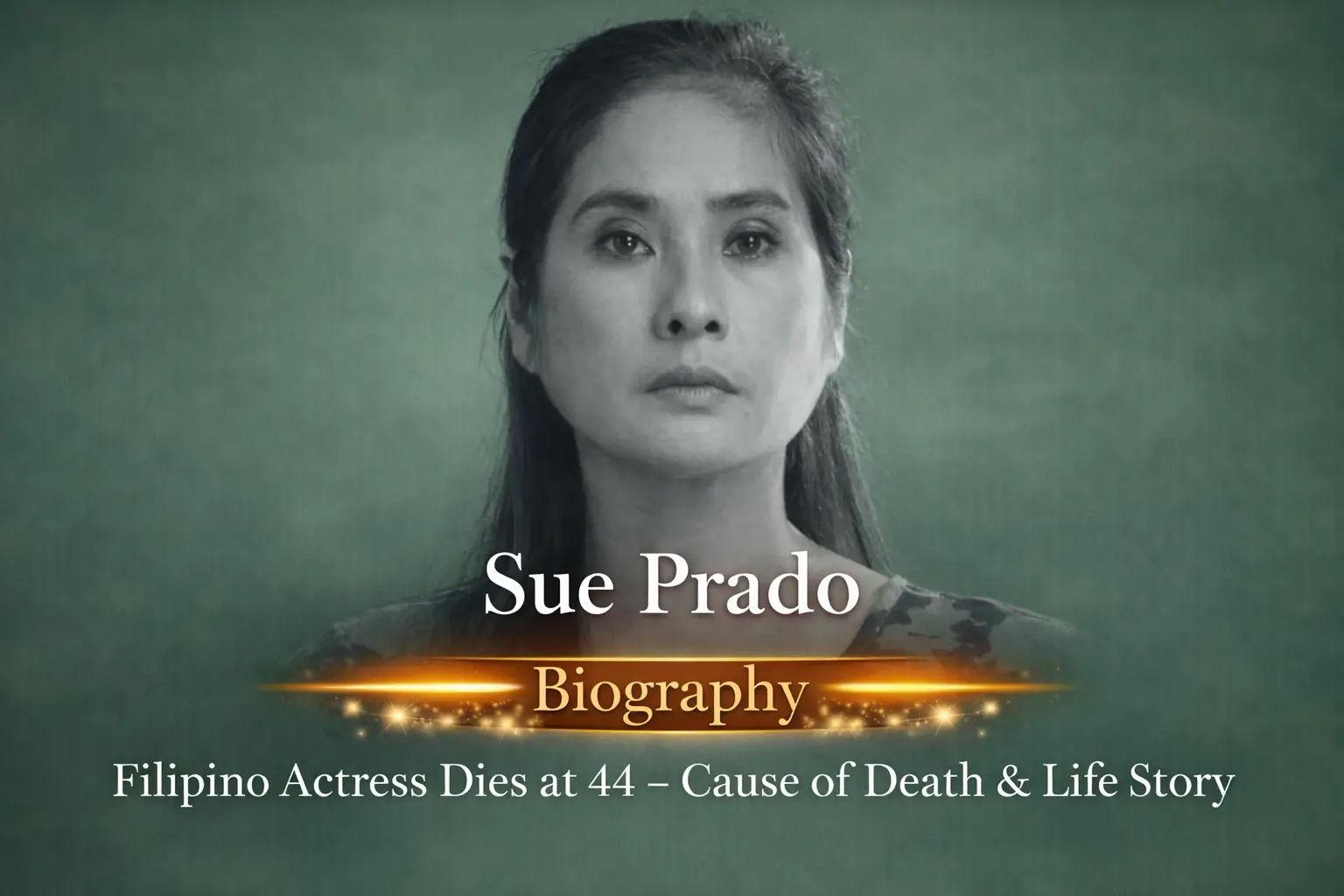
Sue Prado was a respected actress in the Philippine entertainment industry, admired for her ability to portray deep and realistic characters. In an industry often dominated by glamorous leading ladies and high profile celebrity culture, Sue Prado carved out a distinctive niche through her commitment to craft, her emotional authenticity, and her willingness to inhabit complex supporting roles that enriched every production she joined. She was especially known for her roles in independent films and television dramas, where she consistently delivered strong supporting performances that elevated the material around her.
Although she was not always in leading roles, her presence on screen was memorable, and she earned praise from critics and audiences alike. The mark of a truly skilled actor is not the size of the role but the depth of the impression left upon the audience. By this measure, Sue Prado was among the most accomplished performers in Philippine cinema. Her ability to make every scene feel lived in, to bring psychological complexity to even brief appearances, made her invaluable to directors seeking authenticity in their productions.
The story of Sue Prado is one of dedication to craft over celebrity, of substance over spotlight. In an era when social media metrics and tabloid visibility often determine an actor’s perceived importance, Sue Prado represented a different tradition, one that valued artistic integrity and professional consistency above fame. Her career choices reflected a conscious commitment to meaningful work rather than maximum exposure.
Her untimely passing on April 14, 2026, at the age of 44 shocked the Philippine entertainment community and prompted widespread reflection on her contributions to film, television, and theater. The grief expressed by colleagues and fans alike testified to the deep respect she had earned through years of quiet excellence. This comprehensive biography examines her formative years, her development as an actress, her notable works, her private personal life, the circumstances of her death, and the lasting legacy she leaves behind.
Sue Prado Biography: Early Life and Background
Sue Prado was born in the Philippines, where she spent most of her early life. The Philippines, with its rich cultural heritage blending indigenous, Spanish, American, and Asian influences, provided a complex cultural landscape that would inform her artistic sensibility. Growing up in this environment exposed her to diverse storytelling traditions, performance styles, and human experiences that would later enrich her acting.
While details about her childhood, education, and family background remain limited, this privacy about her early years is consistent with the discretion that characterized her entire public life. Unlike celebrities who construct elaborate origin narratives for public consumption, Sue Prado allowed her work to speak for itself, keeping personal history separate from professional identity.
It is known that she developed a passion for acting at a young age. This early attraction to performance suggests an innate sensitivity to human emotion and a desire to explore the full range of human experience through artistic expression. Many great actors trace their calling to childhood experiences of imaginative play, emotional intensity, or exposure to transformative performances.
She pursued her interest in performing arts through theater, which later became the foundation of her acting career. Theater education provides rigorous training in voice, movement, characterization, and ensemble work that translates effectively to screen acting. The discipline required for live performance, where mistakes cannot be edited away, builds the technical foundation and mental toughness necessary for sustained acting careers.
Her stage experience helped her build strong acting skills that translated effectively into film and television. The transition from theater to screen is challenging for many actors, as the two media demand different techniques. Theater acting requires projection and broad physical expression to reach distant audiences, while screen acting demands subtlety and internal focus to register on camera. Sue Prado’s successful navigation of this transition demonstrated both her technical adaptability and her deep understanding of acting fundamentals.
The specific institutions where she trained, the teachers who influenced her, and the productions that shaped her early development are not extensively documented. This gap in the public record reflects both her private nature and the limited media coverage that theater work receives compared to film and television. However, the quality of her subsequent performances suggests training of high caliber and dedication to continuous improvement.
Sue Prado Biography: Acting Career and Professional Development
Sue Prado had a diverse acting career that spanned theater, television, and film. This range across multiple media demonstrated both her versatility as a performer and her commitment to engaging with different storytelling forms. Each medium offered distinct challenges and opportunities, and her willingness to work across all three indicated an actor driven by artistic curiosity rather than narrow career calculation.
Theater Career and Foundational Training
Before gaining recognition on screen, she was actively involved in stage performances. The Philippine theater scene, while smaller than the film and television industries, has produced remarkable work and provided training grounds for many of the country’s finest actors. Stage work demands discipline, memorization, physical stamina, and the ability to sustain character through entire performances without the safety net of retakes.
Theater played a major role in shaping her as an actress, allowing her to develop emotional depth and strong character interpretation. The rehearsal process in theater, with its extended exploration of text, character relationships, and thematic meaning, builds analytical skills that serve actors throughout their careers. The immediacy of audience response in live performance also hones an actor’s sensitivity to timing, pacing, and emotional truth.
Her theater work likely included both classical and contemporary productions, exposing her to diverse dramatic traditions and performance styles. Classical training in works by Shakespeare, Greek tragedians, or local dramatists builds technical command and understanding of dramatic structure. Contemporary work develops relevance to current audiences and flexibility with modern acting approaches.
Film and Television Career Transition
She later transitioned into film and television, where she became known for supporting roles in drama series. Supporting roles, while less glamorous than leads, often provide the emotional backbone of dramatic narratives. The best supporting performances create the world around the protagonists, establish social context, and provide emotional resonance that makes leading characters’ journeys meaningful.
Appearances in independent Filipino films formed a significant portion of her screen work. Independent cinema, freed from the commercial constraints of mainstream production, often explores more challenging subject matter and demands more nuanced performances. Sue Prado’s affinity for independent film suggested an artistic temperament drawn to substance over spectacle, to human complexity over easy resolution.
Strong character portrayals became her trademark. Rather than playing variations of herself, she immersed herself in diverse personalities, finding the specific physicality, vocal quality, and psychological motivation that made each character unique. This chameleon like ability separated character actors from performers who merely project their own personality.
Some of her performances were praised for their realism and emotional intensity, making her a respected figure in the acting community. Realism in acting requires more than naturalistic behavior; it demands the revelation of inner life, the suggestion of history and experience that makes characters feel like complete human beings rather than plot devices. Sue Prado’s realism operated at this deeper level, creating characters who seemed to exist beyond the frame.
Notable Works and Artistic Contributions
Throughout her career, Sue Prado appeared in several films and TV shows that demonstrated her range and commitment. While she may not have always been in the spotlight, her performances stood out to attentive viewers and industry professionals who understand the craft of acting.
She was particularly recognized in independent Filipino films that explored social issues, family dynamics, and psychological complexity. These films, often screened at international festivals and appreciated by discerning audiences, provided vehicles for her most challenging work. The independent film community valued her contributions and repeatedly sought her participation.
Drama series on Philippine television also benefited from her presence. Television drama, with its extended storytelling and large audiences, allowed her to develop characters over time and to reach viewers who might not attend independent films. Her television work demonstrated that artistic integrity could coexist with popular accessibility.
Character driven roles suited her strengths as an actor. Rather than relying on plot mechanics or physical action, character driven drama explores personality, relationships, and internal conflict. These demands align perfectly with the skills of trained actors who can reveal psychological complexity through subtle behavioral choices.
Her ability to bring authenticity to her roles made her a favorite among directors and fellow actors. Directors value actors who arrive prepared, who understand the text deeply, and who contribute creative ideas that enhance the production. Fellow actors appreciate colleagues who listen generously, respond truthfully in scenes, and elevate the ensemble through committed performance. Sue Prado’s reputation among peers suggests she excelled in all these dimensions.
Sue Prado Biography: Personal Life and Private Values
Sue Prado kept her personal life largely private. In an era of celebrity culture that demands constant disclosure and performance of personal identity, her choice to maintain boundaries was both unusual and admirable. She understood that acting is a craft of transformation, and that excessive public exposure of the private self can diminish an actor’s ability to disappear into character.
She avoided excessive media attention that might have distracted from her work or distorted public perception of her identity. Many actors find that media coverage focuses on superficial aspects of appearance, relationships, or controversy rather than on artistic achievement. By limiting her media exposure, Sue Prado ensured that discussions of her work centered on the work itself.
She rarely shared personal details publicly, maintaining a separation between her professional persona and private self. This separation allowed her to live with normalcy outside her professional activities and protected her loved ones from the intrusions that accompany public visibility. The ability to move through ordinary life unrecognized is a privilege that famous actors often sacrifice.
She focused more on her craft than fame, prioritizing artistic development over celebrity building. This value system, while limiting her commercial profile, earned her the respect of serious artists and critics who recognize that fame and talent are not synonymous. Her career choices reflected a belief that good work eventually finds its audience, even without promotional machinery.
Because of this principled privacy, information about her relationships, family, and lifestyle remains limited. Fans curious about her off screen life encountered respectful silence rather than curated revelation. This mystery, far from diminishing interest in her work, may have enhanced appreciation for her performances by keeping focus on her artistic output.
The choice to maintain privacy also suggests emotional maturity and psychological health. The pressures of public life, particularly for women in entertainment, can be damaging to mental wellbeing. By establishing clear boundaries, Sue Prado protected herself from aspects of celebrity culture that have harmed many performers.
Sue Prado Cause of Death and Final Days
Sue Prado passed away on April 14, 2026, at the age of 44. Her death at a relatively young age shocked those who knew her and appreciated her work. The loss of a talented artist in mid career represents not only personal tragedy but also cultural loss, as the contributions she might have made in coming decades will now never materialize.
Her death was confirmed by a relative through a social media post, which quickly spread across online platforms. In the contemporary media environment, social media often serves as the primary channel for breaking news about public figures. The rapid dissemination of this information reflected both the connectivity of digital culture and the genuine concern that Sue Prado’s community felt upon learning of her passing.
As of now, the official cause of death has not been publicly disclosed. No confirmed medical or external cause has been released, leaving a gap in public understanding that has been filled by speculation and concern. The family’s decision to maintain privacy around the circumstances of her death is consistent with the discretion that characterized her life.
Fans and colleagues continue to await more details, while many have chosen to focus on celebrating her life and legacy rather than dwelling on the unknown circumstances of her death. This choice to emphasize positive remembrance over morbid curiosity reflects the affection and respect that Sue Prado inspired.
The suddenness of her passing, without prior public indication of serious illness, added to the shock felt by her community. In an age when many celebrities share health updates publicly, the absence of such information from Sue Prado made her death particularly unexpected. This privacy about health matters, like her privacy about other personal details, was consistent with her overall approach to public life.
Reactions and Tributes from the Entertainment Community
Following her death, many fans, actors, and industry professionals expressed their grief and paid tribute to her. The response to an artist’s death reveals the scope of their impact and the depth of connections they formed during their life. The outpouring for Sue Prado demonstrated that her influence extended far beyond her immediate circle.
Common tributes included messages praising her acting talent and recognizing the technical skill, emotional truth, and artistic courage that distinguished her performances. Colleagues who had worked alongside her shared memories of her professionalism, generosity, and dedication. These firsthand accounts provided insight into her character that her private nature had kept from public view.
Recognition of her dedication to the craft appeared repeatedly in tributes. In an industry often criticized for valuing image over substance, Sue Prado’s commitment to serious acting stood as a counterexample. Those who celebrated her emphasized that she represented the best traditions of Philippine performance art.
Emotional posts remembering her kindness and professionalism revealed the personal qualities that complemented her artistic abilities. Technical skill alone does not earn the kind of love that Sue Prado inspired; it must be combined with human warmth, generosity, and integrity. The tributes suggested that she possessed these qualities in abundance.
Her passing is considered a significant loss to the Philippine entertainment industry. The industry benefits from having artists who raise standards through example, who demonstrate what is possible when talent meets discipline. Sue Prado’s absence will be felt in the productions that might have featured her and in the younger actors who might have learned from her.
Sue Prado Legacy and Enduring Impact
Sue Prado’s legacy lies in her dedication to acting and her ability to bring characters to life with truth and depth. While her career was cut short, the body of work she leaves behind continues to demonstrate what is possible when an actor commits fully to the craft.
Her impact on Philippine entertainment includes inspiring upcoming actors who saw in her example that meaningful careers can be built on artistic integrity rather than celebrity chasing. Young performers entering the industry face constant pressure to prioritize visibility over substance. Sue Prado’s career offered an alternative model, proving that respect and fulfillment can come from doing excellent work regardless of fame level.
She contributed significantly to Philippine independent cinema, helping to build a film culture that values artistic ambition and social relevance. Independent cinema depends on actors willing to work for modest compensation in challenging conditions because they believe in the material. Sue Prado’s repeated participation in independent productions demonstrated this commitment and encouraged others to similar choices.
She delivered memorable performances in supporting roles that enriched the productions she joined. Great supporting acting is often invisible to casual viewers, who may not recognize how much the lead performances depend on the reality created around them. Industry professionals understood Sue Prado’s contribution at this foundational level, and her work will continue to be studied by those learning the craft.
Even though she was not always in the spotlight, her work continues to be appreciated by those who followed her career. The audiences for independent film and quality television may be smaller than mainstream markets, but they are often more discerning and more loyal. Sue Prado built a following among viewers who value substance, and these viewers will ensure that her work remains alive through continued viewing and discussion.
READ ALSO:
- Adin Ross Biography
- Indian Asha Bhosle Biography
- Marquay Collins Biography
- Ambassador Konjit Sinegiorgis Biography
- Kid Rock Biography
Sue Prado Net Worth and Financial Profile
Sue Prado’s exact net worth was not publicly disclosed. In keeping with her private nature, she did not discuss financial matters publicly or participate in the celebrity wealth ranking culture that fascinates many entertainment consumers.
However, her income likely came from acting roles in films and TV, which provided the primary revenue stream for most working actors. Philippine entertainment industry compensation varies widely based on project budget, actor profile, and negotiation position. As a respected character actor rather than a leading star, her earnings would have been modest by celebrity standards but sufficient to support her chosen lifestyle.
Theater performances, while rarely lucrative, provided additional income and professional satisfaction. Stage work in the Philippines often pays little but offers artistic rewards that commercial film and television cannot match. Sue Prado’s continued theater work despite its limited financial returns suggested that she valued these artistic rewards highly.
She lived a modest and professional life focused on her craft rather than wealth or public recognition. This lifestyle choice, increasingly unusual in an era of conspicuous consumption among celebrities, reflected her value system and her understanding of what brings genuine fulfillment. Her example suggests that professional satisfaction and personal integrity can be more valuable than material accumulation.
The financial aspects of her career, while of interest to some observers, are ultimately less significant than the artistic contributions she made. Her true wealth lay in the body of work she created, the respect she earned, and the example she set for others in her profession.
Conclusion
Sue Prado was a talented and respected actress whose work left a lasting mark on Philippine entertainment. Her sudden death at 44 has left fans and colleagues mourning the loss of a dedicated performer who represented the best traditions of acting craft.
While many details about her life remain private, consistent with her values and choices, her contributions to film, television, and theater ensure that her legacy will not be forgotten. The performances she gave continue to exist in the productions she graced, available for future generations to discover and appreciate.
Her career demonstrates that impact in entertainment is not measured solely by fame, fortune, or media coverage. The true measure of an actor’s contribution is the quality of work they produce and the inspiration they provide to others in the field. By these measures, Sue Prado’s career was remarkably successful.
As the Philippine entertainment industry continues to evolve, facing new challenges and opportunities in the digital age, the example of Sue Prado remains relevant. Her commitment to craft, her respect for the art form, and her refusal to compromise her values for commercial advantage provide a standard against which contemporary performers can measure themselves.
The grief expressed at her passing reflects not only loss but gratitude for what she gave during her too brief career. Those who knew her, worked with her, or were moved by her performances carry forward her influence in their own work and lives. In this way, Sue Prado’s legacy persists and will continue to shape Philippine culture for years to come.
Frequently Asked Questions About Sue Prado
Who was Sue Prado?
Sue Prado was a Filipino actress known for her roles in films, television, and theater. She was particularly respected for her supporting performances in independent Filipino films and drama series, where she brought emotional depth and authenticity to her characters.
How old was Sue Prado when she died?
She was 44 years old at the time of her death on April 14, 2026.
When did Sue Prado die?
She passed away on April 14, 2026. Her death was confirmed by a relative through social media.
What was the cause of her death?
The cause of death has not been officially confirmed or publicly disclosed. No confirmed medical or external cause has been released as of now.
What is Sue Prado known for?
She is known for her strong supporting roles in Philippine films and television dramas. She was especially respected in independent cinema for her realistic and emotionally intense performances.
Where was Sue Prado from?
She was born in the Philippines, where she spent most of her life and built her acting career.
What was Sue Prado’s background in theater?
Before transitioning to film and television, she was actively involved in stage performances. Her theater experience provided foundational training in acting skills that translated effectively to screen work.
What type of roles did Sue Prado play?
She specialized in supporting roles and character driven parts that required emotional depth and psychological complexity. She was particularly valued for her ability to bring authenticity to diverse characters.
Was Sue Prado a leading actress?
While she was not always in leading roles, her supporting performances were consistently memorable and earned praise from critics and audiences alike. Her impact came from quality rather than prominence.
What was Sue Prado’s net worth?
Her exact net worth was not publicly disclosed. She lived a modest life focused on her craft rather than wealth accumulation.
Did Sue Prado share details about her personal life?
She kept her personal life largely private, rarely sharing details about relationships, family, or lifestyle. This privacy was consistent throughout her career.
How did the entertainment industry react to Sue Prado’s death?
Many fans, actors, and industry professionals expressed grief and paid tribute to her talent, dedication, and professionalism. Her passing was considered a significant loss to Philippine entertainment.
What is Sue Prado’s legacy?
Her legacy includes inspiring upcoming actors, contributing to Philippine independent cinema, and delivering memorable performances that demonstrated the power of authentic, craft focused acting.
What made Sue Prado’s acting special?
Her ability to portray deep and realistic characters with emotional truth, her dedication to craft over celebrity, and her versatility across theater, film, and television distinguished her as a respected artist.
Will Sue Prado’s work continue to be available?
Her performances in films, television series, and theater productions remain part of Philippine cultural heritage and can be appreciated by future generations of viewers and students of acting.